Buying Guide
Automotive replacement parts buying checklist
By Cusket Editorial · Published · Updated
A buying checklist for automotive replacement parts, covering compatibility, part numbers, certifications, MOQ, packaging, delivery terms, and return expectations.
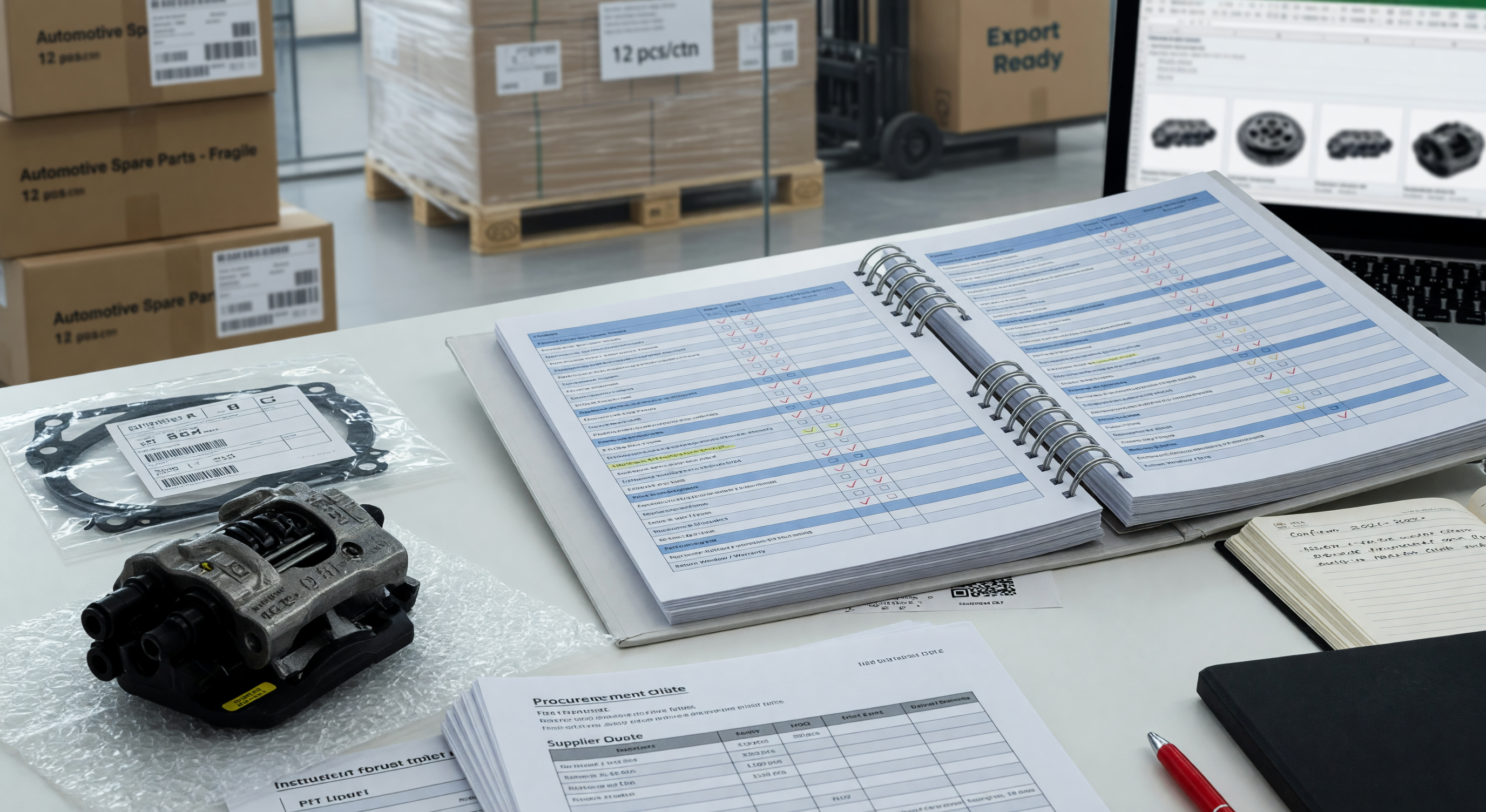
Confirm compatibility before negotiating price
Replacement parts sourcing starts with fitment evidence: part number, model coverage, year range, material, warranty expectation, and documentation. Price comparison is premature until each supplier has confirmed the part matches the buyer’s application.
Product specs to define
Begin with the original equipment reference and fitment. Include OEM number, aftermarket cross-reference, vehicle make, model, year, engine, body, trim, region, left/right orientation, front/rear position, and any VIN or chassis range when relevant. For electrical parts, include connector shape, pin count, voltage, sensor range, software or calibration notes, and compatibility warnings. For mechanical parts, state dimensions, material, hardness, coating, bearing type, thread, pressure rating, or temperature range as needed.
Parts category changes the evidence required. Brake, steering, suspension, lighting, engine, emission, battery, and safety-related parts may need stronger documentation than cosmetic trim. Ask for test reports, production standard, quality management evidence, material certificate, or regulatory documents where relevant. Packaging also matters because replacement parts often move through warehouses, repair shops, and parcel carriers. Define inner bag, box, foam, rust protection, label, barcode, installation sheet, and master carton requirements.
MOQ and price tier logic
Price tiers should be read as a model, not a promise. A supplier may show one unit price at sample quantity, another at carton quantity, and a lower number at pallet or container quantity. Your landed cost should include setup charges, tooling, artwork, testing, labeling, export packing, freight, duties, payment fees, and the cost of quality failures. The lowest unit price is rarely the lowest total purchase cost if it forces the wrong MOQ, hides a long lead time, or excludes required documentation. Automotive parts MOQ varies by whether the part is standard aftermarket inventory, made-to-order production, private-label packaging, or custom tooling. Stock items may support lower MOQ, while uncommon fitments or private-label cartons can require larger runs. Ask whether MOQ is per part number, fitment family, brand label, carton design, or total order.
If you manage many SKUs, compare supplier economics by basket, not one hero item. A supplier with the lowest price on a common filter may not be the best source for mixed slow-moving parts. Request tiers for each critical SKU and ask whether mixed cartons, assortment packs, or scheduled releases are possible. Include the cost of wrong-fit returns, warranty claims, shop downtime, and customer support when comparing unit prices.
Sample and proofing path
For custom or compliance-sensitive items, do not skip the proof path. Ask for a pre-production sample, golden sample, digital proof, material certificate, test report, or dimensional drawing before mass production. Store the approved proof with the quote so receiving, support, and reorder teams know what was actually accepted. For replacement parts, sample approval should include fitment check, dimensional inspection, material or performance validation, packaging review, and installation feedback when possible. Test the sample on the intended vehicle or assembly, not only against a drawing. Confirm connector fit, bolt alignment, clearance, left/right orientation, label accuracy, and installation instruction quality.
For private-label orders, approve package artwork and barcode data before mass production. If the part is safety-related, define inspection and warranty handling before ordering. Keep approved fitment notes with the quote so customer service can explain exactly which vehicles are covered.
RFQ questions to ask
- Which OEM numbers, aftermarket references, vehicles, and model years are supported?
- Is the part stock inventory, made-to-order, remanufactured, or private-label?
- What material, test, quality, or compliance documentation is included?
- Is MOQ per SKU, fitment family, packaging version, or total order?
- What warranty, defect, wrong-fit, and return process applies?
- Are installation instructions, labels, barcodes, and retail boxes included?
- Can the supplier provide samples for fitment validation?
- Which delivery term, lead time, and packaging protection are quoted?
Red flags
Red flags include vague product names, copied specification sheets, missing certification numbers, resistance to samples, unclear ownership of tooling, price breaks that change after questions, no written lead time, and quotes that omit packaging or delivery responsibility. A good supplier may still need clarification, but they should be able to document what they will make, when they will make it, and what is included in the price. For automotive parts, red flags include vague fitment lists, copied OEM photos, missing part numbers, no warranty terms, and reluctance to provide samples. Be careful when a supplier says universal fit without dimensions or application notes. Also watch for private-label quotes that omit packaging durability or barcode accuracy, because receiving and customer support problems can erase any unit-price savings.
Next step in Cusket
Cusket is most useful for this kind of purchase when the buyer can move from a checklist into product discovery, seller comparison, RFQ, cart, or checkout without losing the commercial assumptions. Use the Cusket guide hub for broader sourcing context, then open product search or the relevant category page when you are ready to compare live listings. Use auto parts search and the auto parts category to compare product claims. Then review how to buy replacement parts, price tier comparison, and delivery terms before buying before sending the RFQ.
Quote comparison fields to score
Compare suppliers with fields for OEM reference, fitment range, material, test evidence, warranty, packaging, MOQ per SKU, unit price at tiers, sample availability, private-label options, defect process, return process, lead time, and delivery term. Add a fitment confidence score. A supplier with fewer but clearer applications may be safer than one listing every vehicle model without notes, exclusions, or cross-reference evidence.
Acceptance criteria before purchase
Set pass criteria for part number match, dimensional fit, connector or bolt alignment, material finish, label accuracy, carton protection, installation note quality, and warranty documentation. For high-risk parts, require fitment validation before bulk purchase. If the supplier changes mold, sub-supplier, material, electronics, or packaging, require notice and approval. Wrong-fit parts create customer service cost even when the initial unit price looks attractive.
Planning the first order
For a first replacement-parts order, choose a controlled SKU set instead of chasing every application at once. Start with parts where fitment data, sample validation, and warranty handling are clear. Keep slow-moving fitments separate from high-volume parts when comparing price tiers. Ask whether the supplier can support staged releases, mixed cartons, and replacement shipments for defective or wrong-labeled parts. The goal is to prove compatibility and service process before scaling the catalog.
For safety-critical categories, keep the first order conservative until the supplier has proven both fitment accuracy and claim handling. Document who approves substitutions, who pays freight for confirmed defects, and which evidence is required for warranty review.