Buying Guide
Fasteners supplier comparison checklist
By Cusket Editorial · Published · Updated
A checklist for comparing fastener suppliers by material grade, dimensions, coating, standards, MOQ, packaging, lead time, and supplier documentation.
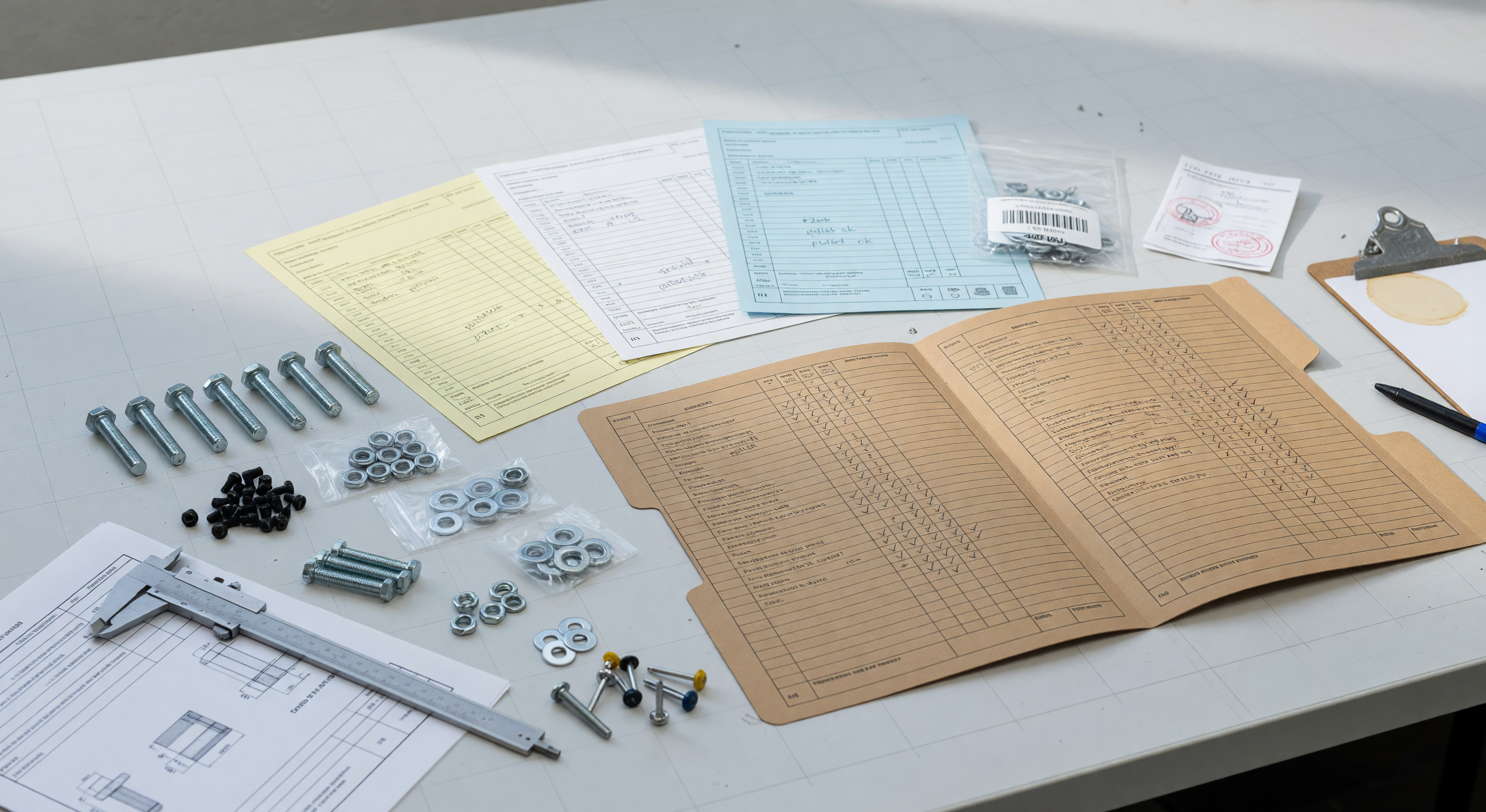
Compare fasteners by spec, tolerance, and traceability
Fasteners look simple until grade, thread, coating, tolerance, corrosion resistance, packaging, and documentation differ. Supplier comparison should begin with the exact standard or performance requirement, then move to MOQ, price breaks, and delivery.
Product specs to lock
Identify the fastener family and the governing standard first. Include DIN, ISO, ANSI, ASTM, SAE, JIS, or customer drawing reference when applicable. State diameter, length, pitch, head style, drive type, thread length, point type, nut class, washer dimensions, material grade, hardness, tensile strength, coating, color, corrosion requirement, and tolerance. If the fastener is safety-critical, structural, automotive, electrical, marine, food-equipment, or outdoor-facing, document the environment and required certificates before requesting price.
Coating is not cosmetic only. Zinc, nickel, black oxide, hot-dip galvanizing, dacromet-style coatings, passivation, and stainless grades behave differently in salt spray, outdoor exposure, and assembly. Ask whether the supplier can provide salt spray hours, material test certificates, RoHS or REACH statements when needed, and lot traceability. Also define packaging: bulk cartons, small boxes, bags, kits, barcode labels, mixed assortments, or production-line replenishment packs.
MOQ and price tier logic
Price tiers should be read as a model, not a promise. A supplier may show one unit price at sample quantity, another at carton quantity, and a lower number at pallet or container quantity. Your landed cost should include setup charges, tooling, artwork, testing, labeling, export packing, freight, duties, payment fees, and the cost of quality failures. The lowest unit price is rarely the lowest total purchase cost if it forces the wrong MOQ, hides a long lead time, or excludes required documentation. Fastener MOQ may be based on tooling, wire stock, heat treatment batch, plating batch, packaging format, or standard inventory. Off-the-shelf standard fasteners may be available at low MOQ, while custom dimensions or coatings may require a production batch. Ask for tiers by pieces and by packaging unit, such as 1,000 pieces, 10,000 pieces, 50,000 pieces, and pallet quantities.
If the supplier quotes per kilogram, convert to pieces and compare against your assembly usage. If they quote per thousand pieces, confirm packaging count and overage tolerance. A lower price can become expensive if it requires a full plating batch, mixed lots, or weak packaging that causes counting errors. For recurring production, ask whether the supplier can hold safety stock, split releases, or maintain the same lot documentation across orders.
Sample and proofing path
For custom or compliance-sensitive items, do not skip the proof path. Ask for a pre-production sample, golden sample, digital proof, material certificate, test report, or dimensional drawing before mass production. Store the approved proof with the quote so receiving, support, and reorder teams know what was actually accepted. For fasteners, samples should be checked against drawings or standards, not just visually. Measure dimensions, test thread fit with mating parts, verify head drive fit, check coating appearance and thickness, and confirm hardness or material documents when relevant. For production parts, run an assembly trial using actual torque, tools, washers, inserts, or anchors.
If the fastener is custom, ask for first-article inspection before mass shipment. Define acceptance criteria for mixed parts, burrs, thread damage, rust, oil residue, coating flakes, and packaging accuracy. Keep an approved sample or measurement report with the quote so reorder substitutions are visible.
RFQ questions to ask
- Which standard, grade, material, dimensions, thread, and coating are quoted?
- Is the product standard inventory, made-to-order, or custom tooling?
- What documentation is included: material certificate, inspection report, salt spray, RoHS, REACH, or lot traceability?
- Is MOQ per size, grade, coating, packaging type, or total order?
- What packaging count, carton weight, labels, and pallet requirements are included?
- What dimensional tolerance and defect allowance apply?
- Can the supplier support recurring releases or safety stock?
- Which delivery term and lead time are included?
Red flags
Red flags include vague product names, copied specification sheets, missing certification numbers, resistance to samples, unclear ownership of tooling, price breaks that change after questions, no written lead time, and quotes that omit packaging or delivery responsibility. A good supplier may still need clarification, but they should be able to document what they will make, when they will make it, and what is included in the price. For fasteners, red flags include suppliers who quote from a photo without a standard or drawing, cannot state material grade, mix standards casually, or treat coating as a color choice only. Be careful when certificates are generic and not tied to the shipment lot. Also avoid accepting substitutions from stainless to plated carbon steel, from full thread to partial thread, or from one head drive to another without assembly testing.
Next step in Cusket
Cusket is most useful for this kind of purchase when the buyer can move from a checklist into product discovery, seller comparison, RFQ, cart, or checkout without losing the commercial assumptions. Use the Cusket guide hub for broader sourcing context, then open product search or the relevant category page when you are ready to compare live listings. Use fastener search and the fasteners category to compare supplier fit, then review replacement parts buying, price tier comparison, and delivery terms before buying before committing to a bulk order.
Quote comparison fields to score
Create a table for standard, material grade, finish, dimensions, tolerance, documentation, MOQ per size, unit price per thousand, packaging count, carton weight, lead time, inspection method, and delivery term. Add a line for lot traceability and supplier response quality. Fasteners often look interchangeable until a receiving team finds thread damage, mixed sizes, coating variation, or missing certificates. A supplier who can explain inspection and packing controls reduces that risk.
Acceptance criteria before purchase
Define pass criteria for dimensions, thread fit, head drive, coating appearance, rust, burrs, packaging count, label accuracy, and document match. For assembly-critical fasteners, test torque and fit on the actual part before approving the order. If the supplier changes material source, coating process, heat treatment, or packaging quantity, require written approval. That keeps a reorder from becoming a hidden engineering change.
Planning the first order
For a first fastener order, separate validation quantity from production replenishment. Buy enough to test assembly, packaging, and receiving accuracy, but avoid locking into a full custom batch before thread fit, coating, and documentation are verified. If the part will support a production line, ask the supplier to quote both initial validation stock and scheduled replenishment. Include overage tolerance and count accuracy in the order terms so a shortage does not stop assembly.