Buying Guide
Inspect cables and connectors quotes before ordering
By Cusket Editorial · Published · Updated
A buyer checklist for reviewing cable and connector quotes before ordering, including length tolerance, conductor material, gauge, connector type, shielding, jacket, certifications, packaging, test reports, and sample pull checks.
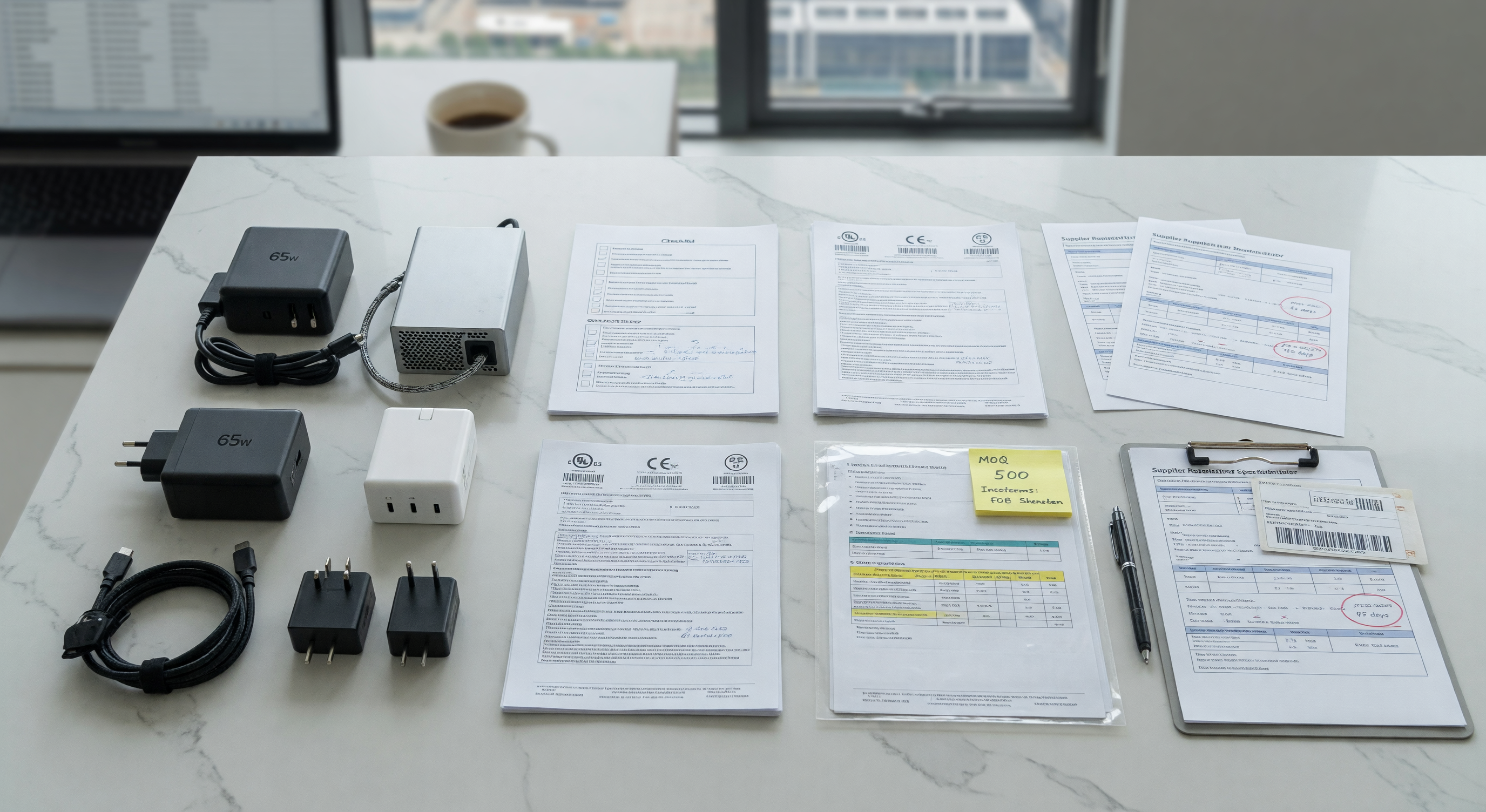
Start with the assembly, not just the unit price
A cable or connector quote can look simple until the shipment arrives with the wrong length, plating, jacket, or packaging. Before approving an order, treat the quote as a technical document and compare it against your drawing, sample, and receiving process. The goal is to make supplier assumptions visible before money, tooling time, or production slots are committed.
When sourcing from https://cusket.com/products, compare each product listing with the quotation line by line. If the quote says "USB-C cable," "wire harness," or "connector set" without defining conductor material, gauge, connector type, length tolerance, shielding, and jacket material, ask for a revised quote. Buyers using https://cusket.com/search can also check similar listings from the same seller.
Confirm length, gauge, and conductor material
Cable length should state both the nominal dimension and the tolerance, such as 1,000 mm +/- 10 mm. Confirm whether the measurement includes connectors, overmold, strain relief, or only exposed cable. For harnesses, ask whether branch lengths are measured centerline to centerline, terminal end to terminal end, or by another defined point.
Gauge and conductor material deserve equal attention. Confirm AWG or square millimeter size, strand count when relevant, and whether the conductor is bare copper, tinned copper, copper-clad aluminum, or another material. Do not assume two quotes with the same current rating use the same construction. If flexibility matters, ask for bend radius expectations and whether the assembly has been tested after repeated flexing.
Check connector identity and contact finish
Connector type should be specific enough for your receiving team to verify. A complete quote should identify the standard or series, gender, pin count, pitch, keying, orientation, latch style, mounting style, shell, and any overmold or strain relief design. For circular, waterproof, automotive, RF, board-to-wire, and industrial connectors, close matches are not always interchangeable.
Contact finish can explain large price differences. Gold flash, thicker gold plating, tin, nickel, and mixed finishes can change insertion cycles, corrosion behavior, and durability. If the quote includes mated connector pairs, confirm whether both sides are included or only the cable-side connector is quoted. For custom assemblies, request a pre-production sample before approving the full batch.
Review shielding, jacket, and environment claims
For data, signal, audio, instrumentation, or high-noise industrial use, shielding should be described clearly. Look for braid coverage percentage, foil layers, drain wire, twisted-pair construction, pair shielding, and grounding method. A quote that only says "shielded cable" may not be enough. Ask whether the shield is terminated to the shell, drain wire, connector pin, or left unterminated.
Jacket material should match the use environment. PVC, PUR, TPE, silicone, FEP, and other materials behave differently under flexing, abrasion, oil exposure, temperature, sunlight, and cleaning chemicals. If a supplier claims flame resistance, low smoke, UV resistance, outdoor use, waterproofing, or high temperature performance, request the test standard or datasheet behind the claim. You can compare adjacent category examples through https://cusket.com/categories, but the final quote should still name the actual jacket material.
Use a quote inspection checklist before approval
A practical inspection table helps separate a complete quote from a low-information offer. Keep it with your sourcing notes and require answers before purchase approval. For more buyer guides, bookmark https://cusket.com/guides.
| Quote item | What to verify | Buyer action before ordering |
|---|---|---|
| Length and tolerance | Nominal length, measurement points, branch lengths, connector inclusion | Mark dimensions on drawing or sample photo and ask supplier to confirm |
| Conductor and gauge | AWG or mm2, strand count, copper type, current or signal assumption | Compare against load, voltage drop, and flexibility needs |
| Connector type | Series, pin count, pitch, gender, keying, latch, shell, mating side | Request datasheet, mating sample, or approved equivalent statement |
| Shielding | Braid, foil, drain wire, coverage, termination method | Ask for construction drawing and continuity expectation |
| Jacket material | PVC, PUR, TPE, silicone, temperature and exposure limits | Match to installation environment and request datasheet |
| Certifications and tests | UL, CE, RoHS, REACH, IP rating, flame rating, continuity, hi-pot | Request current documents where applicable without treating badges as proof by themselves |
| Packaging | Reel, coil, bag, carton count, labels, bend protection | Confirm pack quantity, label data, and damage-prevention method |
This checklist is not legal, tax, importing, or compliance advice. It is a practical way to find missing information before a quote becomes a purchase order.
Ask for test evidence, samples, and pull checks
For production orders, quote review should include the evidence the supplier will provide with the shipment. Basic cable assemblies often need continuity testing, open-short testing, insulation resistance, and hi-pot testing where relevant. Data cables may need impedance, attenuation, or performance reports depending on the application. Waterproof connectors may need IP test references or sample test conditions. If the supplier mentions UL, RoHS, REACH, CE, or another certification, ask for current documentation and confirm whether it applies to the exact cable assembly, the raw cable, or only one component.
Samples are especially valuable for custom lengths, overmolds, crimp terminals, and strain relief. Ask for pre-production samples made with the quoted materials, then inspect connector fit, cable markings, jacket feel, bend behavior, and label accuracy. A sample pull test can reveal weak crimps, loose overmolds, or inadequate strain relief. Define pull direction and force with your engineering team or test standard rather than relying on a casual tug test.
Lock packaging and change control before payment
Packaging affects receiving speed and product condition. Confirm whether cables ship individually bagged, coiled, tied, reeled, tray-packed, or bulk packed. Ask for carton quantity, label fields, barcode format, country-of-origin marking if needed, and whether protective caps are included on exposed connectors.
Before placing the order through https://cusket.com/buy, make sure the quote has a revision date and clear change-control language. If the supplier substitutes connector brands, conductor material, plating thickness, jacket compound, packaging, or test process, they should notify you before shipment. When details remain unclear, contact the seller through the available product path or use https://cusket.com/support for marketplace help. A quote that is specific on construction, tests, and packaging is easier to receive, inspect, and reorder than a cheap quote built on assumptions.