Buying Guide
How to inspect workwear and uniforms quotes before ordering
By Cusket Editorial · Published · Updated
A buyer-focused checklist for comparing workwear and uniform quotes before approving samples, branding, packaging, and repeat orders.
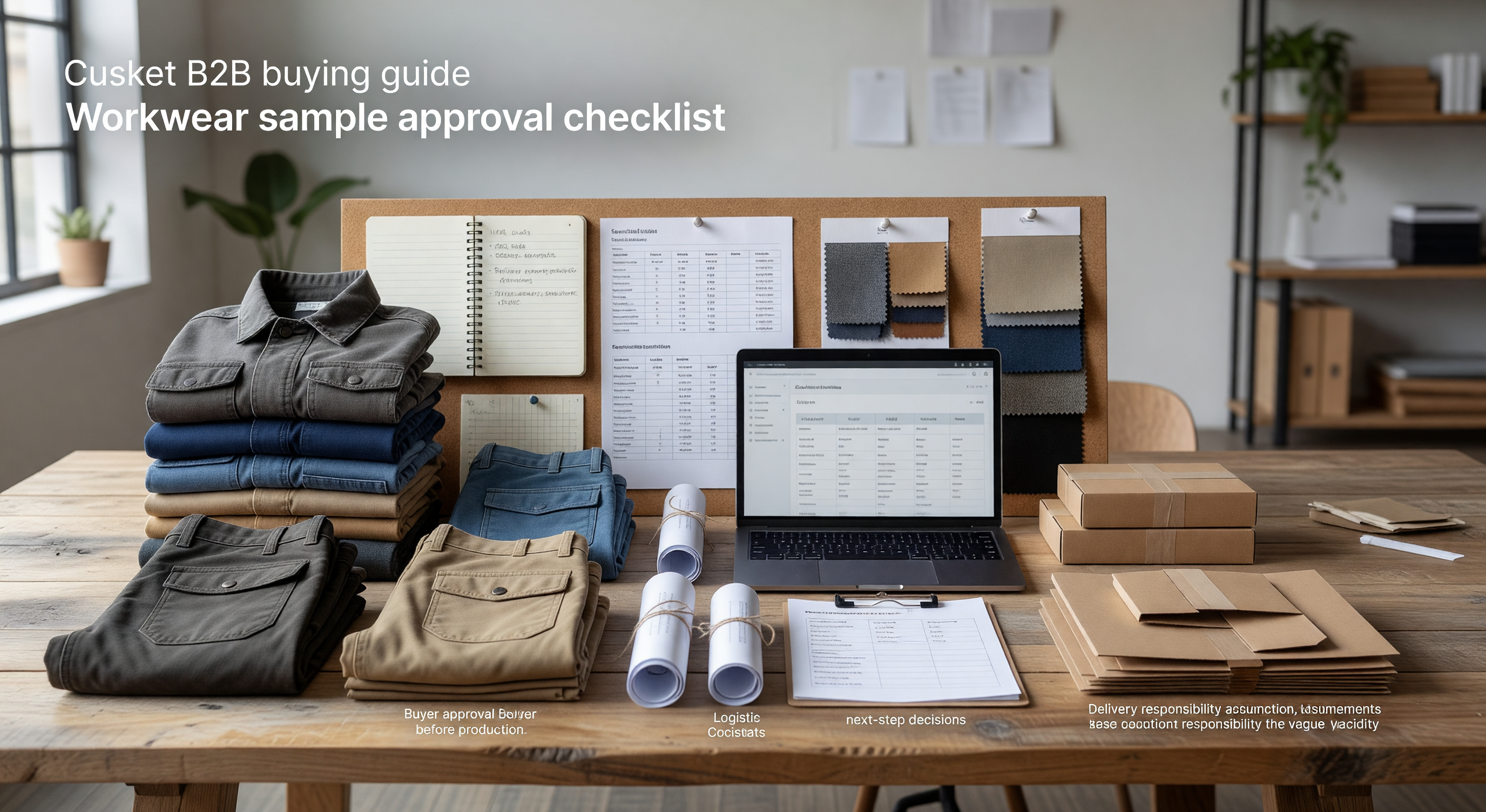
Start with the job the uniform must do
A workwear quote is a promise about how shirts, trousers, jackets, aprons, or coveralls will perform after repeated shifts, washing, movement, and team growth. Before comparing suppliers on Cusket products or browsing broader category options, define the work setting: warehouse, clinic, restaurant floor, field service, front desk, construction site, or event crew.
Ask each seller to identify the garment type, intended environment, and assumptions behind the price. A lightweight indoor polo does not need the same fabric, seams, or reflective details as outdoor workwear. A kitchen apron may need stronger ties and stain resistance, while a field jacket may need reinforced pockets and high-visibility panels.
Check size range, fit, and packaging by size
Uniform orders fail quickly when quotes hide sizing gaps. Confirm the full size range, including smaller and larger sizes, women’s or unisex fit options, tall lengths, and whether extended sizes cost more or take longer. For growing teams, ask whether the same range will be available for reorders.
Packaging is part of the quote. A mixed carton may be cheaper, but it creates sorting work across sites or departments. Ask whether garments can be packed by size, role, location, employee kit, or color group. Size-labelled polybags, carton labels, and a packing list by SKU can save hours during rollout. When comparing sellers through Cusket search, include packaging requirements so quotes answer the same question.
Compare fabric, stitching, and construction details
Fabric weight affects comfort, durability, opacity, and seasonality. Ask for GSM or ounce weight, fiber composition, shrinkage expectations, and whether the fabric is pique, twill, ripstop, fleece, coated, or brushed. “Cotton blend” is not enough when buyers need to predict wash behavior and daily wear.
Construction details deserve the same attention. Check seam type, stitch density, reinforcement at stress points, zipper quality, button attachment, waistband construction, cuff finish, and pocket strength. For trousers or jackets, ask whether knees, elbows, and pocket corners are bartacked or reinforced. For aprons, check tie length and neck adjustment. For medical or service uniforms, confirm that seams feel smooth and the garment stays presentable after sitting, bending, and laundering.
Inspect branding, color, pockets, and reflective details
Logo method should be quoted clearly. Embroidery, screen printing, heat transfer, woven patches, silicone badges, and reflective prints differ in texture, cost, durability, and minimum order impact. Ask for logo size, placement, thread or ink colors, setup charges, repeat setup costs, and whether a physical logo sample is included before bulk production.
Color can vary by fabric lot, especially navy, charcoal, khaki, safety yellow, and black. Request fabric color codes or lab dips where possible, particularly for brand colors or reorder-sensitive programs. For reflective tape or high-visibility trims, ask for width, placement, color, and wash-care limits. Buyers with safety requirements should verify local rules with a qualified adviser rather than relying on a marketplace quote as compliance advice.
Pocket and feature details should be explicit: chest pocket, pen slot, cargo pocket, phone pocket, ID loop, tool loop, side vents, snap closure, zipper garage, hood, elastic cuff, or removable liner. A quote that says only “custom jacket” can hide expensive omissions.
Use a quote inspection checklist before approval
Before approving a sample or placing the order through Cusket buying tools, normalize every quote into the same checklist. This makes it easier to compare value rather than unit price alone.
| Quote item | What to verify | Why it matters |
|---|---|---|
| Size range | Size chart, fit type, extended-size costs, reorder availability | Prevents rollout gaps and inconsistent future orders |
| Fabric | Composition, weight, weave, shrinkage, color reference | Determines comfort, durability, and appearance |
| Stitching | Seam type, reinforcements, bartacks, zipper or button quality | Reduces failures at stress points |
| Logo method | Technique, placement, size, setup fee, sample proof | Controls brand appearance and wash durability |
| Details | Pockets, reflective tape, closures, vents, labels, trims | Confirms the garment matches the workday |
| Packaging | Packed by size, site, kit, or carton; packing list included | Simplifies distribution and receiving checks |
| Defect tolerance | Accepted defect rate, inspection method, remedy process | Clarifies expectations before money is committed |
Keep this table with the seller conversation and sample notes. If two quotes have different assumptions, ask follow-up questions before choosing the lower price.
Approve samples and test wash durability
Sample approval should happen before bulk production whenever timing and budget allow. Review fit on real team members, not only on a flat table. Check arm movement, bending, pocket access, logo position, fabric transparency, collar shape, hem length, and whether the garment still looks professional after a shift-like trial.
Wash durability is a buyer verification step. Ask for care instructions and expected wash performance, then test the sample using the laundering method your team will actually use. Look for shrinkage, twisting seams, pilling, fading, cracked print, loose embroidery threads, curled collars, and reflective tape damage. For industrial laundering, confirm whether the quote is based on that wash environment before approving bulk production.
Lock down tolerance, delivery, and reorder consistency
Every quote should state how defects are defined and handled. Common issues include wrong size labels, color mismatch, skipped stitches, stains, holes, loose trims, crooked logos, incomplete packaging, or quantity shortages. Ask what inspection standard the seller uses, whether photos are provided before shipment, and what happens if defects exceed the agreed tolerance. Treat informal messages as practical purchasing records, not legal certainty.
Reorder consistency matters because teams grow and replacements are normal. Confirm whether the same fabric, color, trim, logo file, and size chart can be used again. Ask how long the seller keeps production files and whether repeat orders have different minimums, lead times, or color-variation risk.
If a quote is unclear, compare alternatives in Cusket guides and product pages, then ask direct questions before payment. For unresolved order or platform questions, use Cusket support. A strong workwear quote should make the finished uniform predictable before the first carton arrives.