Buying Guide
Skincare packaging MOQ and quote checklist
By Cusket Editorial · Published · Updated
A checklist for skincare packaging quotes, covering container type, material, decoration, compatibility, MOQ, samples, lead time, and delivery expectations.
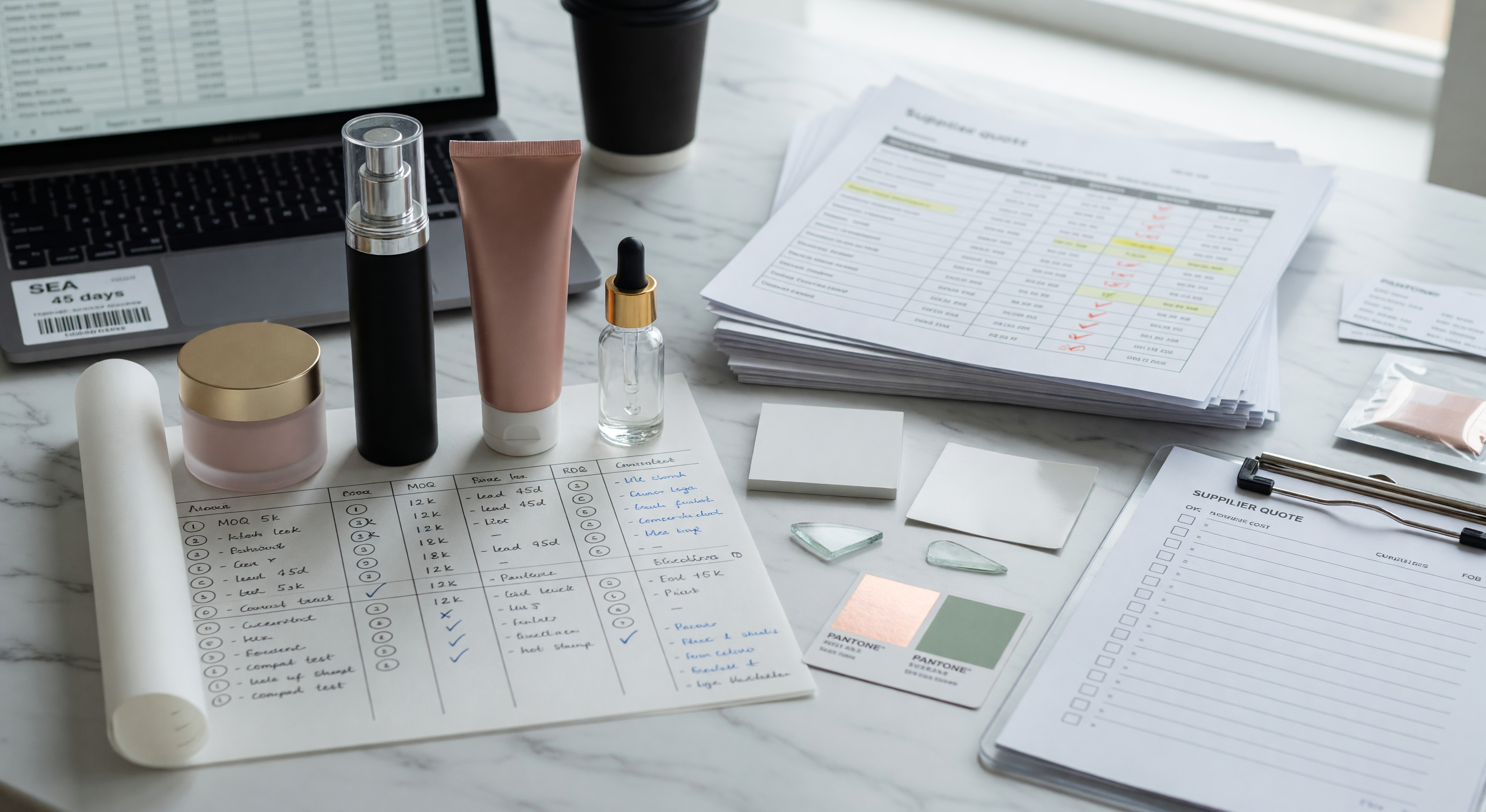
Match packaging to formula, fill process, and retail channel
Skincare packaging quotes depend on container compatibility, closure, decoration, MOQ by color or mold, sample approval, and how the package will be filled and sold. Buyers should compare suppliers after the packaging system is defined.
Product specs to define
Define the primary package and the formula risk together. Include container type, nominal fill volume, overflow capacity, material, wall thickness, neck finish, closure type, pump dosage, dip tube length, cap style, liner, seal, spatula, insert, outer box, and carton packing. State whether the product is water-based, oil-based, alcohol-containing, acidic, alkaline, fragrance-heavy, active-ingredient-sensitive, hot-filled, or light-sensitive. Compatibility matters because packaging that looks fine with water may discolor, crack, leak, swell, or lose pump function with the actual formula.
Decoration should be specified before price comparison. Ask for color matching, spraying, metallization, frosting, silk screen, hot stamping, label area, embossing, debossing, gradient finish, and artwork limitations. For pumps and droppers, define output dose, closure torque, leakage test, and whether components are standard stock or custom matched. If sustainability claims matter, clarify PCR content, mono-material options, refill design, and the evidence available for those claims.
MOQ and price tier logic
Price tiers should be read as a model, not a promise. A supplier may show one unit price at sample quantity, another at carton quantity, and a lower number at pallet or container quantity. Your landed cost should include setup charges, tooling, artwork, testing, labeling, export packing, freight, duties, payment fees, and the cost of quality failures. The lowest unit price is rarely the lowest total purchase cost if it forces the wrong MOQ, hides a long lead time, or excludes required documentation. Skincare packaging MOQ often splits between standard stock components and custom decoration. A clear stock jar may be available at low MOQ, while custom color, sprayed finish, metallized cap, or private mold may require thousands of units. Pumps, caps, bottles, labels, and cartons may each have separate MOQs. Ask suppliers to state MOQ by component and by finished set.
Request tier pricing for first validation order, launch order, and replenishment order. A first order might use standard colors to reduce risk, while later orders justify custom mold or custom decoration. Separate mold, screen, plate, color-match, sample, and compatibility-test costs from unit price. If the supplier bundles components from multiple factories, ask who is responsible when bottle, pump, and cap fit problems appear.
Sample and proofing path
For custom or compliance-sensitive items, do not skip the proof path. Ask for a pre-production sample, golden sample, digital proof, material certificate, test report, or dimensional drawing before mass production. Store the approved proof with the quote so receiving, support, and reorder teams know what was actually accepted. Skincare packaging proofing should include stock sample, decorated sample, formula compatibility test, leakage test, drop test, pump or closure cycle test, carton fit, and final artwork proof. Fill samples with the actual formula and test at intended storage temperatures. Check color stability, label adhesion, cap torque, pump dosage, dropper suction, airless function, and consumer handling.
Do not approve mass production from an empty sample only. If formula compatibility takes weeks, build that time into the sourcing plan. Keep an approved decorated sample and component list with the quote, including material, supplier model number, color code, pump output, and decoration method.
RFQ questions to ask
- Is the quote for stock packaging, decorated stock, custom components, or private mold?
- What material, volume, neck finish, closure, pump output, and carton pack are included?
- Is MOQ per bottle, cap, pump, color, decoration, carton, or finished set?
- Are mold, screen, plate, color-match, sample, and compatibility-test fees separate?
- What testing is available for leakage, drop, pump function, and formula compatibility?
- Can the supplier provide material statements or sustainability evidence?
- What lead time applies after artwork and sample approval?
- Which delivery term is quoted and what freight assumptions are excluded?
Red flags
Red flags include vague product names, copied specification sheets, missing certification numbers, resistance to samples, unclear ownership of tooling, price breaks that change after questions, no written lead time, and quotes that omit packaging or delivery responsibility. A good supplier may still need clarification, but they should be able to document what they will make, when they will make it, and what is included in the price. For skincare packaging, watch for suppliers who do not ask about formula type, promise universal compatibility, or quote custom color without lab dip or sample approval. Be cautious when pumps and bottles come from different sources with no fit responsibility. Also treat sustainability claims carefully unless material percentages, test evidence, and destination-market language are clear.
Next step in Cusket
Cusket is most useful for this kind of purchase when the buyer can move from a checklist into product discovery, seller comparison, RFQ, cart, or checkout without losing the commercial assumptions. Use the Cusket guide hub for broader sourcing context, then open product search or the relevant category page when you are ready to compare live listings. Use skincare packaging search and the beauty packaging category to shortlist suppliers. For related planning, read custom product supplier comparison, low-MOQ sourcing, and delivery terms before buying.
Quote comparison fields to score
Score quotes by container type, capacity, material, closure system, pump output, decoration method, component MOQ, finished-set MOQ, mold or screen charges, sample fees, compatibility support, testing plan, carton pack, lead time, and delivery term. Add a component-responsibility column. If bottles, pumps, caps, labels, and cartons come from different sources, the quote should still identify who owns fit, leakage, and decoration defects.
Acceptance criteria before purchase
Define approval rules for fill volume, leakage, closure torque, pump dosage, dropper function, decoration adhesion, color match, carton fit, label area, formula compatibility, and documentation. Test with the real formula, not only water. If a supplier substitutes resin, pump, gasket, decoration process, or carton structure, require written approval and a new sample when the change affects compatibility or appearance. Beauty packaging is brand presentation and functional containment at the same time.
Planning the first order
For a first skincare packaging order, align MOQ with formula stability and launch risk. If compatibility testing is incomplete, use standard components or a smaller decorated run before committing to custom molds or large color batches. Keep enough packaging for filling trials, lab retains, marketing samples, and damaged units. Ask the supplier to quote repeat pricing and component lead times so a successful launch does not fail because pumps, caps, or cartons cannot be replenished together.