Buying Guide
Agricultural Equipment supplier comparison checklist
By Cusket Editorial · Published · Updated
A buyer-focused checklist for comparing agricultural equipment suppliers by field fit, specification depth, spare parts, delivery risk, documentation, and total cost.
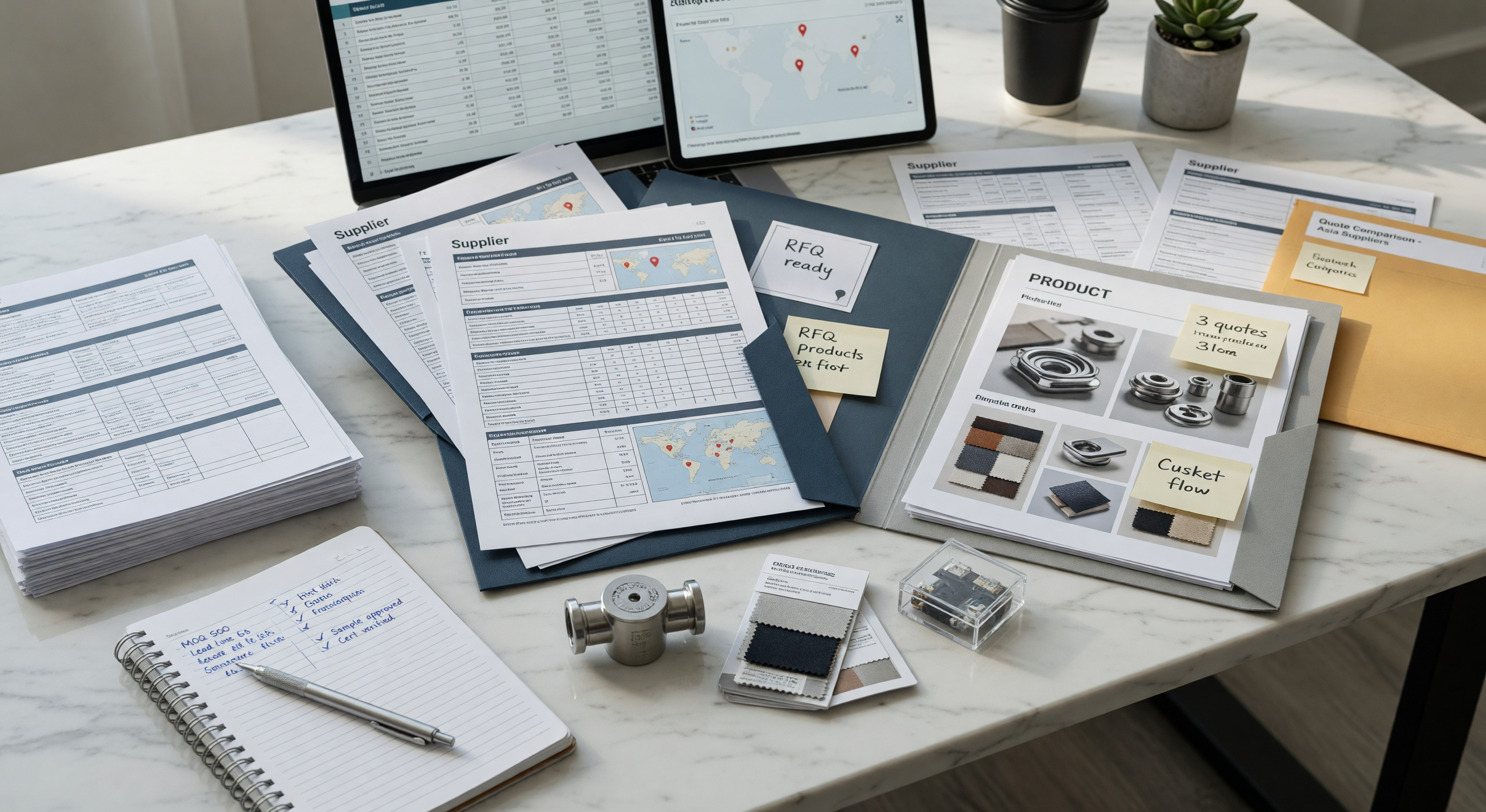
Start with the job the equipment must perform
Agricultural equipment comparisons get clearer when the buyer starts with field conditions, operating hours, and the cost of downtime instead of only the machine name. A compact tractor, irrigation pump, sprayer, seeder, feed mixer, or harvesting attachment may look comparable across suppliers, but the right choice depends on crop type, acreage, soil condition, fuel access, maintenance capacity, and seasonal urgency.
Before comparing suppliers in Agricultural Equipment, write a short use case: the work to be done, expected daily output, terrain, power source, operator skill level, and the months when the equipment cannot fail. This gives every supplier the same operating context and prevents a low quote from winning when it does not match the field reality.
Confirm specification depth before price
A serious supplier should be able to explain the machine beyond model names. Ask for rated capacity, engine or motor specifications, working width, tank or hopper volume, PTO requirements, hydraulic connections, tire or track options, voltage, fuel consumption, compatible implements, and recommended spare parts. For irrigation, storage, or processing equipment, include flow rate, pressure, filtration, food-contact materials, and cleaning requirements.
Treat vague answers as a comparison signal. If one supplier gives only a brochure and another provides a full specification sheet, parts list, and operating limitations, the second supplier is easier to evaluate even when the initial price is higher. For mixed procurement, connect the equipment plan to adjacent categories such as Feed and Fertilizer or Fresh Produce, because the same farm operation may need compatible handling, storage, and input workflows.
Use a practical supplier scorecard
Score suppliers against the buying risks that matter most for agricultural operations. A simple scorecard keeps the discussion factual and makes it easier to compare quotes from Cusket product listings, search results, and direct supplier conversations.
| Evaluation area | What to check | Score 1-5 |
|---|---|---|
| Field fit | Matches crop, acreage, terrain, power source, and operator skill | |
| Specification clarity | Complete data sheet, capacity range, compatible attachments, and limitations | |
| Parts availability | Wear parts, filters, belts, blades, seals, and local replacement plan | |
| Maintenance support | Manuals, service intervals, troubleshooting help, and repair guidance | |
| Delivery readiness | Packing method, lead time, documentation, and unloading requirements | |
| Total cost | Unit price plus freight, spare parts, training, consumables, and downtime risk | |
| Supplier responsiveness | Clear answers, consistent terms, and willingness to confirm details in writing |
Use the scorecard before negotiating final price. If a supplier cannot answer the maintenance or parts questions, the buyer is not comparing equivalent offers.
Compare durability, service, and spare parts
Agricultural equipment often fails at the worst possible time: planting, spraying, irrigation peaks, feed preparation, or harvest. That makes durability and serviceability part of the purchase price. Ask each supplier which components wear fastest, which parts should be stocked with the first order, and whether common parts use standard sizes.
For powered machines, confirm engine brand, emission standard, battery type, starter system, and fuel tolerance. For implements, ask about steel thickness, bearing quality, blade hardness, paint or coating, weld inspection, and grease points. For pumps, sprayers, and irrigation equipment, check seals, nozzles, hoses, valves, and filtration. A supplier that provides exploded diagrams, maintenance videos, or part numbers reduces future purchasing friction.
Review delivery, packing, and setup risk
Large, heavy, or delicate farm equipment can arrive damaged if packing is treated casually. Confirm whether the item ships assembled, semi-assembled, or knocked down. Ask for crate dimensions, gross weight, lifting points, corrosion protection, moisture protection, and photos of previous export packing. If the equipment needs forklifts, ramps, cranes, special tools, or technician setup, include that in the landed cost.
Delivery timing should be compared against the season when the equipment is needed, not only the supplier's production lead time. Buyers using Cusket search should shortlist alternatives early enough to allow for quote review, payment processing, freight, customs, inland transport, inspection, and operator familiarization.
Check compliance and operating documentation
Equipment requirements vary by destination, product type, and buyer use case. Ask suppliers for manuals, safety labels, warranty terms, certificates, test reports, and applicable standards. For machines used around food, livestock, chemicals, or workers, documentation matters because poor labeling or missing safety instructions can create real operating risk.
A buyer should also confirm language requirements for manuals and warning labels, voltage and plug compatibility, chemical compatibility for tanks and sprayers, and whether replacement parts can be ordered using stable part numbers. If the equipment will be financed, insured, or used in a regulated facility, collect documentation before payment rather than after shipment.
Make the final comparison decision
The strongest supplier is usually the one that can prove fit, explain tradeoffs, and support the equipment after delivery. Price still matters, but it should sit beside capacity, field fit, maintenance burden, delivery risk, and documentation quality. Keep a written comparison file with the final scorecard, quote versions, photos, specifications, and supplier answers.
Use Cusket guides to refine buying criteria, then move back into categories and listings to compare real options. If a supplier response leaves uncertainty about specifications, delivery, or documentation, use Cusket support before committing to an order path. A careful comparison process helps buyers avoid paying twice: once for the machine, and again for avoidable downtime.