Buying Guide
Canada buyer checklist for delivery terms
By Cusket Editorial · Published · Updated
A practical checklist for Canadian buyers comparing delivery terms, landed-cost assumptions, customs responsibilities, and handoff details before placing an international order on Cusket.
Start with what the delivery term controls
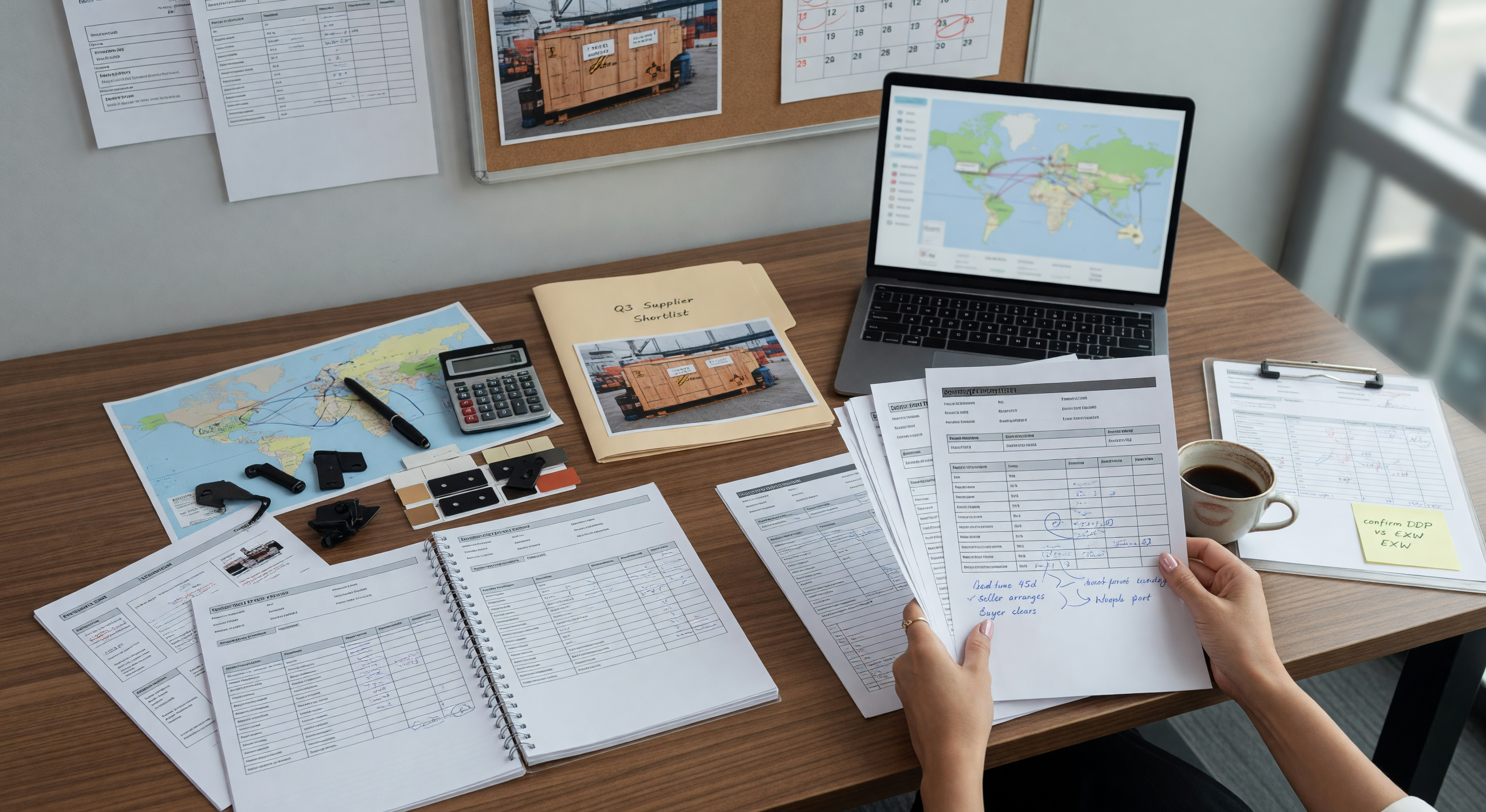
For a Canadian buyer, a delivery term is more than a shipping label. It shapes who arranges freight, where risk usually transfers, who prepares export or import paperwork, and which costs are likely to appear before the order reaches your door. The exact effect depends on the wording used in the offer, the carrier service, and the documents attached to the shipment, so treat the term as a planning tool rather than legal advice.
Before comparing products on Cusket products, read the offer details and identify the named place attached to the delivery term. “Delivered to Toronto” and “delivered to port” can lead to very different responsibilities. If the page gives only a short abbreviation, ask for the full meaning in writing before payment. A clear term helps you compare prices across suppliers without mistaking a low item price for a low delivered cost.
Check the named place, not just the abbreviation
Many delivery misunderstandings come from stopping at the three-letter term and missing the named location. The location tells you where the seller’s arranged movement may end and where your own cost or risk may begin. For Canada-bound orders, that location might be a foreign factory, an export port, a Canadian port, a warehouse, a business address, or another handoff point.
Use Cusket search and product filters to shortlist similar items, then compare each offer using the same destination assumptions. If one product is priced to a foreign port and another is priced to your Canadian address, the cheaper one may not be cheaper after freight, brokerage, duty, tax, and last-mile delivery are considered.
| Question to confirm | Why it matters for Canada-bound orders |
|---|---|
| What is the exact named place? | It defines the handoff point you should cost from. |
| Is freight to Canada included? | Some offers include export-side movement only. |
| Who books the main carrier? | The booking party often controls timing and carrier communication. |
| Who handles import customs? | Canada import clearance may require a broker, importer number, and tax handling. |
| Is insurance included or optional? | Carrier liability may be limited if cargo is damaged or lost. |
Estimate landed cost before comparing prices
A practical Canadian comparison starts with landed cost: product price, international freight, insurance if used, customs brokerage, duty if applicable, GST/HST or other taxes, carrier disbursement fees, storage risk, and domestic delivery. Cusket can help organize product discovery, but you should avoid treating checkout or invoice numbers as the full landed total unless the offer clearly says so.
When browsing Cusket categories, keep a simple spreadsheet with one row per product. Add the delivery term, named place, currency, minimum order quantity, estimated package weight, and any stated shipping inclusion. Then add a “questions open” column. If a supplier cannot clarify who pays for brokerage or import charges, mark that offer as incomplete rather than trying to guess.
Match the term to your buying style
The best delivery term is not always the one with the most seller responsibility. If you are new to importing, you may prefer a term where the seller arranges more of the transportation so you have fewer carrier decisions. If you already work with a Canadian freight forwarder or customs broker, you may prefer more control so your team can consolidate cargo, choose routing, and manage documents directly.
Before using Cusket buy, decide which control level fits the order. Small samples may justify convenience even if the freight cost is higher. Repeat replenishment orders may justify a more controlled setup, because stable routing and predictable paperwork can matter more than a single low quote. Expensive or fragile goods may need explicit insurance terms and packaging standards rather than a generic shipping promise.
Document customs and handoff responsibilities
Canada-bound shipments often need commercial invoices, packing lists, country-of-origin details, product descriptions, HS classification support, and values that match the actual transaction. The buyer of record may need to coordinate with a broker and keep records after import. Do not rely on vague descriptions such as “accessories,” “samples,” or “gift” if they do not accurately describe the goods.
Use this checklist before paying:
- Confirm the exact delivery term and named place.
- Confirm who arranges export clearance, main freight, import clearance, and final delivery.
- Ask whether the quote includes insurance, fuel surcharges, remote-area fees, and residential or liftgate charges if relevant.
- Confirm commercial invoice details, package count, gross weight, dimensions, and country of origin.
- Ask for the expected ship date, transit estimate, and what happens if storage or demurrage charges arise.
- Save the offer, order confirmation, invoice, tracking, and customs documents in one place.
If anything feels inconsistent, contact Cusket support before assuming the platform page, supplier message, and carrier notice all mean the same thing. Early clarification is usually easier than resolving a shipment already waiting at a terminal.
Review before you reorder
Delivery terms should be reviewed again after the first order arrives. Compare the original quote with the actual charges and delays. Did the carrier ask for import fees you did not expect? Did the broker need missing information? Did the named place match the real handoff? Did the packaging survive the route? These answers should influence the next order more than the abbreviation alone.
For future purchases, keep a short preferred-term note by product type. You might use one approach for low-value samples, another for palletized replenishment, and another for time-sensitive launches. When researching more options in Cusket guides, focus on guidance that helps you ask clearer questions and compare offers on the same basis.
This checklist is meant to reduce surprises, not replace professional advice. Canadian import obligations can depend on the product, province, buyer status, destination, and transaction structure. For high-value, regulated, or recurring shipments, confirm your assumptions with a qualified customs broker, tax adviser, or logistics professional before committing to a delivery term.