Buying Guide
Canada buyer checklist for replacement parts
By Cusket Editorial · Published · Updated
A practical checklist for Canadian buyers sourcing replacement parts online, from fit checks and documentation to shipping, returns, and import readiness.
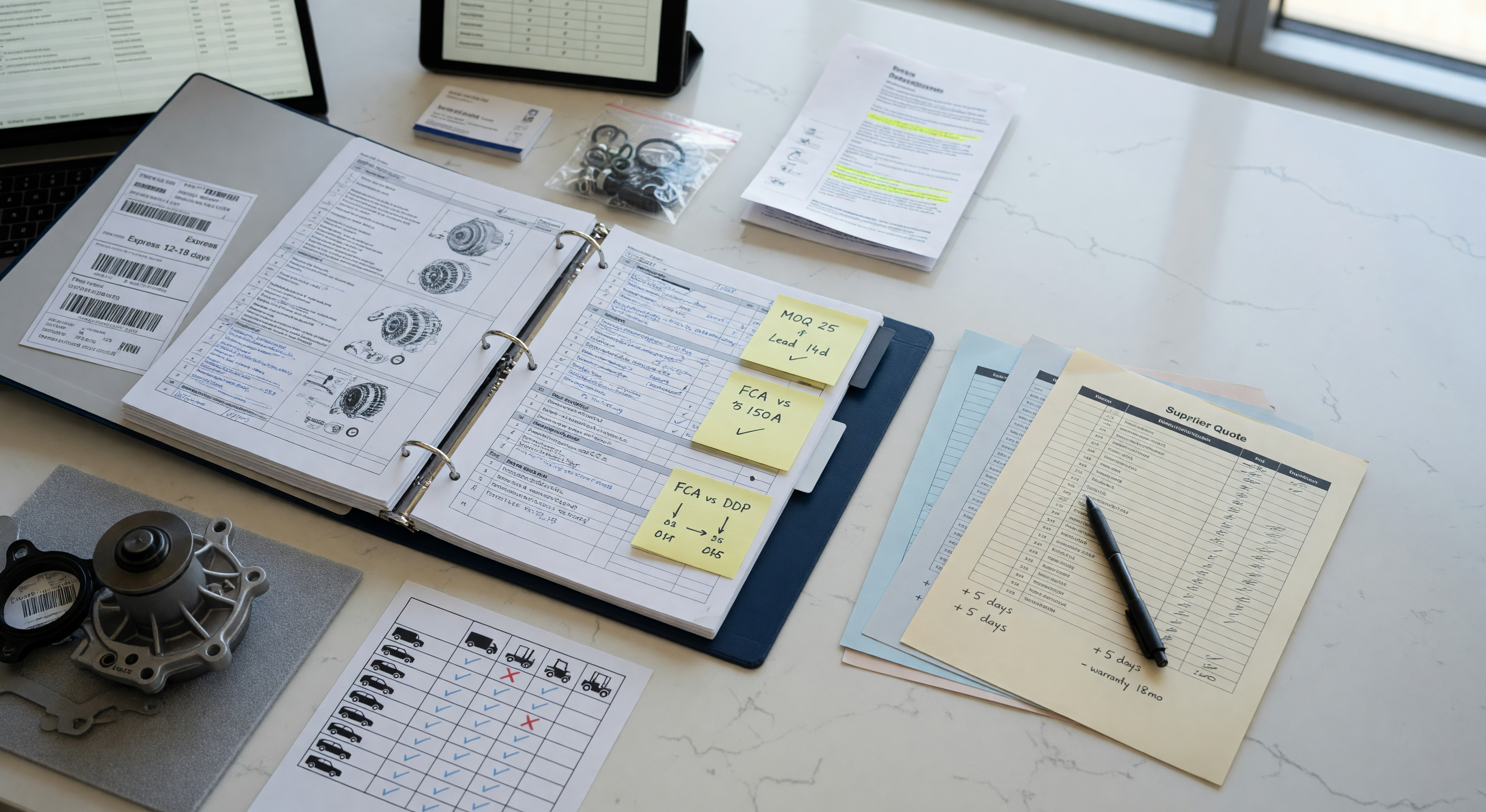
Replacement parts purchases often start under pressure: a machine is down, a vehicle needs one matched component, or a maintenance team is waiting for a small item. For Canadian buyers, the fastest order is still the one checked carefully before payment.
Use this checklist when comparing Cusket products, narrowing options through Cusket search, or reviewing adjacent options in Cusket categories. It is practical buying guidance, not legal or tax advice.
Start with exact part identity
Begin with the item being replaced. Record the part number, model, serial number, revision mark, capacity, orientation, and label text. If the old part is damaged, photograph it before removal and measure the points that control fit.
Mechanical parts may need hole spacing, shaft diameter, thread pitch, gasket shape, belt profile, or mounting depth. Electrical parts may need voltage, amperage, phase, connector type, pin layout, firmware version, or enclosure rating. Small differences can stop filters, seals, bearings, sensors, and controls from fitting.
Treat compatibility claims as useful but incomplete. Match the listing against the equipment manual, maintenance record, or installer requirements before using Cusket buy to place the order.
Compare total order value
The lowest visible price is not always the lowest repair cost. Compare unit price, minimum quantity, lead time, shipping method, warranty language, packaging, and what arrives in the box. A cheaper part that excludes seals, fasteners, brackets, calibration data, or instructions may create a second delay.
| Check | What to confirm | Why it matters |
|---|---|---|
| Fit | Part number, revision, dimensions, connector, orientation | Reduces near-match mistakes |
| Condition | New, refurbished, used, remanufactured, or surplus | Sets expectations for life and warranty |
| Included items | Gaskets, clips, brackets, manuals, certificates | Prevents missing small parts from stopping installation |
| Timing | Stock status, handling time, carrier estimate | Shows whether the order fits the downtime window |
| Returns | Restocking fees, installed-part limits, inspection window | Clarifies recovery options if the part is wrong |
When two listings are similar, prefer the one with clearer specifications and documentation. Replacement parts are a poor place to accept uncertainty just to save a small amount.
Check Canada shipping and border readiness
Before paying, confirm the ship-from country, carrier, service level, and delivery destination. International replacement parts can move quickly, but customs or carrier delays may happen when invoices, product descriptions, or contact details are incomplete. A useful description says what the part is and what it is used for, not only an internal stock code.
Duties, taxes, brokerage fees, and admissibility requirements can vary by item, origin, shipment value, and use. Treat estimates as planning information rather than certainty. For expensive, regulated, safety-related, or urgent parts, check with the carrier, customs broker, or relevant professional before ordering.
Also confirm whether the carrier can reach the final site. Remote addresses, oversized freight, batteries, oils, pressurized items, and restricted materials may need different handling. If shipping terms are unclear, contact Cusket support before placing an urgent order.
Confirm safety, standards, and records
Some replacement parts are simple consumables; others affect safety, compliance, insurance, or inspection outcomes. Electrical components, pressure parts, lifting components, vehicle parts, food-contact parts, and medical-adjacent parts deserve closer review. Do not assume a part suitable in another market automatically fits Canadian workplace or inspection expectations.
Look for relevant markings, certificates, test reports, material declarations, or installation instructions. For industrial parts, material grade, pressure rating, temperature range, ingress protection, and chemical compatibility may matter more than the product photo. If a contractor or maintenance provider will install the part, ask what documentation they need before ordering.
Save the listing URL, specifications, order confirmation, messages, invoice, tracking details, and packing slip. For business purchases, connect the order to an asset ID, job number, or maintenance ticket so another buyer can repeat the decision later.
Final buyer checklist
Before checkout, confirm that:
- The part number, revision, dimensions, and operating ratings match the original equipment.
- The condition is clear: new, refurbished, used, remanufactured, or surplus.
- Included accessories are listed, and missing items are ordered separately.
- Lead time, carrier method, delivery address, and freight limits are acceptable.
- Possible duties, taxes, brokerage, or import costs have been considered where material.
- Listing details, messages, and specifications have been saved.
- Return timing and installed-part exclusions are understood.
On arrival, inspect quantity, markings, dimensions, visible damage, and included accessories before installation. For fragile or high-value parts, photograph the packaging and keep shipping materials until the part is accepted. For broader buying habits, continue through Cusket guides before urgent purchasing becomes routine.