Buying Guide
Feed and Fertilizers MOQ and Price Tier Guide
By Cusket Editorial · Published · Updated
A buyer-facing guide to evaluating feed and fertilizer minimum order quantities, price tiers, landed cost, storage risk, and when to test or consolidate volume.
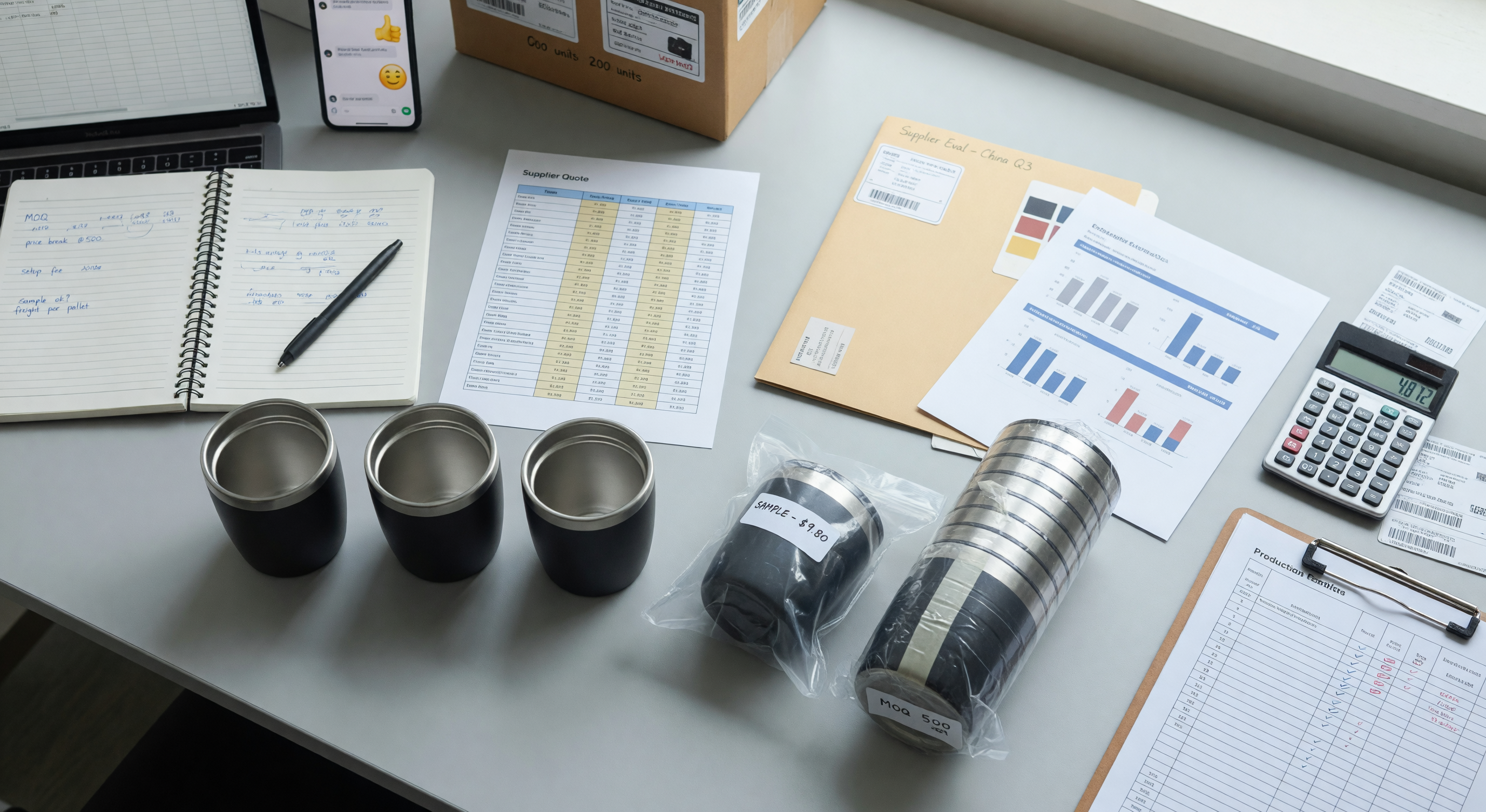
Why MOQ and price tiers matter for feed and fertilizer orders
Feed and fertilizer buying is rarely a simple unit-price comparison. A low headline price can become expensive if the minimum order quantity is too high, the delivery window is too narrow, or storage losses eat into the savings. Buyers sourcing through Cusket should read MOQ and tiered pricing as a combined commercial structure: MOQ tells you the smallest practical commitment, while price tiers show how costs change when volume increases.
For farms, distributors, co-ops, livestock operators, and food producers, this structure affects cash flow, warehouse space, expiry risk, seasonal planning, and freight efficiency. A 20-ton fertilizer order may look efficient before planting season, but it can be risky if nutrient specifications do not match the crop plan or if local demand shifts. Feed orders carry similar pressure because animals need consistent formulations, and switching too quickly can create operational problems. Start from the dedicated category page at https://cusket.com/categories/FEED_FERTILIZER, then compare each listing with your real consumption schedule.
Build demand around usage, not only discounts
The first step is to estimate demand in the same unit the seller uses. Some listings are priced by metric ton, bag, pallet, container, or truckload. Convert your expected monthly usage into that unit before comparing tiers. For feed, separate starter, grower, finisher, mineral, protein, and specialty blends. For fertilizers, separate NPK formula, urea, phosphate, potash, organic amendments, micronutrients, and liquid products.
Discounts should not push the order beyond useful demand. A buyer who needs eight tons per month may not benefit from a 40-ton tier if storage conditions are poor or capital is needed elsewhere. The better question is not “What is the cheapest tier?” but “Which tier gives the lowest landed cost for product I can use safely before quality declines?” Product discovery at https://cusket.com/products can help you keep alternatives visible while you compare similar pack sizes and order increments.
Compare landed cost by tier
Tiered pricing should be evaluated after freight, handling, duties, insurance, financing, and expected shrinkage. Feed and fertilizers can be dense, heavy, and regulated, so freight economics often improve at larger quantities. However, the largest tier is not automatically the best tier if it creates slow-moving stock.
Use this table when comparing seller offers:
| Checkpoint | What to confirm | Why it changes the tier decision |
|---|---|---|
| MOQ unit | Bag, pallet, ton, container, or truckload | Prevents comparing unlike order sizes |
| Tier break | Quantity where unit price drops | Shows the real cost of stepping up volume |
| Freight basis | Included, quoted separately, or buyer-arranged | Can erase a unit-price discount |
| Shelf life or stability | Best-use period, storage temperature, moisture limits | Protects against spoilage, caking, or nutrient loss |
| Specification tolerance | Protein level, nutrient ratio, additives, coating, or granule size | Avoids paying less for the wrong input |
| Cash timing | Deposit, balance due, credit terms, or staged delivery | Determines whether the tier fits working capital |
For each tier, calculate landed cost per usable ton, not just invoice price per ton. If two offers are close, the offer with clearer delivery timing and specification control may be the better commercial choice.
MOQ checklist before committing
Before accepting a feed or fertilizer MOQ, run a practical check across operations, finance, and product fit:
- Confirm the MOQ in physical units and total order value.
- Match the order to a realistic consumption window.
- Check storage capacity, ventilation, humidity control, pest control, and segregation from incompatible goods.
- Ask whether partial shipment or staged delivery is available at the same tier.
- Confirm whether the tier price applies to mixed SKUs or only one exact product.
- Verify formulation, nutrient analysis, batch documentation, safety data sheets, and labeling requirements.
- Compare substitutes in adjacent sourcing areas such as https://cusket.com/categories/FRESH_PRODUCE when inputs are tied to seasonal crop plans, or https://cusket.com/categories/AGRICULTURAL_EQUIPMENT when equipment capacity affects handling.
- Leave room for trial volume if the product is new to your operation.
A strong MOQ is one you can receive, store, use, and pay for without forcing poor operating decisions. If the only way to reach a discount is to overbuy, negotiate a lower trial MOQ or ask whether a future repeat order can unlock the tier after performance is proven.
Ask better questions when tiers look attractive
When a seller offers a sharp price drop at a higher tier, ask what drives the discount. It may come from full-container freight, production batch size, packaging efficiency, seasonal inventory, or payment terms. Each reason has different risk. A production-batch discount may be stable over time, while a seasonal clearance discount may not repeat. A freight discount may depend on the destination, route, and unloading capacity.
Buyers should also ask whether the tier can be split by delivery date. For example, a 30-ton fertilizer tier delivered in three 10-ton drops may be more useful than one immediate delivery. For feed, staged delivery can preserve freshness and formulation consistency. Use https://cusket.com/search to compare similar products and identify whether the same tier pattern appears across multiple listings or only one offer.
Decide when to test, consolidate, or walk away
The right order size depends on confidence. Use a test order when the product is new, the specification is unfamiliar, livestock response is uncertain, or the crop plan has not been proven. Consolidate into a higher tier when you already know the product performs, storage is ready, and demand is stable. Walk away when the MOQ forces inventory beyond your planning horizon, documentation is incomplete, or the seller cannot explain what happens if the product arrives outside specification.
Cusket buying guides at https://cusket.com/guides can help you connect this decision with broader supplier comparison, delivery terms, and order planning. If a listing is promising but the MOQ or price tier is unclear, use https://cusket.com/support to clarify platform or order-flow questions before committing. A disciplined buyer treats MOQ as a planning constraint and price tiers as one input, not the whole decision. The best feed or fertilizer order is the one that fits actual usage, protects product quality, and keeps the next buying cycle flexible.