Buying Guide
Hand Tools MOQ and Price Tier Guide
By Cusket Editorial · Published · Updated
A buyer-facing guide to evaluating hand tool MOQs, price breaks, mixed orders, packaging variables, and first-order volume before committing to larger tiers.
Start with the tool family, not only the unit price
Hand tools look simple on a quote sheet, but MOQ and price tiers can change quickly once the buyer adds grip material, packaging, alloy grade, calibration, or a private-label case. A low unit price for pliers, screwdrivers, hex keys, clamps, snips, files, or measuring tools is useful only when the tier matches the real order plan. Before comparing offers in hand tools, define the tool family, expected use, acceptable grade, and first shipment size.
Separate three numbers: the seller's minimum order quantity, the first price break, and the volume needed for stable replenishment. MOQ tells you the lowest accepted order. A price tier tells you where the unit price improves. Replenishment volume tells you whether the order fits your sales cycle, maintenance schedule, or project pipeline. If those numbers are mixed together, the cheapest quote can become expensive through excess inventory, slow-moving variants, or missing accessories.
Identify what drives MOQ in hand tools
MOQ is rarely arbitrary. For basic stocked items, it may reflect carton quantities or warehouse picking rules. For customized tools, it may reflect handle molding, stamping plates, laser marking, color matching, blister cards, instruction inserts, or factory setup time. A wrench set with a standard finish may have a modest MOQ, while the same set with custom pouch branding, barcode labels, and multilingual packaging may require a higher run.
Ask what part of the specification creates the minimum. If the MOQ is caused by packaging, you may be able to start with neutral cartons and add branded packaging later. If it is caused by alloy procurement or heat treatment, a lower MOQ may affect price, timing, or consistency. If it is caused by assortment complexity, reducing sizes or handle colors can make the first order easier to place.
Compare price tiers with landed use in mind
Price tiers should be compared against the full buying outcome, not just the line item. A quote for 1,000 utility knives at a lower unit price may still be weaker than 500 units if the larger tier ties up cash, requires more storage, or includes blades that do not match the buyer's safety standard. For mixed tool categories, price tiers can also hide uneven value: one screwdriver size may sell quickly while another stays in the bin.
Use Cusket search and product listings to compare similar tool families before treating a discount as meaningful. Check whether the tier includes the same steel grade, finish, tolerance, handle material, replacement parts, and packaging. If one offer includes a case, bits, blades, or inspection report and another does not, normalize the comparison before choosing the tier.
MOQ and price-tier checklist for buyers
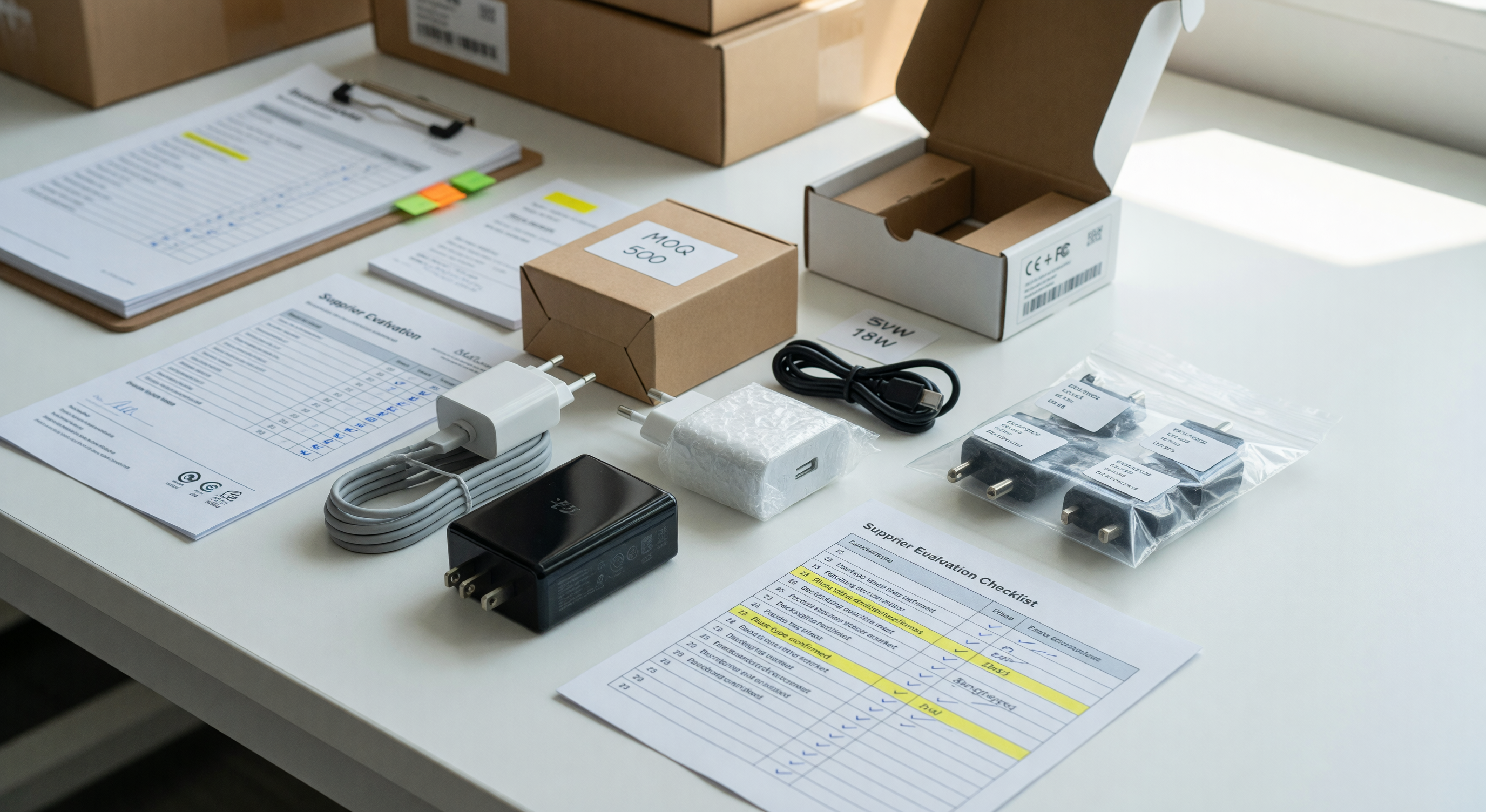
Use this checklist before approving a first order or asking for a revised quote.
| Checkpoint | What to confirm | Why it matters |
|---|---|---|
| Tool specification | Grade, finish, size range, handle material, tolerance, accessories | Prevents comparing unlike items across tiers |
| MOQ basis | Stock carton, production run, packaging, custom marking, or assortment | Shows where the minimum can be negotiated |
| Price breaks | Unit price at MOQ, first break, second break, and mixed-carton options | Reveals whether the discount is worth the volume |
| Packaging | Bulk pack, retail card, kit case, barcode label, language requirements | Packaging often changes both MOQ and lead time |
| Inspection | Sample, measurement report, hardness check, or functional test | Reduces risk before committing to a larger tier |
| Reorder plan | Expected monthly usage, resale velocity, or project drawdown | Keeps the buyer from overbuying slow variants |
The checklist is especially useful when the order includes kits. A socket set, screwdriver assortment, or mixed clamp pack can look efficient, but the MOQ may be tied to the slowest component in the set. If the seller allows split quantities by size, request that structure before moving up to the next price break.
Handle mixed orders across adjacent categories
Many hand tool purchases sit next to other procurement lines. A buyer sourcing drill bits, driver bits, anchors, screws, or replacement blades may need to coordinate across power tools and fasteners as well. The goal is not to force every item into one large order. The goal is to understand which products benefit from consolidation and which should stay separate.
Combine items when they share the same supplier, carton plan, inspection method, and delivery timing. Keep them separate when one product has a risky custom spec, uncertain demand, or a much longer lead time. For example, standard measuring tapes and levels may be safe to consolidate, while custom-branded insulated screwdrivers should be treated as a controlled first run. Mixed orders can improve freight efficiency, but they can also make approvals slower.
Negotiate without hiding real demand
Buyers often ask for a lower MOQ without explaining the order plan. A better approach is to show the supplier what you are testing. State the first order quantity, the expected reorder window, and the condition that would justify moving to the next tier. This makes the conversation concrete: 300 units for field testing, 800 units after inspection approval, then a 2,000-unit replenishment if usage is confirmed.
When asking for flexibility, trade on variables that matter. You might accept neutral packaging, fewer color variants, a standard finish, or a longer production window in exchange for a lower first MOQ. You might also ask whether the seller can hold the higher tier price for a reorder placed within a fixed period. That can protect the buyer from overcommitting while still giving the supplier a credible path to volume.
Turn the quote into a buying decision
A strong hand tools quote should answer five buyer questions: what exactly is included, why the MOQ exists, where the price breaks are, what proof supports quality, and what happens after the first order. If the quote leaves any of those points unclear, ask for a revised version before approving payment or routing the order internally.
Keep the decision connected to discovery. Browse more Cusket guides when building sourcing criteria, compare available tool listings, and use Cusket support if a marketplace workflow or order question needs clarification. For hand tools, the best first order is usually not the biggest tier. It is the tier that proves fit, keeps inventory usable, and leaves a clean path to the next purchase.