Buying Guide
Inspect fabric and materials quotes before ordering
By Cusket Editorial · Published · Updated
A buyer-focused checklist for reviewing fabric quotes before ordering, including fiber content, GSM, width, dye lot, shrinkage, handfeel, finishing, defects, swatches, and packaging.
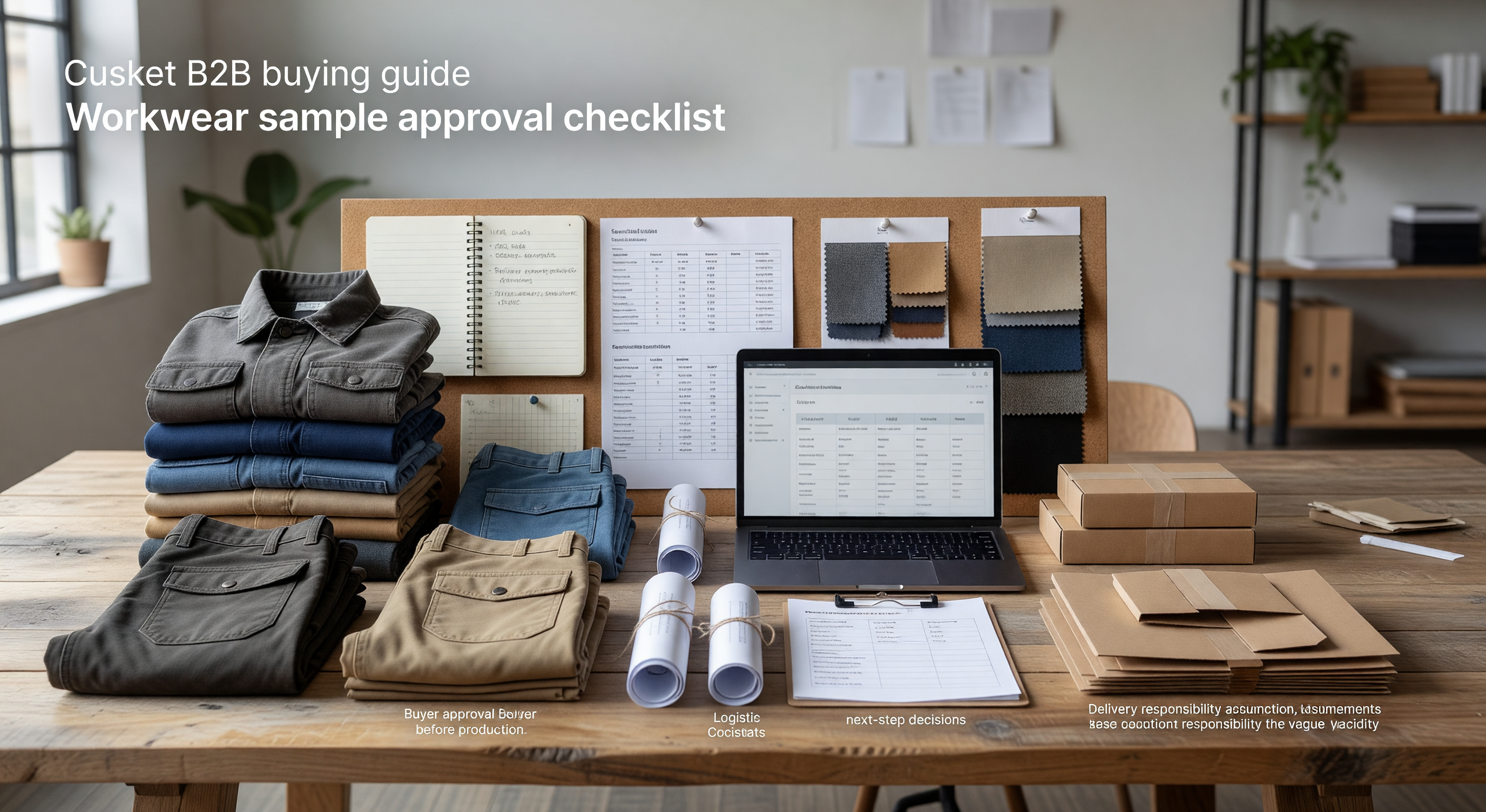
A fabric quote should be treated as a technical document, not just a price. Before ordering, confirm that the cloth offered matches the fabric you tested and the product you plan to make. Use Cusket products, compare similar listings through Cusket search, and focus on measurable details.
Start with the quote identity
A reliable quote should identify the material being priced. Ask for the fabric name, construction, item code, color references, and whether the quoted stock is ready goods, greige goods, or made-to-order production. If the quote only says "cotton fabric" or "polyester blend," it is not yet specific enough.
Confirm the pricing unit early. Fabric can be quoted per meter, yard, kilogram, roll, or piece, and those units do not convert cleanly without weight, width, and roll details. If you are browsing from Cusket categories, similar materials may appear close in price but differ sharply once usable width, finishing, or weight is included.
Verify fiber content, GSM, and usable width
Fiber content should be stated as a percentage, not a marketing phrase. "Linen touch" is not the same as linen. "Cotton feel" may be polyester, rayon, or a blend. For blended cloth, ask whether the percentages are supplier-declared, test-backed, or based on production records.
GSM or weight is equally important. A 180 GSM jersey and a 240 GSM jersey can behave like different products even when the fiber content is identical. For wovens, weight may be listed as GSM or ounces per square yard.
Width should be treated as usable width, not full width. Selvedge, coating edges, print borders, and inspection trimming can reduce the fabric you can cut. A low unit price is less useful if the usable width is narrow or inconsistent.
| Quote field | What to inspect | Buyer action before ordering |
|---|---|---|
| Fiber content | Exact percentage and blend order | Match it to the approved sample |
| GSM or weight | Unit, tolerance, and test basis | Compare against drape, opacity, and handfeel |
| Width | Full width versus usable width | Calculate consumption with usable width only |
| Color and dye lot | Pantone, lab dip, lot number, or stock shade | Approve a swatch under your own lighting |
| Shrinkage | Wash method, direction, and tolerance | Confirm it fits your production allowance |
| Defects | Inspection grade and allowance | Decide whether the allowance is workable |
| Packaging | Roll length, wrapping, labels, and moisture protection | Confirm it suits storage and receiving checks |
Check color, dye lot, and handfeel evidence
Color is one of the easiest places for a fabric order to drift. Ask whether the quote is for a specific dye lot, a future production shade, or a general stock color. If a listing includes photos, use them for orientation only. Screen color is not approval. Request a swatch, lab dip, or strike-off where color matching matters.
Dye lots matter because two acceptable shades can still look different side by side. For apparel, home textiles, accessories, or replacement production, ask whether the order will ship from one dye lot and whether extra rolls can be reserved from that lot.
Handfeel should be verified before ordering. Words like soft, crisp, brushed, dry, peach, silky, or structured are useful, but subjective. Ask what finish creates that feel and whether the sample you touched has the same finish as the quoted bulk fabric.
Read shrinkage, finishing, and colorfastness claims
Shrinkage should include direction and method. A quote that says "3 percent shrinkage" is incomplete unless it explains whether that is length, width, or both, and whether it was tested after washing, steaming, tumble drying, or another process. Treat supplier figures as inputs for your production decision.
Finishing can change performance as much as fiber does. Common finishes include enzyme wash, brushing, calendaring, coating, water repellent treatment, anti-pilling treatment, resin finishing, preshrinking, and softener. Ask whether the finish is standard, optional, or included in the quoted price.
Colorfastness claims should be checked as buyer verification, not accepted as a slogan. Ask which tests were used, such as washing, rubbing, perspiration, or light exposure, and request the grade if available. For sensitive uses, confirm whether your own quality or compliance process requires additional testing. Cusket can help you organize buying steps through Cusket buy, but final product requirements may depend on your use case and market.
Inspect roll length, defects, and packaging terms
Roll length affects receiving, cutting, and storage. A quote should state average roll length, allowed roll-length variation, and whether short rolls are included. If you are calculating consumption, ask how many rolls are expected and whether each roll will carry a label with item code, color, lot, length, and weight.
Defect allowance should be visible before payment. Fabric is often sold with an accepted defect rate or inspection grade, but the wording varies. Ask whether defects are measured by a recognized point system, internal inspection, or simple visual sorting. Also ask how holes, stains, shade bars, slubs, print misalignment, coating marks, and edge damage are handled.
Packaging matters more than it looks. For rolled fabric, confirm whether rolls are tube-packed, poly-wrapped, strapped, carton-packed, or protected against moisture. For delicate, coated, brushed, or light-colored materials, packaging can affect creasing, contamination, or surface damage.
Approve a sample swatch before the order
A sample swatch approval is the cleanest way to connect the quote to the material you expect. Keep the swatch, label it with supplier, item code, color, date, GSM, width, and quoted order reference, and photograph it in consistent lighting. If you later receive bulk fabric, compare the first roll against that approved swatch before cutting.
For higher-value orders, request a pre-shipment photo or inspection record showing roll labels, shade grouping, and packaging. This does not replace your receiving check, but it helps catch obvious mismatches early. If the quote changes after sampling, ask the supplier to restate the changed fields rather than assuming everything else stayed the same.
Keep your decision trail simple: quote, sample approval, final order confirmation, and receiving notes. You can return to Cusket guides for more buying workflows, and contact Cusket support if you need help navigating platform features. The safest fabric quote is the one where every important claim can be matched to a sample, a measurement, or a written confirmation before you order.