Buying Guide
How to inspect truck and bus parts quotes before ordering
By Cusket Editorial · Published · Updated
A buyer checklist for reviewing truck and bus parts quotes, including fitment, OEM references, material specs, safety-critical evidence, packaging, installation notes, warranty scope, and batch consistency.
Confirm the vehicle application before comparing price
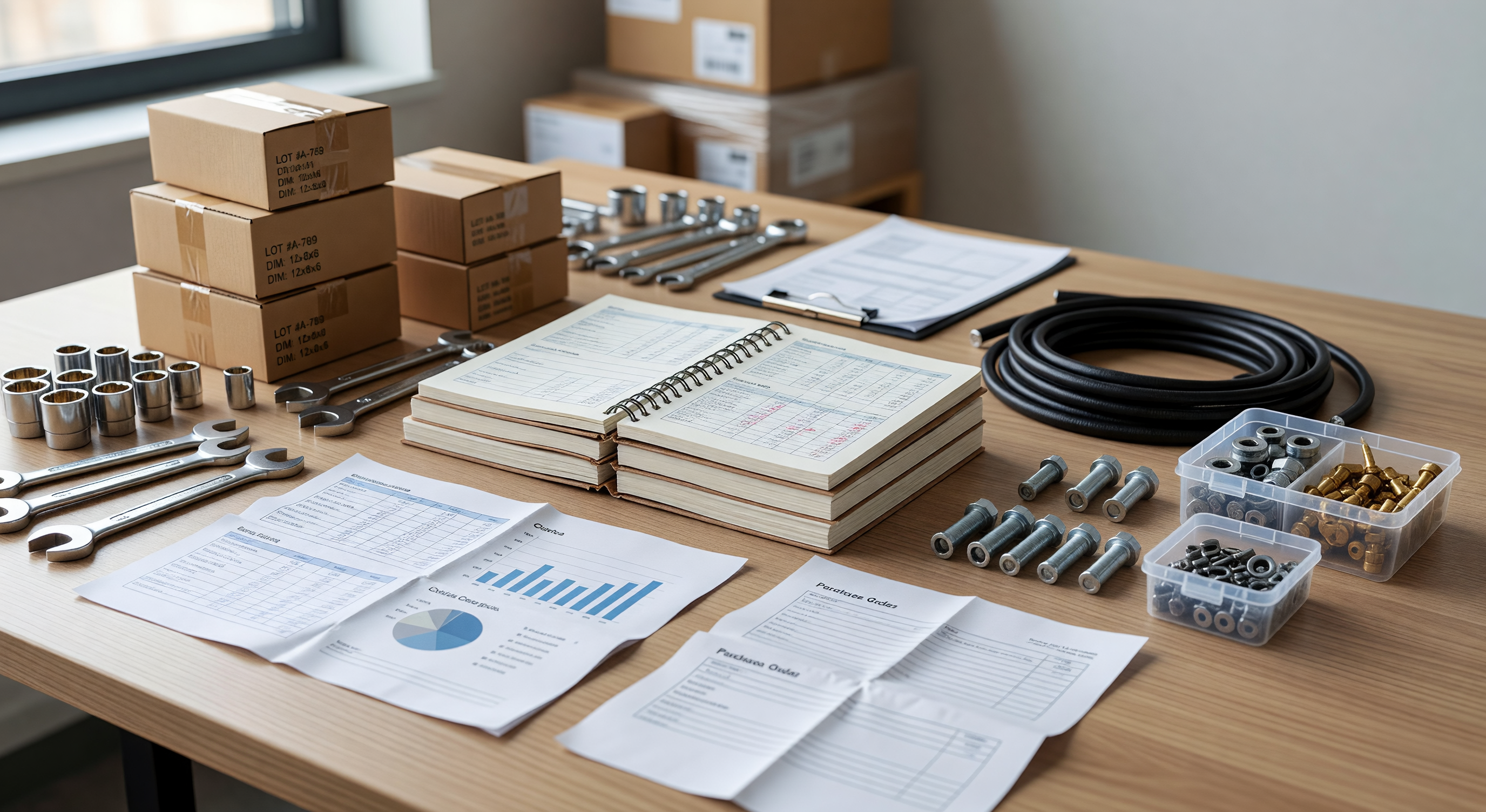
A truck or bus parts quote is useful when it matches the vehicle. Before you look at unit price, confirm the make, model year, engine family, axle rating, body style, and any fleet-specific configuration that changes fitment. Two vehicles with the same badge can use different brake assemblies, cooling parts, suspension hardware, lighting, mirrors, or electrical connectors.
Start by matching the seller's application notes against your own vehicle data. If you are sourcing across multiple vehicles, separate the quote by application instead of allowing one line item to cover the whole fleet. On Cusket, you can compare listings from truck and bus part sellers, then keep a separate note for each vehicle group.
Ask for the part's intended position and operating context. Front left, rear right, inner, outer, low-floor bus, city route, coach, heavy-haul, and off-road service can all change the correct specification.
Match OEM, reference, and supersession numbers
Heavy vehicle parts often move through several reference systems: OEM number, aftermarket number, casting number, stamping number, chassis catalog number, and seller stock code. A quote should state which number is being matched and whether any number is an exact replacement, an interchangeable reference, or a superseded version.
Do not accept a vague statement such as "fits most buses" for safety, drivetrain, steering, braking, or suspension parts. Ask the seller to mark the number on the quote and, where practical, provide a photo of the number on the item, label, box, or data plate. When using Cusket search, compare number formatting carefully: a missing suffix, region code, voltage mark, bore size, thread pitch, or handed variant can point to a different part.
If the seller proposes an alternative number, request the basis for interchange. Useful evidence may include a manufacturer interchange sheet, a catalog screenshot, a measurement drawing, or photos showing the same mounting pattern and connection points.
Inspect material, duty rating, and handed variants
Truck and bus parts are exposed to weight, heat, vibration, road spray, and repeated service cycles. Your quote should describe the material and duty rating, especially for brake hardware, suspension parts, cooling parts, body panels, mirrors, lamps, seats, ramps, steering components, and driveline items.
Look for details such as steel grade, rubber compound, bushing hardness, bearing type, voltage, amperage, pressure rating, coating, corrosion protection, wall thickness, lens marks, gasket material, hose reinforcement, and working temperature range. If the listing is shown under Cusket categories, still read the quote line itself; category placement is not a substitute for the part specification.
Also check left and right variants. Sellers may abbreviate these as LH/RH, driver/passenger side, near/off side, or by axle position. Because side terms vary by driving market, ask for photos from multiple angles and confirm the orientation from the vehicle's front or installed position.
| Quote item to inspect | What to ask before ordering | Why it matters |
|---|---|---|
| Vehicle application | VIN/chassis range, model year, engine, axle, body type | Prevents fitment errors across similar fleet vehicles |
| Reference number | OEM number, aftermarket number, supersession notes | Separates exact matches from possible substitutes |
| Material and rating | Grade, coating, pressure, voltage, load, temperature | Confirms the part can handle heavy-duty service |
| Handed or positional variant | LH/RH, front/rear, inner/outer, axle position | Avoids receiving the mirror-image or wrong axle part |
| Photos and measurements | Label, mounting holes, connector, dimensions, packaging | Gives your installer evidence before the order is placed |
| Batch details | Production date, lot, brand consistency, quantity match | Reduces mixed batches on fleet maintenance orders |
Verify safety-critical parts with extra evidence
For braking, steering, suspension, driveline, lighting visibility, fuel, emergency exit, door, ramp, restraint, and structural mounting parts, quote review should be stricter. Cusket can help buyers discover sellers and organize purchase conversations, but the final technical decision should come from the buyer's qualified mechanic, fleet engineer, or parts specialist.
Ask for sample photos of the actual stock, not only catalog images. The photos should show labels, stampings, casting marks, mounting surfaces, connector pins, hose ends, thread details, and any included accessories. If the item is refurbished, remanufactured, or compatible aftermarket, the quote should say so clearly.
Avoid treating any marketplace quote as legal, regulatory, or roadworthiness approval. Requirements can vary by country, vehicle use, passenger service type, and inspection authority. Use the quote to collect evidence, then confirm whether the part is acceptable for your vehicle and operating environment.
Check packaging, freight, and heavy-part handling
Large truck and bus parts can be damaged by poor packing even when the part itself is correct. A quote for heavy, long, fragile, painted, glass, body, cooling, axle, or driveline parts should describe packaging before you use Cusket Buy or complete the order flow.
Ask whether the part will ship in a crate, pallet, reinforced carton, protective sleeve, moisture barrier, or manufacturer box. For radiators, windshields, panels, doors, shafts, tanks, compressors, and assemblies with sensors, ask how movement is prevented inside the package. If the part is heavy, confirm lifting points, packed weight, dimensions, and whether unloading equipment is needed.
For multi-piece orders, ask the seller to label each package by vehicle application or line item. Keep the quote, packing photos, and shipment label together so your team can check the delivery against the agreed specification.
Review installation notes, warranty boundaries, and batch consistency
A strong quote does not stop at price and quantity. It explains what is included, what is excluded, and what conditions affect warranty. Ask whether bolts, seals, clips, brackets, gaskets, sensors, adapters, bushings, grease, instructions, or programming files are included. If special tools, torque sequences, bleeding, alignment, calibration, or software pairing are needed, capture that before ordering.
Read warranty boundaries carefully. Some sellers cover manufacturing defects only, while others exclude installation damage, electrical shorting, overheating, modified vehicles, incorrect fluids, or parts installed without professional documentation.
For fleet orders, batch consistency matters. Request the same brand, revision, production lot, color, finish, and accessory set across vehicles. Mixed batches can create uneven wear, different appearance, or extra workshop time. If you need help preserving quote evidence, start from Cusket guides or contact Cusket support.