Buying Guide
Labels and stickers seller artwork approval guide
By Cusket Editorial · Published · Updated
A seller guide for managing label and sticker artwork approval, material choices, proofing, and quote readiness on Cusket.
Define the label job before the artwork
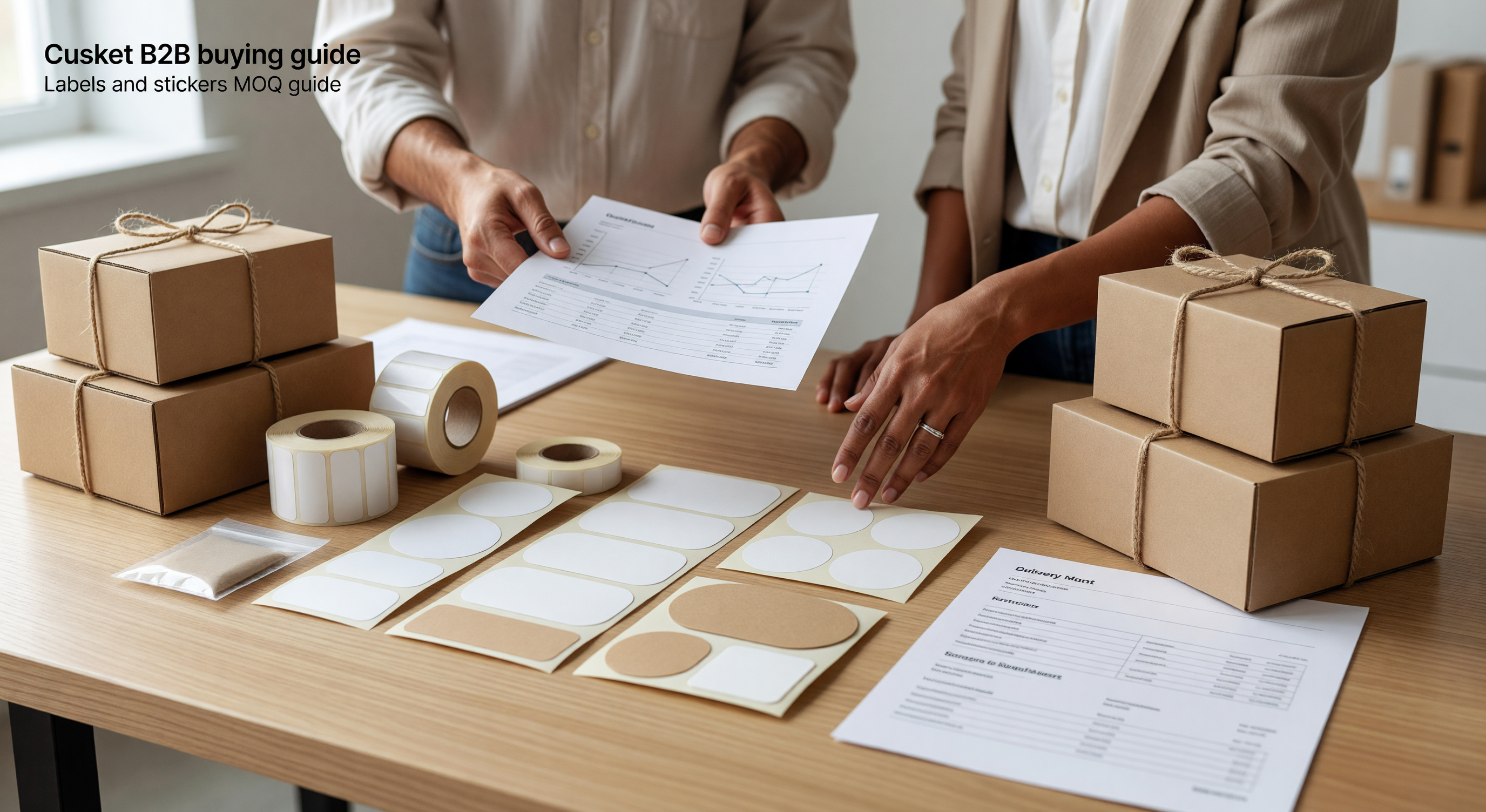
Labels and stickers are sold through details: size, shape, material, adhesive, finish, print method, roll format, and application surface. Your listing on Cusket seller products should make those details visible before a buyer sends artwork. A buyer coming from Cusket search may know they need cosmetic labels, shipping labels, food stickers, equipment labels, barcode labels, or promotional decals, but they may not know the exact production terms.
Start by explaining the intended label job. Is the label for retail packaging, logistics, outdoor use, freezer storage, bottles, jars, boxes, machinery, or temporary promotion? The answer changes material and adhesive choices. If your listing supports multiple label types, organize them rather than presenting one vague custom label offer.
Explain file requirements plainly
Artwork approval is faster when the buyer understands what you need. State preferred file formats, color mode, bleed, safe area, cut line, barcode resolution, font handling, and whether white ink or spot color needs a separate layer. If you can quote from a rough preview, say that final production still needs production-ready artwork.
| Artwork item | Seller instruction | Approval risk reduced |
|---|---|---|
| Finished size | Confirm width, height, and shape | Prevents wrong dieline |
| Bleed and safe area | Provide minimum values | Avoids cut-off text or logos |
| Cut line | Mark kiss-cut, die-cut, or sheet cut | Clarifies finishing |
| Color reference | Provide Pantone or sample if important | Reduces color expectation gaps |
| Barcode | Submit usable vector or high-resolution file | Prevents unreadable print |
Connect material to application
A label material that works on a carton may fail on a curved bottle, freezer pack, oily surface, or outdoor tool. Your listing should explain available materials and the applications they suit. Name paper, PET, PP, vinyl, thermal, removable adhesive, permanent adhesive, waterproof options, matte finish, gloss finish, lamination, and special effects only when you actually offer them.
Buyers browsing Cusket products need help selecting the right base before quote discussion. Ask for application surface, expected temperature, exposure to moisture or abrasion, container shape, and whether the label is hand-applied or machine-applied. This is practical guidance, not a guarantee of performance in every environment.
Set a proof and approval sequence
Label orders should not move directly from file upload to production without approval. Describe your sequence: file check, digital proof, buyer approval, optional printed sample or production proof, then production. If an artwork file has issues, state that timing starts after corrected files are received. This protects your schedule and helps buyers plan launches.
If you promote labels through Cusket seller ads, make sure the landing listing includes proof rules. Ad visitors often want quick quotes, but a fast quote still needs controlled approval before printing.
Use an artwork approval checklist
Add this checklist to the listing or response template:
- Finished size, shape, and corner style are confirmed.
- Material, adhesive, and finish match the application surface.
- Artwork file includes bleed, safe area, and cut line.
- Barcode, QR code, or small text is large enough for print review.
- Quantity, roll direction, core size, sheet format, or individual cut format is confirmed.
- Digital proof is approved before production.
- Any printed proof requirement is agreed before bulk printing.
This checklist helps buyers organize their files and helps your team catch avoidable errors.
Keep platform links secondary to production detail
Use Cusket categories and Cusket guides as discovery paths, and point buyers to Cusket support for platform questions. The label production decision, however, belongs on your listing. Keep the artwork instructions current, especially when you add a new material, finish, roll direction, or proofing option.
A clear artwork approval guide saves time because it turns incomplete creative files into a structured production conversation. Buyers appreciate knowing what will be checked before the order becomes final.
Document approval decisions for reorders
Label and sticker buyers often reorder with small changes: a new barcode, a revised warning line, a different roll direction, a seasonal color, or a new container size. Keep an approval record that names the artwork version, material, adhesive, finish, quantity, roll format, and proof date. This record lets your team quote reorders quickly without treating every job as new.
If a buyer changes the application surface or storage environment, do not assume the old material still fits. A label approved for a dry carton may not behave the same on a chilled bottle or curved plastic jar. Add this reminder to your listing so buyers understand why you ask application questions again. Repeat orders should be efficient, but they still need a current production check when the use case changes.
Before accepting final artwork, ask who on the buyer side is approving it. A procurement contact may approve price, while a brand, operations, or quality contact may approve color, barcode, or application details. Your listing can invite buyers to align those reviewers before production. This avoids late changes after proof approval and makes your approval process feel controlled. When the buyer has multiple stakeholders, record the final approved file name and approval date in the quote notes so reorders begin from the correct version.