Buying Guide
Motorcycle and Scooter Parts MOQ and Price Tier Guide
By Cusket Editorial · Published · Updated
A buyer-focused guide to reading MOQ breaks, landed unit cost, and supplier price tiers when sourcing motorcycle and scooter parts.
Start with the part family and replacement risk
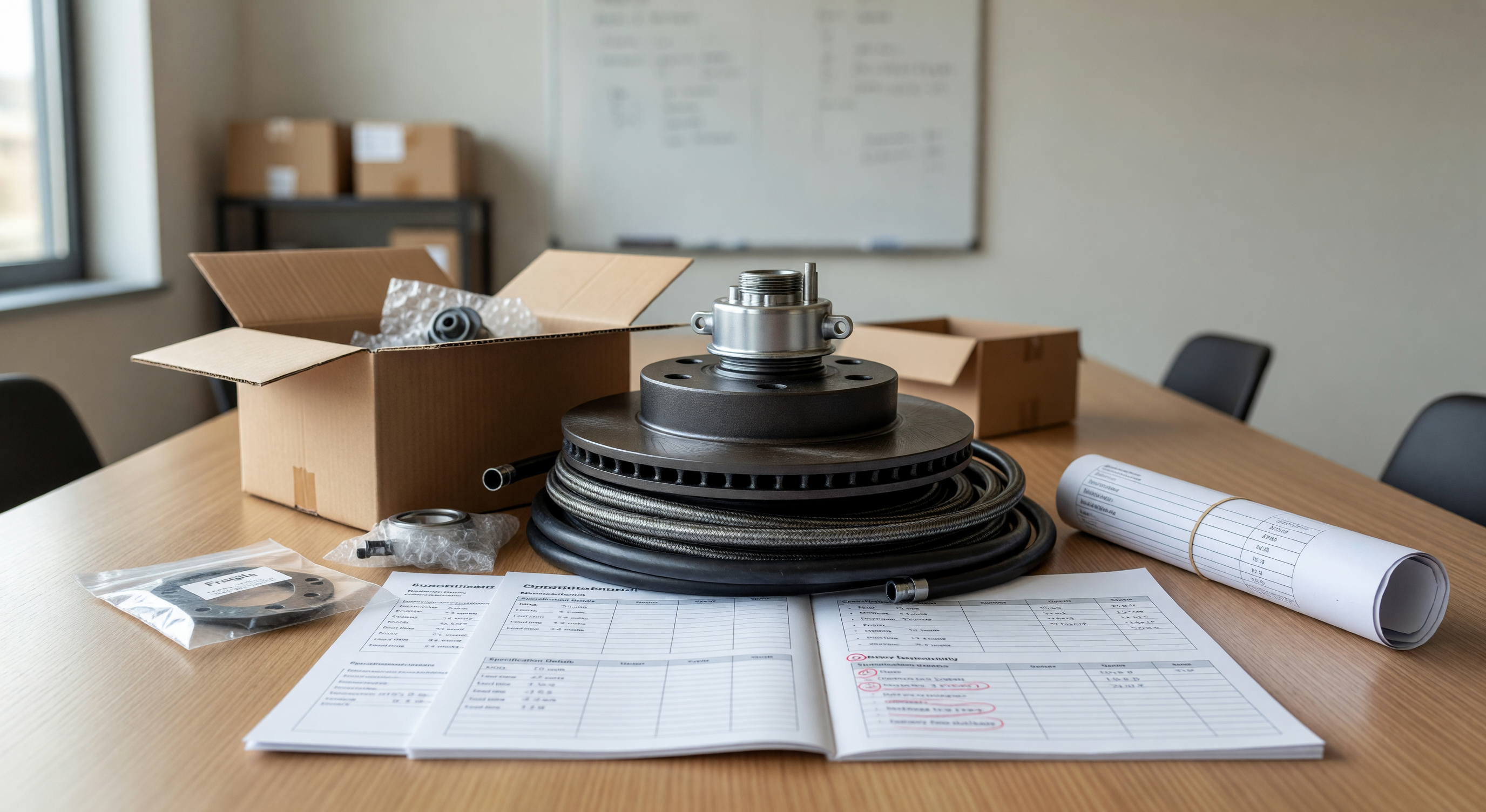
Motorcycle and scooter parts look simple when a listing shows a familiar item name, but MOQ and price tiers only make sense after the buyer separates the part family. A spark plug, brake pad set, clutch cable, mirror, fairing panel, and controller module do not carry the same inventory risk. Fast-moving consumables can justify larger cartons because they turn over across many models. Fitment-sensitive parts need tighter testing because one wrong model year can create returns, warranty disputes, or dead stock.
Before comparing suppliers, map each item to its use case: routine maintenance, crash repair, accessory upgrade, or electronic replacement. Then check whether the part is universal, semi-universal, or model-specific. A universal grip may support a larger first order. A scooter CDI unit or ABS sensor should be validated against exact model, year, connector, and voltage details first. Buyers browsing the motorcycle parts category should treat MOQ as a sourcing variable, not just a number to negotiate down.
Read MOQ as packaging, tooling, and quality-control logic
MOQ is often tied to how the supplier packs, inspects, and ships the part. Small hardware may be counted by bag, box, or master carton. Painted body panels may have a higher MOQ because color matching, surface protection, and rejection handling create setup work. Electrical assemblies may need batch testing, labeling, and anti-static packaging. If a supplier cannot explain the MOQ logic, the price tier may not be reliable.
Ask what the MOQ represents: one carton, one production batch, one color, one model fitment, or one mixed assortment. A 300-piece MOQ can be reasonable for brake pads if it covers multiple popular applications, but risky if it is one slow-moving SKU. This is especially important when your purchase combines motorcycle repair parts with adjacent auto parts and accessories, because carton economics and inspection routines may differ.
Compare price tiers by landed unit cost
A lower ex-works unit price does not always mean a better buy. Motorcycle parts can be dense, fragile, regulated, oversized, or easy to misclassify. Mirrors and fairings need protective packing. Tires and wheels occupy volume quickly. Batteries, lubricants, and certain electronics may trigger shipping restrictions or documentation checks. The useful comparison is landed unit cost at the quantity you can actually sell or consume.
Use this checklist when a supplier offers tiered pricing:
| Price-tier item | What to verify before choosing the tier |
|---|---|
| MOQ basis | Is the tier per SKU, per model, per color, or per mixed order? |
| Packaging unit | Does the tier match inner boxes, master cartons, pallets, or loose pieces? |
| Fitment coverage | Can one tier cover multiple models, years, or engine sizes? |
| Defect allowance | What happens if painted, molded, or electrical parts fail inspection? |
| Freight impact | Does the higher tier reduce unit freight, or does volume jump sharply? |
| Cash exposure | How long will this tier take to sell through at realistic demand? |
For bulky categories such as tires and wheels, the second or third tier may look attractive until freight and storage are included. For compact consumables, a higher tier may be sensible if fitment demand is broad and reorder lead time is long.
Use test orders for fitment-sensitive parts
A test order should prove fitment, labeling, packaging strength, and supplier responsiveness. It does not need to be the lowest possible quantity, but it should be small enough that a mistake does not lock up working capital. For a new supplier, ask whether the first order can use a paid sample, carton-level trial, or mixed-SKU starter set before moving into a full price tier.
Fitment-sensitive parts deserve extra proof. Request photos of markings, connector shape, mounting points, measurements, and packaging labels. For replacement panels, ask how color names are controlled and whether paint batches can vary. For brake, suspension, and steering parts, confirm standards, certificates, and inspection records where relevant. Buyers using Cusket product discovery should shortlist listings that expose enough detail to support these checks.
Build a tier plan before negotiating
Negotiation works better when the buyer knows the target tier, fallback tier, and reorder trigger. Instead of asking only for a lower MOQ, explain the business reason: initial market test, model coverage, warehouse limit, seasonal demand, or need to verify compatibility. A supplier may be more flexible if the buyer can show a path from trial order to repeat orders.
Create a simple tier plan for each part family. A buyer may start with one carton of mixed scooter mirrors, reorder at two cartons after sell-through, and move to a larger tier only after return rates stay low. For brake pads, the buyer may accept a higher MOQ if the supplier can mix fast-moving fitments in one shipment. Use Cusket search to compare how similar products present quantities, part numbers, and specifications, then ask sharper questions.
Protect margin after the order arrives
The landed cost is not final until the parts arrive, pass receiving checks, and are ready to sell or install. Build a receiving checklist for count, visible damage, model labels, SKU mapping, and random fitment checks. Keep photos of cartons and defects, especially for painted panels, lenses, cables, and electronic modules. If the supplier promises replacement parts or credits, document the process before the next order.
Margin can disappear through slow-moving variants, mislabeled fitments, warranty claims, and storage costs. Keep reorder decisions tied to actual demand rather than the next price break alone. If a supplier offers a deep discount for a much larger tier, compare that discount with the cost of holding stock for months. When the order contains safety-related parts, include more conservative inspection and documentation standards before expanding quantity.
Continue sourcing with a buyer checklist
A practical motorcycle-parts order should connect MOQ, price tier, fitment evidence, landed cost, and after-arrival controls. The best tier is not always the largest or cheapest. It is the quantity that gives enough price improvement without creating avoidable compatibility, freight, or inventory risk.
Before committing, confirm the part family, MOQ basis, packaging unit, fitment proof, freight effect, defect process, and reorder plan. Keep the first order narrow when compatibility is uncertain, and expand only after the supplier proves consistency. Buyers can continue comparing categories through Cusket guides, and can contact Cusket support when they need help with product discovery or account workflow questions.