Buying Guide
How to compare packaging, labeling, and documentation in one quote: questions to ask
By Cusket Editorial · Published · Updated
A buyer-focused guide to comparing supplier quotes by asking concrete questions about packaging, labels, documents, sample approval, carton photos, and revision responsibility.
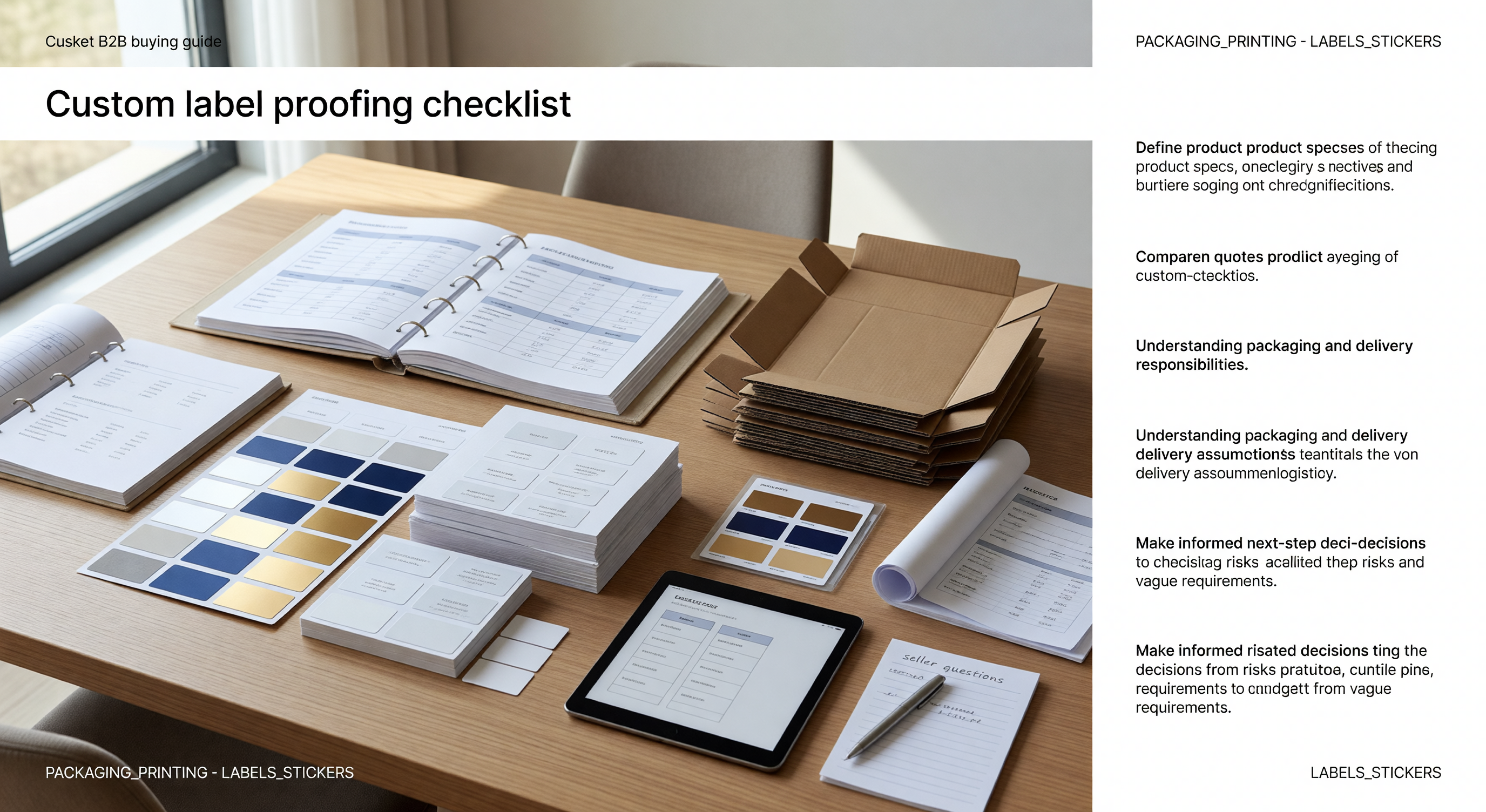
Start with the pack hierarchy, not the unit price
A packaging, labeling, and documentation quote can look cheaper because it leaves work undefined. Before comparing prices, ask each supplier to describe the full pack hierarchy: product unit, inner packaging, retail pack if any, master carton, pallet or export carton, and protective material between layers. The goal is to make sure each quote covers the same physical result.
For small items, inner packaging may matter more than the outer carton. Ask whether each unit is bagged, wrapped, boxed, sleeved, divided, or packed loose. If a product can scratch, leak, deform, absorb odor, or collect dust, ask what prevents that during storage and transit. If you are sourcing multiple items from https://cusket.com/products, ask whether mixed cartons are allowed and how each SKU is identified inside the carton.
Ask carton-strength questions that match real handling
Carton strength affects damage rates, warehouse handling, claims discussions, and customer experience after delivery. Ask for carton dimensions, gross weight, net weight, expected units per carton, board grade or carton type, and recommended stacking limit. If the supplier cannot provide a formal specification, ask for prior carton photos, packed-carton weight records, or a sample carton test.
For heavier goods, ask whether the carton is double-wall, reinforced, strapped, edge-protected, or internally braced. For fragile goods, ask how empty space is controlled. For humid routes or long storage cycles, ask whether moisture protection is included and whether carton marks should remain readable after handling.
If you compare candidates from https://cusket.com/search, keep the carton questions identical. A stronger carton may look more expensive at first but cheaper after breakage, repacking, or manual relabeling.
Make barcode and label rules explicit
Labels fail when the buyer and supplier assume different rules. Ask which labels are included: product label, retail label, carton label, warning label, country or language label, barcode label, batch label, and platform or warehouse label. For each label, ask who provides content, who checks layout, who prints it, and when the proof must be approved.
Barcode questions should be specific. Ask what barcode type will be printed, where it will be placed, the minimum size, whether it must scan through clear packaging, and whether the supplier can send a scan-test photo or short video before mass packing. If you use internal SKU labels, ask whether both the supplier code and your SKU can appear without confusion.
Language is another common source of rework. Ask which languages appear on the unit, carton, user document, and warning text. If a market, retailer, or logistics partner has specific requirements, confirm them with qualified advisers or the receiving party rather than treating supplier comments as legal certainty.
Confirm every document before production starts
Documentation should be part of the quote, not a surprise after payment. Ask which documents the supplier provides by default and which cost extra. Buyer-side needs can include commercial invoice, packing list, product specification sheet, material declaration, test report, certificate copy, user manual, warranty card, installation guide, ingredient statement, and carton packing photos.
The packing list deserves its own questions. Ask whether it includes buyer SKU, supplier SKU, product name, variant, units per carton, carton count, net weight, gross weight, carton dimensions, total volume, batch or lot number if applicable, and label references. If you plan to purchase through https://cusket.com/buy, align these fields with what your receiving, finance, and freight partners expect.
Be careful with regulated claims. A supplier may say a product is compliant, certified, food safe, child safe, recyclable, or suitable for a destination market. Ask for the document name, issuing party, date, scope, and whether it matches the exact product and material quoted. Use documents as evidence to review, not final tax, import, safety, or compliance advice.
Use a quote checklist suppliers can answer line by line
Send the same list to each supplier and ask them to answer in writing, with photos or files where possible.
| Area | Questions to ask before comparing quotes | Evidence to request |
|---|---|---|
| Inner packaging | Is each unit bagged, wrapped, boxed, divided, sealed, or packed loose? What prevents scratches, leaks, dust, odor transfer, or deformation? | Inner-pack photo, material description, sample pack |
| Master carton | What are carton dimensions, units per carton, gross weight, board type, stacking limit, and reinforcement method? | Carton spec, packed-carton photo, weight record |
| Barcode and labels | Which labels are included, who supplies artwork, where are labels placed, and how is barcode scanning checked? | Label proof, scan-test photo or video |
| Language | Which languages appear on product, carton, inserts, warnings, and manuals? Who approves translations or market wording? | Artwork file, manual draft, revision history |
| Documents | Which invoice, packing list, certificate, test report, specification, or manual files are included in the quote? | Sample document set, document scope notes |
| Revisions | Who pays for changes caused by buyer edits, supplier errors, packaging failure, or document mismatch? | Written revision responsibility |
You can keep this checklist with supplier notes while browsing related categories on https://cusket.com/categories or comparing product options in https://cusket.com/guides.
Lock the sample pack and revision process
A sample that arrives loose in a courier envelope does not prove the mass-production packing method. Ask for a sample pack that reflects the intended unit packaging, label placement, insert documents, and carton marking. If a full master carton sample is too costly, ask for photos of a comparable packed carton and a written description of what will change.
Before production, define the approval sequence: sample pack, artwork proof, document draft, carton mark, pre-packing photo, and final packed-carton photo. Ask what happens if you request a change after each step. Some revisions are buyer changes, some are supplier corrections, and some are shared decisions after a test reveals a weakness. The quote should say who carries cost, time impact, and responsibility for each type.
If the answers remain unclear, pause before placing the order and ask for help through https://cusket.com/support. The best quote is the one where the supplier can show what will be packed, labeled, documented, photographed, approved, and corrected before goods leave their control.