Buying Guide
How to compare packaging, labeling, and documentation in one quote: scorecard
By Cusket Editorial · Published · Updated
A buyer-facing scorecard for comparing packaging, labeling, documentation, sample proof, revision risk, receiving risk, and payment readiness before choosing a supplier.
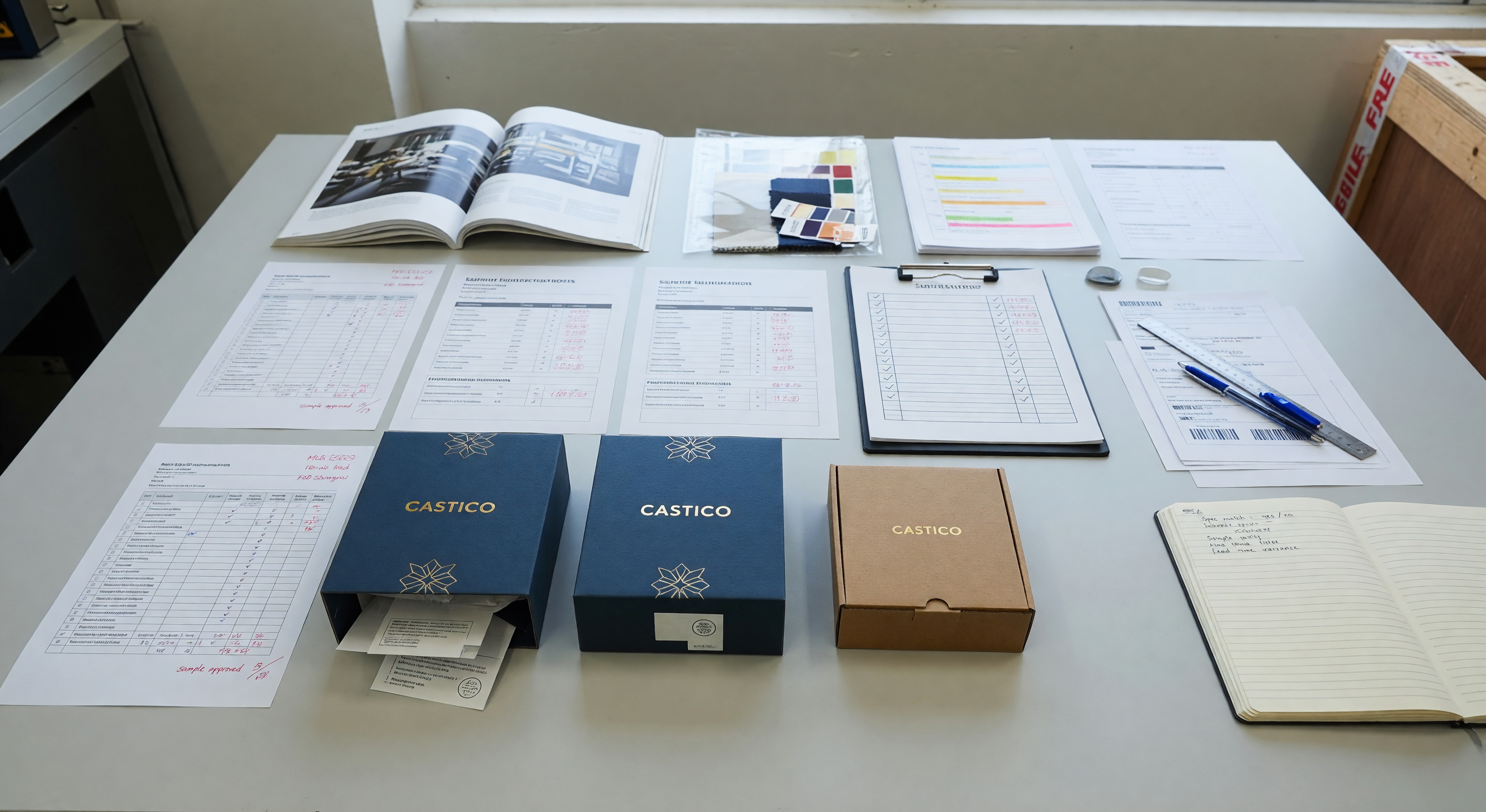
A supplier quote can look complete because it has price, lead time, and minimum order quantity. For physical goods, packaging, labeling, and documentation decide whether an order arrives ready to receive, store, scan, resell, or hand to a customer without rework.
Use this scorecard when reviewing suppliers found through Cusket search, comparing listings on Cusket products, or building a shortlist from Cusket categories. It is not legal, tax, customs, or regulated product advice. Use it to find assumptions before they become order problems.
Start With the Full Quote Package
Ask every supplier to quote the same pack configuration: inner pack, master carton, label format, document set, sample proof, revision allowance, receiving instructions, and payment. If one quote includes retail-ready packaging and another assumes bulk cartons, prices are not comparable.
Collect the same evidence from each supplier: carton photos, dielines, barcode placement examples, sample label files, invoice templates, packing list examples, sample pack photos, and a note saying what is included. If something is “standard,” ask for dimensions, material, print colors, quantity per carton, and file format.
Three suppliers are usually enough if each answers the same questions. Keep Cusket guides nearby so the comparison stays tied to the order.
Score the Quote Before You Negotiate
Score each supplier from 0 to 5 in every row. A 5 means specific evidence and cost impact are included. A 3 means confirmation is still needed. A 0 means the detail is missing. Multiply by the weight and compare totals out of 100.
| Area | Weight | What a 5 looks like | What to check |
|---|---|---|---|
| Inner pack clarity | 12 | Unit, bundle, sleeve, bag, insert, and retail pack quantities are written clearly. | Confirm what the buyer receives when one unit is ordered or scanned. |
| Carton protection | 12 | Carton size, board strength, dividers, void fill, and handling limits are described. | Ask whether protection changes for courier, air, sea, or mixed cartons. |
| Label and barcode readiness | 14 | Label size, barcode type, placement, readable text, and proof process are included. | Test whether receiving, retail, or marketplace teams can scan it. |
| Document completeness | 12 | Invoice, packing list, product specs, and shipment references are listed. | Verify customs, tax, and regulated claims with qualified advisers when needed. |
| Sample pack proof | 12 | Supplier will show the real packed sample before mass production. | Require photos or video of the packing sequence, not only artwork. |
| Revision risk | 10 | Quote states included label, carton, and document revisions. | Identify charges and delays if artwork or destination data changes. |
| Receiving risk | 14 | Carton marks, SKU mapping, quantities, and case logic are clear. | Check whether cartons can match purchase order lines quickly. |
| Payment readiness | 14 | Payment milestones depend on accepted proof or agreed production evidence. | Avoid paying as if details are final while pack questions remain open. |
A supplier with an 82 and one unresolved label question may be safer than a cheaper supplier at 55. The table shows where price depends on decisions.
Check Packs, Cartons, and Labels Together
Inner pack clarity answers what is inside one saleable unit. Carton protection answers what happens during handling. Label readiness answers whether the unit and carton can be identified after they leave the supplier. Score these together because a strong carton cannot fix confusing inner packs, and good retail packaging still fails if the barcode is unreadable.
For inner packs, ask for quantity per bag, box, sleeve, or bundle; whether inserts are included; whether packaging is neutral or branded; and whether variants are packed separately. For cartons, ask for dimensions, gross weight, units per carton, divider use, moisture protection if relevant, and the intended freight method.
If you plan to buy through Cusket, capture these answers before purchase approval. A receiving problem found after payment is usually costlier than a packing clarification before ordering.
Confirm Documents Without Assuming Compliance
Documentation often arrives late because buyers ask about it after production starts. Ask which documents are included, when drafts will be shared, and what information the supplier needs from you. Commercial invoices, packing lists, specification sheets, and shipment references should match the actual packed goods.
Do not treat supplier statements about origin, tax, customs, safety, or regulated product status as final certainty. Use the scorecard to flag those items as “needs verification” and get appropriate advice for the destination and product type.
Require Sample Pack Proof
A product sample is not the same as a sample pack. The sample pack should show the real unit inside the proposed inner packaging, with the label attached or mocked at actual size, placed into the master carton with intended protection. Ask for photos from multiple angles and a short packing video when the sequence matters.
Score sample proof higher when production waits for buyer acceptance of the packed sample or equivalent. A loose product sample may prove the item exists, but it does not prove receiving readiness, barcode placement, carton strength, or document alignment.
Tie Revisions, Receiving, and Payment Together
Revision risk appears when artwork, barcode data, product names, carton marks, destination details, or document fields change after the quote. A good quote states how many revisions are included, what counts as a revision, and how changes affect lead time. If the quote does not say this, assume revision handling is unresolved.
Receiving risk is the buyer-side version of the same problem. Your warehouse or receiving partner needs to identify cartons quickly, match quantities to purchase order lines, and separate variants without opening every case. Ask for carton marks, SKU mapping, carton count logic, and packing list structure before final approval.
Payment readiness should follow evidence. A deposit may be reasonable after the pack plan is confirmed. A production payment should connect to accepted sample pack proof, approved labels, or other agreed evidence. A balance payment should not rely on vague phrases like “all documents ready.”
For unresolved questions, use Cusket support to keep the issue tied to the transaction context. The goal is a quote that describes the order you need to receive.