Buying Guide
How to compare packaging, labeling, and documentation in one quote: workflow
By Cusket Editorial · Published · Updated
A buyer workflow for comparing packaging specs, label and barcode details, export documents, sample packs, quote revisions, checkout decisions, and arrival checks in one supplier quote.
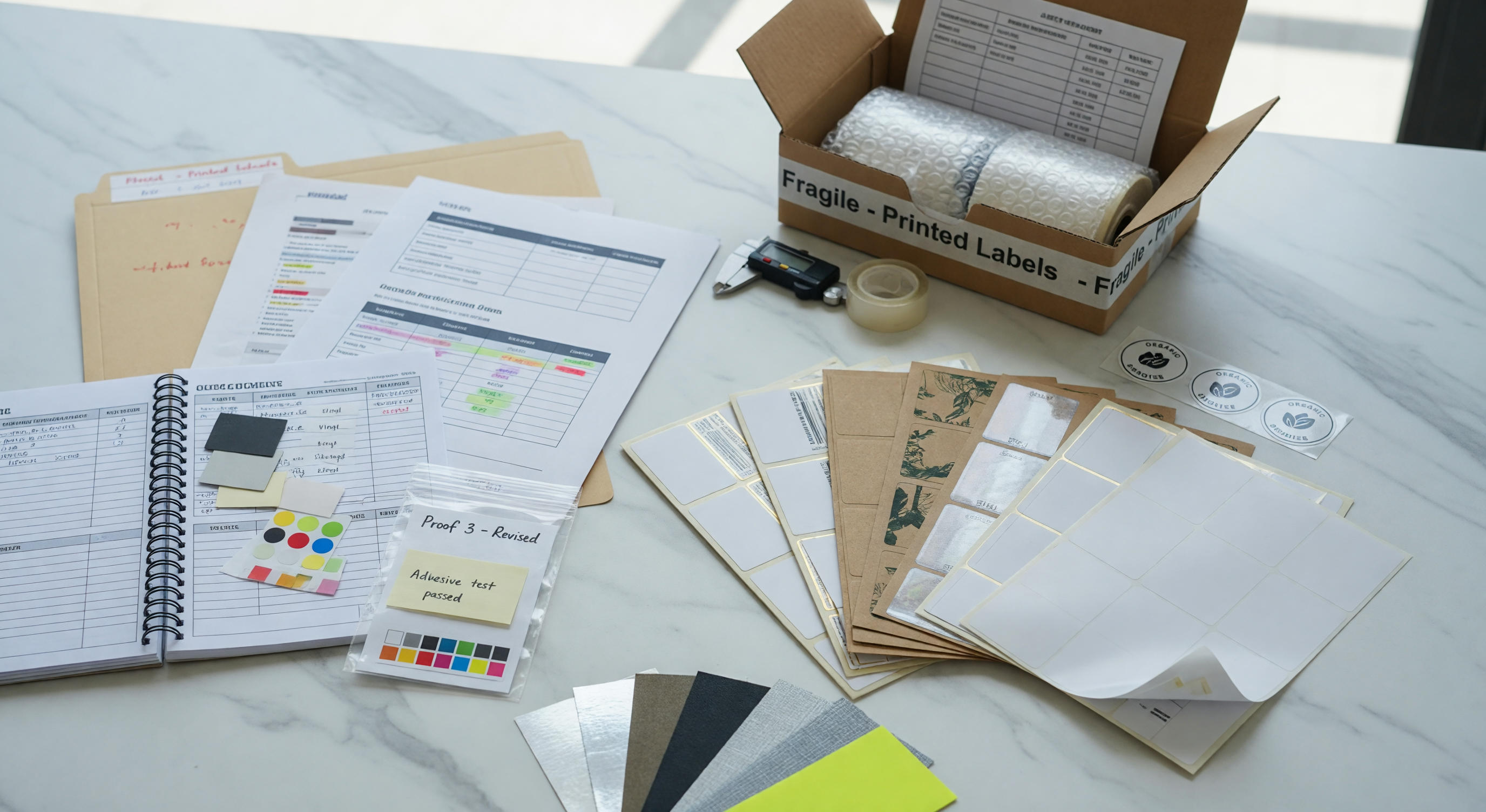
Start with a shortlist that uses the same buying assumptions
Packaging, labeling, and documentation are easiest to compare when every supplier answers the same buying question. Before asking for a quote, build a short list from Cusket products, search, or relevant categories. Normalize the product variant, target quantity, destination country, delivery window, and whether the item will be resold, bundled, gifted, or used internally.
Avoid a vague request like "Can you package this well?" Give each seller the same pack definition and ask what is included, what costs extra, and what changes lead time. ## Define the pack before discussing price
A useful quote separates product price from packing work. Define the unit pack, inner pack, master carton, and outer handling expectation where relevant. For consumer goods, this may mean retail boxes, inserts, protective wrap, and carton marks. For components, it may mean separators, moisture protection, batch labels, or plain export cartons.
Ask for packed-unit and carton dimensions and weights. These details affect freight estimates, storage planning, and arrival inspection. If a seller gives only product dimensions, do not treat the quote as comparable yet.
| Step | Buyer action | Seller confirmation to request | Quote impact to check |
|---|---|---|---|
| Product shortlist | Pick comparable variants | SKU, material, color, quantity break | Base unit price and MOQ |
| Pack definition | Describe unit, inner, and master carton needs | Materials, dimensions, carton count | Packing fee and lead time |
| Label and barcode review | Share label fields and barcode format | Placement, print method, scan check | Setup and per-unit label cost |
| Document request | List documents for receiving | Available document types and timing | Document fee and release timing |
| Sample pack approval | Request photos or a physical sample | Final pack, label, carton mark, inserts | Sample and revision cost |
| Quote revision | Ask for one consolidated version | Product, packaging, labels, documents separated | Total decision input |
| Checkout decision | Compare risk, timing, and cost | Validity date and production start condition | Whether to proceed |
| Arrival inspection | Check goods against approved evidence | Pack condition, labels, counts, documents | Claim evidence or reorder notes |
Review labels and barcodes as operational details
Labels are not only branding. They can also be receiving instructions, warehouse identifiers, consumer-facing claims, and retailer requirements. Treat each field as a decision: product name, model, quantity, country wording, batch or lot number, production date, expiration date if applicable, care text, warning text, and barcode.
Ask where each label will be placed and whether it is printed directly, applied as a sticker, or included as an insert. A label that looks fine on a PDF may fail if it covers a seal, wrinkles on curved packaging, or is too small for warehouse scanning.
For barcodes, provide the barcode type, number, required size, and placement preference. Ask for a scan check before production if the seller is printing the code. Cusket can help compare supplier answers, but barcode ownership, retailer rules, and regulated label language should be verified with the parties responsible for those requirements.
Ask for documents without assuming compliance certainty
Documentation needs vary by product, route, buyer policy, and destination. Your quote request should name the documents you want, but it should not assume that a document alone proves import, tax, safety, or regulatory compliance. If a document has legal, tax, or regulated-use consequences, confirm the requirement with your broker, receiving team, marketplace, or qualified adviser.
For a practical buyer quote, ask whether the seller can provide a commercial invoice, packing list, product specification sheet, material or test report where available, certificate documents where relevant, and photos of carton marks before dispatch. Also ask when each document becomes available: before payment, before shipment, after production, or only after dispatch. Timing matters because a late document may be useless for warehouse approval or broker review.
Approve a sample pack before accepting the final quote
A sample pack is valuable when packaging affects resale, customer experience, breakage risk, or retailer acceptance. If the order is small or urgent, ask for detailed photos instead: front, back, sides, open pack, inner protection, label close-up, barcode close-up, master carton, and carton marks.
When a physical sample is worth the time, ask whether it uses final materials or only a mockup. A mockup can confirm layout, but it may not confirm durability, print color, adhesive strength, carton thickness, or handling performance. If the sample is approved with exceptions, write those exceptions into the revised quote so the seller does not treat the first sample as fully final.
Keep a simple approval record: date, approved files, approved photos, unresolved changes, and approver. Broader buying notes can live alongside other procurement reading in Cusket guides, but the quote should carry the final commercial details.
Request one revised quote and decide through checkout
After packaging, labels, barcodes, and documents are clarified, ask for one revised quote that separates charges. It should show base product price, custom packaging cost, label or barcode setup, per-unit label cost, document charges if any, sample or proofing cost, production lead time, quote validity, payment condition, and shipment preparation timing.
The lowest unit price may not be the best buying decision. One seller may include carton marks and standard documents; another may charge separately. One may offer cheaper packing but require a larger MOQ. Another may need more time because custom inserts are outsourced.
When ready, use the quote details to make a checkout decision through Cusket buy. If anything remains unclear, contact Cusket support before payment rather than trying to resolve a packaging dispute after production starts.
Inspect the arrival against the approved quote package
Your workflow should end with arrival inspection, not checkout. When goods arrive, compare the shipment against the approved quote package: product count, variant, unit pack, inner pack, master carton, label placement, barcode scan, document set, and visible damage. Photograph exceptions before unpacking everything, especially if carton marks, label errors, or crushed packaging affect resale.
Inspection is also the best input for the next order. If the packaging protected the product but slowed receiving, note that. If the barcode scanned well but the carton mark was hard to read, note that too. The next quote can then be more precise, shorter, and easier to compare.