Buying Guide
Packaging Machinery MOQ and price tier guide
By Cusket Editorial · Published · Updated
A buyer-focused guide to comparing packaging machinery MOQ, tooling minimums, price tiers, landed cost, and repeat-order economics before purchase.
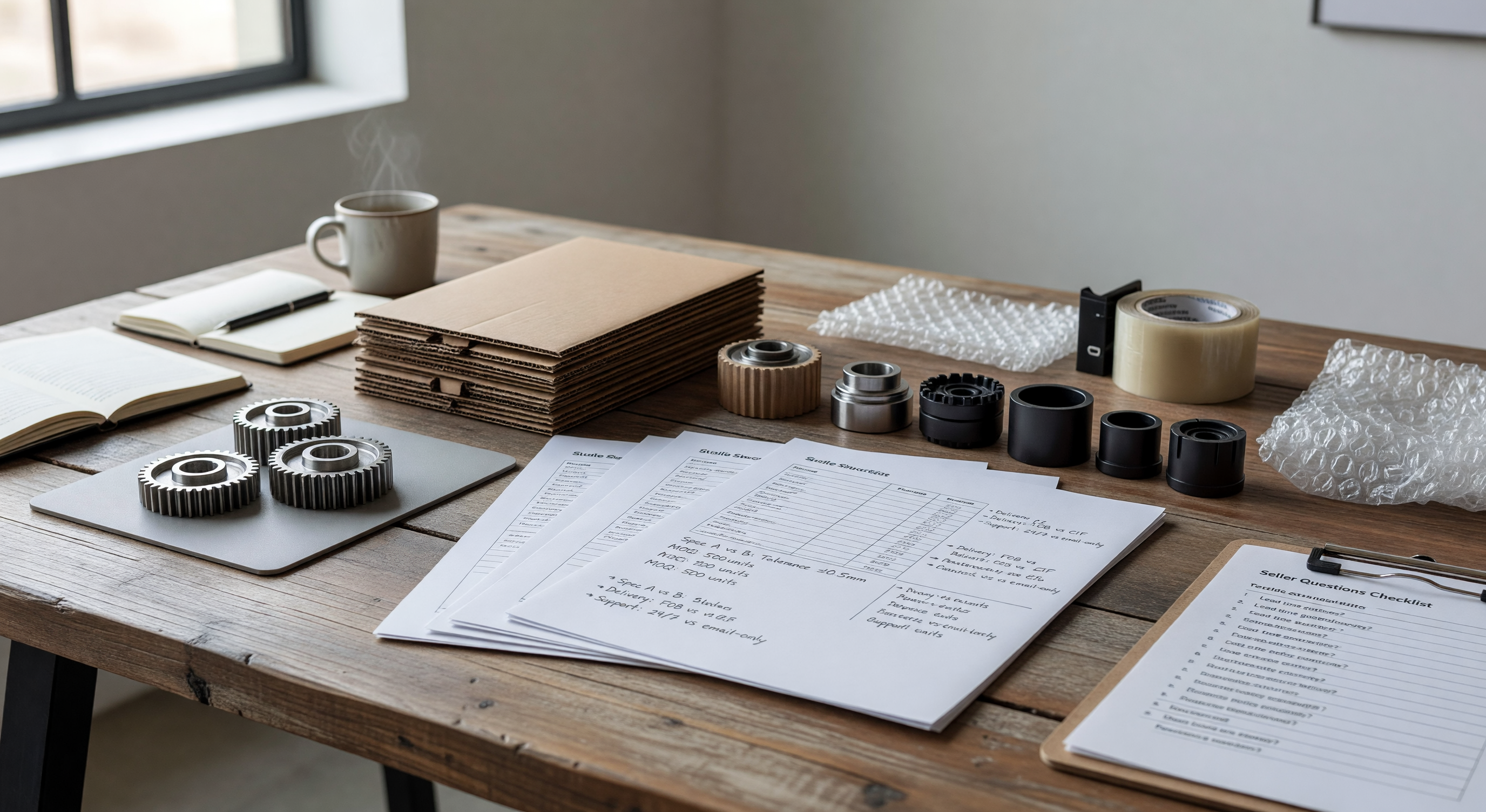
Start with the packaging job, not the machine name
Packaging machinery pricing makes more sense when you describe the actual job before comparing listings. A filling line for viscous sauce, a vertical form-fill-seal machine for pouches, and a case sealer for outbound cartons may all sit under packaging machinery, but their MOQ logic is different. Buyers should define the pack format, target output per hour, material type, fill weight or size range, required automation level, and the inspection steps needed before shipment.
This matters because machinery MOQ is rarely just one machine. The commercial minimum may include tooling, change parts, spare parts, installation accessories, or a minimum order value. A lower quoted machine price can become expensive if the format parts are separate or if the supplier assumes a simple material that does not match your packaging. Write the job in operational language first, then compare price tiers against that job.
Separate machine MOQ from tooling and change parts
Packaging equipment often has at least three minimums: the base machine, the custom tooling, and the consumables or spare parts supplied with the order. A buyer sourcing sealing jaws for flexible packaging may face a tooling MOQ even if the machine quantity is one. A buyer sourcing molds, guides, or fixtures for plastic packaging may see a different minimum because each format requires setup time.
Ask whether the MOQ applies to complete machines, lanes, heads, molds, die sets, conveyors, printers, or service kits. Also ask whether future repeat orders can use the same tooling. If the first order includes engineering work, the initial MOQ may be higher than the reorder minimum. That distinction helps you avoid treating a one-time setup cost as a permanent unit cost.
Read price tiers as cost structure, not discounts
Price tiers on packaging machinery usually reflect how the supplier spreads engineering, procurement, testing, and packing costs. A single-machine tier may carry the full setup burden. A two-to-five-machine tier may reduce the unit price because drawings, electrical configuration, and inspection procedures are reused. Higher tiers may improve price again, but only if the machines are identical or close enough to build in a batch.
Use Cusket product listings to compare visible tier breaks, but do not stop at the headline unit price. Confirm what changes between tiers: motor brand, PLC/HMI configuration, stainless grade, included conveyors, spare parts, voltage, documentation, crating, and factory acceptance testing. If a tier reduces price by removing accessories, it is not a true volume saving. If a tier preserves the same specification and spreads setup cost, it is more useful for planning.
MOQ and price-tier checklist
Use this checklist before you shortlist a machine or ask for clarification through Cusket search results.
| Checkpoint | What to confirm | Why it affects price |
|---|---|---|
| Pack format | Bag, pouch, bottle, tray, carton, case, or mixed formats | Format drives tooling, change parts, and machine layout |
| Production target | Units per minute or hour, including acceptable downtime | Higher output may require more heads, lanes, sensors, or conveyors |
| Material compatibility | Film thickness, container rigidity, cap type, label stock, or carton grade | Wrong assumptions cause jams, sealing failure, or redesign costs |
| MOQ scope | Complete machine, tooling set, spare parts, minimum order value, or line package | Prevents comparing unlike minimums across suppliers |
| Tier condition | Same configuration at each tier, or different included components | Shows whether the lower price is a real volume benefit |
| Acceptance test | Sample materials, test duration, inspection video, and reject criteria | Testing time and sample handling can be priced separately |
| Reorder path | Future tooling reuse, spare-part MOQ, and lead time | Helps calculate total ownership cost, not only first purchase price |
Compare landed cost and operating cost together
A packaging machine can be cheap to buy and expensive to run. Buyers should compare landed cost with operating cost before accepting a price tier. Landed cost includes the machine, tooling, packing, freight, insurance, import duties, unloading, installation support, and any inspection travel or remote commissioning. Operating cost includes consumables, wear parts, changeover labor, utilities, maintenance intervals, and downtime during cleaning or format changes.
A higher tier may make sense when it includes spare parts and a tested configuration that reduces stoppages. A lower tier may be better when you are validating a new product and want less cash tied up before volume is proven. The right decision depends on how stable the packaging format is. If the pack design is still changing, avoid overbuying identical tooling just to reach a lower unit price.
Shortlist suppliers with evidence, not promises
When comparing suppliers, look for proof that the machine has handled similar materials and pack sizes. Useful evidence includes operating videos with your material type, sample test reports, clear photos of control panels and contact parts, spare-part lists, wiring diagrams, and packaging/crating details. A supplier who can explain the MOQ logic is usually easier to work with than one who only repeats a tier price.
Build a shortlist with one target specification, then compare each offer line by line. Use Cusket buying guides to keep your procurement notes consistent across categories, and contact Cusket support if a listing leaves critical purchase information unclear. The goal is not to force every supplier into the same price. The goal is to know which quote gives you the right machine, the right tooling, and a realistic path to repeat production.