Buying Guide
Presentation displays bulk sourcing guide
By Cusket Editorial · Published · Updated
A product-level sourcing guide for presentation displays, covering size, mounting, packaging, MOQ, delivery expectations, and supplier support.
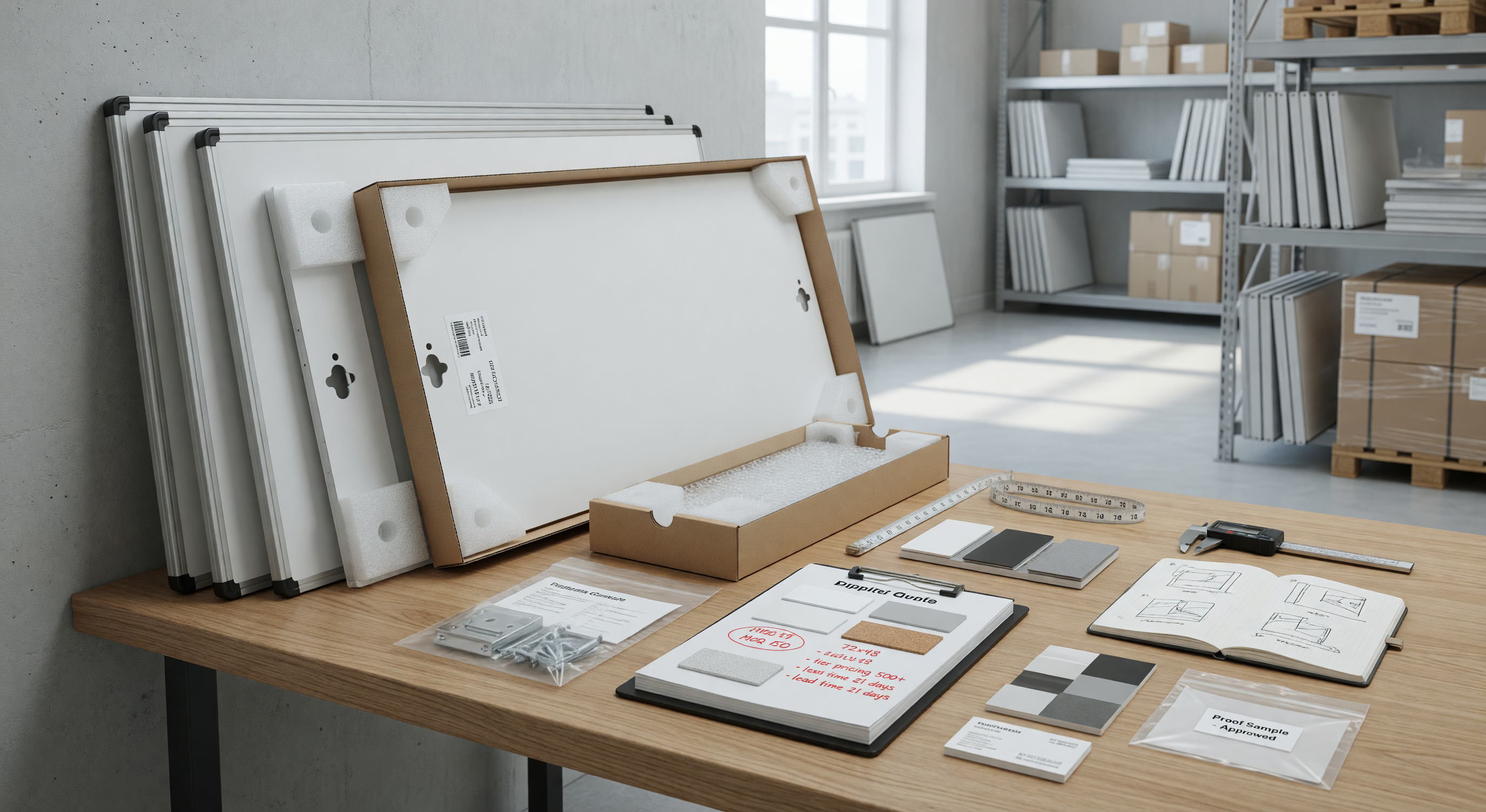
Source presentation displays by format, use case, and setup path
Presentation display sourcing depends on screen or board format, mounting method, accessories, room size, installation needs, warranty, and delivery timing. Buyers should compare suppliers by the complete setup, not just the headline device price.
Product specs to define
Identify the display type and use case first. Include finished size, visible area, surface material, frame material, corner style, backing board, thickness, weight, mounting method, stand style, foldability, mobility, and whether hardware is included. For whiteboards, define magnetic or non-magnetic surface, dry-erase coating, ghosting resistance, tray, marker set, and projection suitability. For bulletin boards, define cork, fabric, felt, self-healing properties, pin density, and fire-retardant requirement where relevant.
Packaging is critical because presentation displays are often bulky and easy to dent. Define inner protection, corner guards, foam, carton strength, drop-test expectation, palletization, and whether the product will ship parcel, LTL, container, or direct to multiple offices. If the display is for classrooms, hotels, conference centers, trade shows, or corporate rollouts, state installation conditions and whether spare hardware or replacement panels are needed.
MOQ and price tier logic
Price tiers should be read as a model, not a promise. A supplier may show one unit price at sample quantity, another at carton quantity, and a lower number at pallet or container quantity. Your landed cost should include setup charges, tooling, artwork, testing, labeling, export packing, freight, duties, payment fees, and the cost of quality failures. The lowest unit price is rarely the lowest total purchase cost if it forces the wrong MOQ, hides a long lead time, or excludes required documentation. Presentation display MOQ may be driven less by unit production and more by packaging, freight, and mixed-size handling. A supplier may offer low MOQ for standard sizes but require higher quantities for custom frame colors, printed branding, unusual dimensions, or bundled accessories. Ask for tiers by exact size and by mixed order, such as 25, 50, 100, 250, and pallet quantity.
Because these products are bulky, compare landed cost per usable display, not only factory unit price. A larger MOQ may reduce unit price but increase storage, damage, and handling cost. Ask whether cartons are parcel-safe, whether replacement parts can be shipped separately, and whether accessories are packed in each unit or in bulk. For multi-location rollouts, ask whether the supplier can label cartons by destination or split shipments.
Sample and proofing path
For custom or compliance-sensitive items, do not skip the proof path. Ask for a pre-production sample, golden sample, digital proof, material certificate, test report, or dimensional drawing before mass production. Store the approved proof with the quote so receiving, support, and reorder teams know what was actually accepted. For displays, samples should be tested for surface quality, frame alignment, hardware fit, stability, writing and erasing performance, pin holding, projection glare, folding action, wheel function, and packaging protection. If the display will be wall-mounted, test hardware on the intended wall type or define what hardware is excluded. For printed or branded displays, approve color and placement before production.
Inspect the carton after sample shipment. If the sample arrives with crushed corners or loose hardware, the mass order may suffer the same problem. Ask for final carton photos, pallet layout, and replacement-part policy before shipment.
RFQ questions to ask
- What display type, size, surface, frame, backing, hardware, and accessories are included?
- Is the product standard stock, custom size, custom color, or branded?
- Is MOQ per size, color, accessory kit, destination, or total order?
- What packaging protects corners, surface, hardware, and cartons during freight?
- Can the supplier provide writing, erasing, pin, projection, or stability test information?
- Are spare parts, replacement hardware, and damaged-unit support available?
- Can cartons be labeled for multiple offices or project phases?
- Which delivery term and shipment method are quoted?
Red flags
Red flags include vague product names, copied specification sheets, missing certification numbers, resistance to samples, unclear ownership of tooling, price breaks that change after questions, no written lead time, and quotes that omit packaging or delivery responsibility. A good supplier may still need clarification, but they should be able to document what they will make, when they will make it, and what is included in the price. For presentation displays, red flags include quotes that omit packaging details, photos that hide frame corners, no answer on mounting hardware, and no support for replacement accessories. Be careful with low prices on large boards if the supplier cannot explain carton strength or damage policy. Also avoid approving custom sizes without checking freight dimensions, because oversized cartons can create unexpected shipping costs.
Next step in Cusket
Cusket is most useful for this kind of purchase when the buyer can move from a checklist into product discovery, seller comparison, RFQ, cart, or checkout without losing the commercial assumptions. Use the Cusket guide hub for broader sourcing context, then open product search or the relevant category page when you are ready to compare live listings. Use presentation display search and the presentation display category to compare suppliers. For procurement planning, read office supplies bulk procurement, price tier comparison, and delivery terms before buying.
Quote comparison fields to score
Score display quotes by size, surface, frame, backing, mounting hardware, accessory kit, packaging, MOQ per size, mixed-order support, unit price, carton dimensions, damage policy, sample cost, lead time, spare-parts support, and delivery term. Add a freight-risk column because bulky display products can become expensive when cartons exceed parcel limits or arrive with dented corners.
Acceptance criteria before purchase
Define approval rules for surface flatness, frame alignment, corner condition, writing and erasing quality, pin holding or projection performance, stand stability, hardware completeness, accessory pack, carton protection, carton labeling, and replacement support. If the supplier changes surface material, frame supplier, carton structure, or hardware kit, require written approval. For office or classroom rollouts, a missing bracket or weak carton can delay installation as much as a defective board.
Planning the first order
For a first display order, confirm where the units will be stored, inspected, and installed. Bulky boards and stands can consume warehouse space quickly, and damaged cartons are hard to recover if the damage policy is vague. Ask for a pilot shipment or sample carton when project timing allows. For multi-site rollouts, quote destination labels, split shipments, spare hardware, and replacement panels before placing the main order.