Buying Guide
How to compare setup fees, sample fees, and unit price
By Cusket Editorial · Published · Updated
A buyer checklist for comparing setup fees, sample fees, tooling, MOQ, unit price tiers, repeat-order pricing, and total cost before checkout.
Start with the full price picture
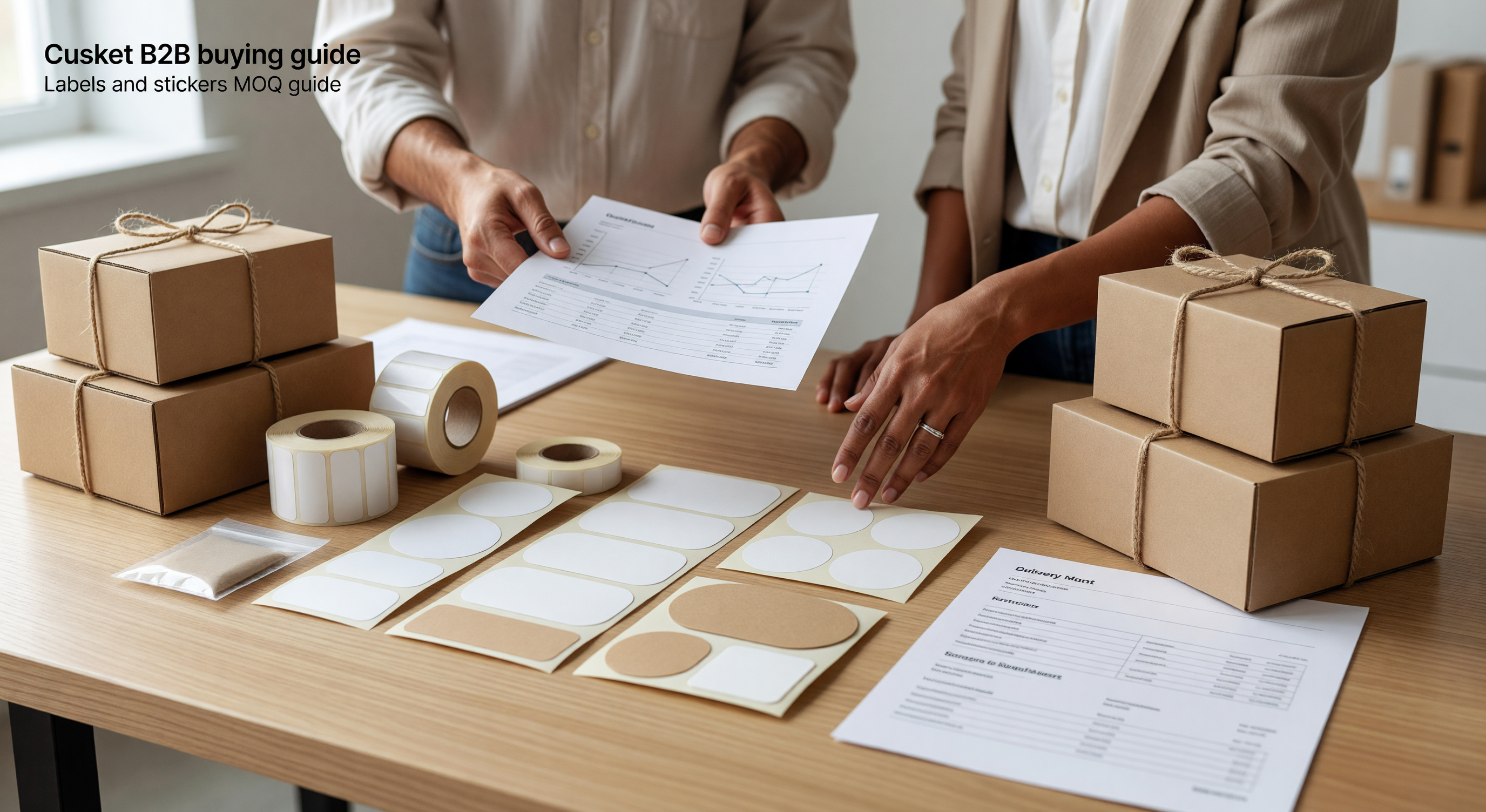
A low unit price can look attractive until setup fees, sample fees, tooling, artwork work, and MOQ are added back in. Before comparing offers on Cusket, treat each quote as a bundle of cost parts instead of one headline number. Understand what you will actually pay before checkout, which charges are reusable on repeat orders, and which charges change if quantity, material, packaging, or design changes.
When browsing https://cusket.com/products or narrowing options through https://cusket.com/search, keep the exact product link, variant, material, size, color, packaging choice, and quantity used for the quote. Ask each supplier to separate one-time charges, refundable or creditable sample charges, unit price tiers, shipping assumptions, and quote validity dates in writing.
Separate setup, tooling, and artwork fees
Setup fees usually cover preparation work: machine setup, production-line preparation, file review, packaging setup, or admin work required before production. Tooling fees may cover a mold, die, plate, embroidery digitization, jig, stencil, or fixture that makes your customized item possible. Artwork fees may apply when a logo, label, print file, dieline, or packaging graphic needs cleanup.
Do not assume these labels mean the same thing across suppliers. One quote may include artwork checking inside setup. Another may list it separately. A third may waive setup at a higher MOQ. Ask whether each charge is one-time, per order, per design, per color, per size, or per production run. Also ask whether the tool or file can be reused later. Cusket categories at https://cusket.com/categories can help you organize product options, but the fee rules still need quote-level confirmation.
For repeat orders, ask whether setup, tooling, or artwork charges disappear, reduce, or apply again when the design changes. A slightly higher first quote can become cheaper if it removes repeated preparation costs.
Compare sample fees and credit rules
Samples reduce uncertainty before a larger order, but sample pricing can hide several items. A sample fee may cover the item, customization, express handling, shipping, or a combination. Stock samples may prove material and workmanship, while customized samples may prove logo placement, color, packaging, or finish. A customized sample is better evidence for final production, but it may bring setup or artwork charges forward.
Ask for the sample fee, sample shipping cost, estimated sample lead time, and what the sample actually proves. Then ask whether the fee is refundable, credited against the first order, credited only above a minimum order value, or lost if you change design. Do not assume a sample credit will appear automatically at checkout. Before moving toward https://cusket.com/buy, keep the supplier's credit wording with the quote so the final invoice can be checked against it.
Map MOQ and unit price tiers
MOQ is not just a minimum. It can change the whole price structure. A supplier may quote one unit price at 100 units, a lower price at 500 units, and a much lower price at 1,000 units. Setup and tooling fees can also make the effective unit cost very different from the quoted unit price.
Ask for prices at the MOQ, your expected order quantity, and one higher quantity that might unlock a better tier. Calculate the same total for every supplier: one-time charges plus non-creditable sample costs plus quantity multiplied by unit price. Shipping, duties, taxes, and regulated-product requirements can depend on destination and product type, so treat them as items to confirm rather than assumptions.
Also ask whether mixed colors, sizes, or designs count toward the MOQ. A supplier may accept 500 total units but require 100 per color, or may treat each artwork version as a separate MOQ.
Use a total-cost checklist before checkout
The practical comparison is not the cheapest displayed unit price. It is the total cost for the order you can actually place, with enough evidence to proceed.
| Cost item | What to ask | How to compare |
|---|---|---|
| Setup fee | Per order, design, color, size, or run? | Add once when assumptions match. |
| Tooling fee | What is made, who keeps it, reusable? | Spread across first order; note repeat impact. |
| Artwork fee | What file work and revisions? | Compare revisions and future reuse. |
| Sample fee | Stock, customized, refundable, creditable? | Count only the unrecovered part. |
| MOQ | Per product, color, size, or artwork? | Avoid mismatched quantities. |
| Unit tiers | MOQ, target, and higher-tier prices? | Calculate total cost per unit. |
| Validity | How long are price and rules valid? | Reconfirm after expiry. |
If packaging, color, logo position, or quantity changes, ask for affected line items to be refreshed instead of assuming the old quote still applies.
Check repeat-order and validity details
Repeat-order pricing can be where the better deal appears. A quote with higher first-order tooling may become cheaper on the second run if the tool is reusable and setup is reduced. Ask the supplier to show first-order pricing and repeat-order pricing separately. Confirm whether repeat pricing depends on ordering within a certain period, keeping the same artwork, using the same material, or meeting the same MOQ.
Quote validity is equally important. Raw material costs, exchange rates, freight conditions, and production capacity can change. Suppliers may hold a quote for 7, 14, or 30 days, or require confirmation before a seasonal deadline. If you found the product through https://cusket.com/search weeks ago, reconfirm the quote before checkout.
Keep decision evidence together
A clean buyer workflow is simple: shortlist products, request itemized quotes, normalize total cost, confirm sample and credit rules, then check the final checkout amount against the quote. Use https://cusket.com/guides for more buyer workflows and https://cusket.com/support if you need help understanding Cusket pages, orders, or account tools.
Before paying, check that the product, quantity, customization, setup fee, sample credit, unit price tier, and quote validity all match the supplier's latest written terms. If a fee is unclear, pause and ask. A careful comparison does not remove every risk, but it makes the tradeoffs visible: which supplier is cheaper now, which one may be cheaper on repeat orders, and which quote gives you the clearest path from sample to checkout.