Buying Guide
How to document supplier assumptions for team approval: questions to ask
By Cusket Editorial · Published · Updated
A practical buyer checklist for documenting supplier assumptions before team approval, including scope, MOQ, lead time, delivery responsibility, samples, landed cost, and decision ownership.
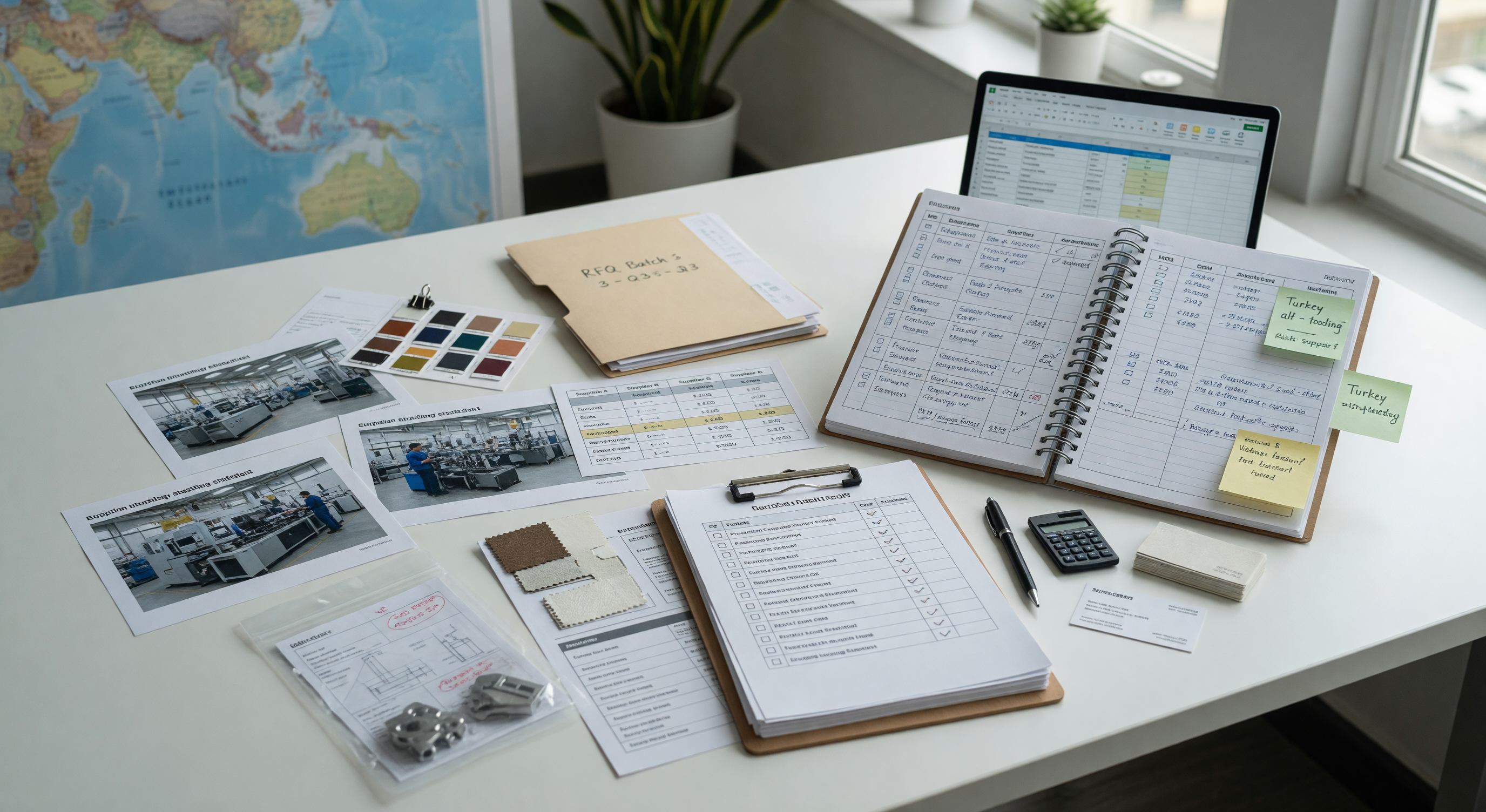
Start with the approval question
Supplier approval is easier when the buying team can see what is confirmed, what is assumed, and who owns the final call. Before anyone signs off, write a short decision note that answers one question: if this order is approved today, what are we relying on?
The note should cover product scope, supplier role, price basis, MOQ, lead time, delivery responsibility, documents, sample status, replacement terms, landed cost, and the decision owner. Keep it attached to the product or comparison your team is already reviewing, whether the item came from Cusket products, Cusket categories, or Cusket search. The purpose is not to remove every risk. It is to stop private assumptions from becoming approval.
Define product scope and supplier role
Start with what the team is actually approving. Ask which model, size, material, color, finish, capacity, grade, packaging, and accessory set are included. If the item is customized, separate the standard product from the custom work. If the supplier is expected to match a sample, photo, specification sheet, or previous order, name that reference in the note.
Then clarify who the supplier is in the transaction. Are they the factory, a trading company, a distributor, a sourcing agent, a brand owner, or a mixed-role partner? Ask what part of the process they control and which claims are supported by evidence. If they mention audits, certificates, test reports, export experience, production lines, or reference customers, record what was shown and what is only stated. Treat documents as inputs for your team or advisor to review, not as automatic proof that every legal, tax, or compliance requirement is satisfied.
A good scope note lets a teammate who missed the supplier conversation understand what would arrive, who is providing it, and which claims still need confirmation.
Put commercial assumptions in one checklist
Price is rarely just a unit number. It depends on quantity, currency, packaging, tooling, samples, payment timing, delivery responsibility, and post-production support. Use one checklist before sending the recommendation around:
| Approval question | What to document | Current answer |
|---|---|---|
| What exactly is included? | Model, variant, packaging, accessories, branding, customization | Confirmed / assumed / open |
| What supplier role are we relying on? | Factory, trader, distributor, agent, or mixed role | Confirmed / assumed / open |
| What is the price basis? | Currency, unit price, tier, tooling, sample cost, payment assumptions | Confirmed / assumed / open |
| What MOQ applies? | Minimum quantity, order value, carton quantity, color split rules | Confirmed / assumed / open |
| What lead time is being used? | Sample time, production time, inspection time, shipping handoff date | Confirmed / assumed / open |
| Who handles delivery? | Pickup point, freight responsibility, insurance assumption, handoff location | Confirmed / assumed / open |
| Which documents are expected? | Invoice, packing list, test reports, certificates, manuals, label files | Confirmed / assumed / open |
| What is the sample status? | Not requested, requested, received, approved, rejected, or pending changes | Confirmed / assumed / open |
| What happens if goods do not match? | Replacement, credit, rework, spare parts, claim window, evidence required | Confirmed / assumed / open |
| Who owns the decision? | Buyer, category lead, finance owner, operations owner, executive approver | Named owner / unclear |
This table is not a contract or professional review. It is a buying-team control that shows which assumptions are solid enough for approval and which still need an owner.
Separate sample confidence from production confidence
A sample can reduce uncertainty, but it does not prove that the production order will match. State whether a sample was not requested, requested, received, approved, rejected, or returned for changes. If a sample was received, note the date, version, visible differences from the requested specification, and the person who approved it.
Ask whether the sample came from current production, a prototype line, leftover stock, or a sales display unit. Ask whether the same materials, molds, packaging, firmware, labels, and quality checks will be used for the actual order. If the supplier promises changes after sample review, keep those changes as open assumptions until a revised sample, photo evidence, or written confirmation is accepted by the decision owner.
Show landed cost and replacement terms
Approval should include the cost your business expects to absorb, not only the supplier invoice. Landed cost may include product cost, packaging, tooling, inspection, domestic handling, international freight, insurance, duties, taxes, brokerage, warehousing, returns processing, and internal quality work. The exact tax or duty outcome should be checked with the right specialist, but the buying note can still show which estimates are being used.
Ask who estimated each landed-cost component and whether it is based on a quote, prior shipment, rate table, or placeholder. If freight is not finalized, label it as an assumption. Buyers still organizing the purchasing path can use Cusket buy for purchase steps and Cusket guides for related sourcing notes.
Replacement terms deserve the same clarity. Ask what happens if goods arrive damaged, incomplete, late, or outside specification. Record the claim window, evidence required, remedy options, and whether the supplier offered replacement units, spare parts, repair support, credit, or future-order adjustment. Avoid vague wording like supplier will take responsibility unless the practical remedy is written down.
Name the owner and approval conditions
End the note with the person or role who can approve the order, pause it, or send it back for more supplier questions. Also name supporting owners, such as finance for budget, operations for delivery feasibility, product for specification fit, or support for post-sale risk.
Close with three short lists: confirmed facts, open assumptions, and decision conditions. Decision conditions might include sample approval, document review, revised quote, freight estimate, budget signoff, or supplier confirmation of replacement terms. If the team cannot resolve an important question before approval, state the risk plainly and route it to the approver. For unresolved platform or order-process questions, contact Cusket support. Clear assumptions help a buying team approve with shared facts instead of private guesses.