Buying Guide
How to document supplier assumptions for team approval: scorecard
By Cusket Editorial · Published · Updated
A buyer-facing scorecard for documenting supplier assumptions before team approval, including scope, MOQ, price basis, delivery responsibility, samples, replacements, landed cost, and owner signoff.
Set the approval question before comparing suppliers
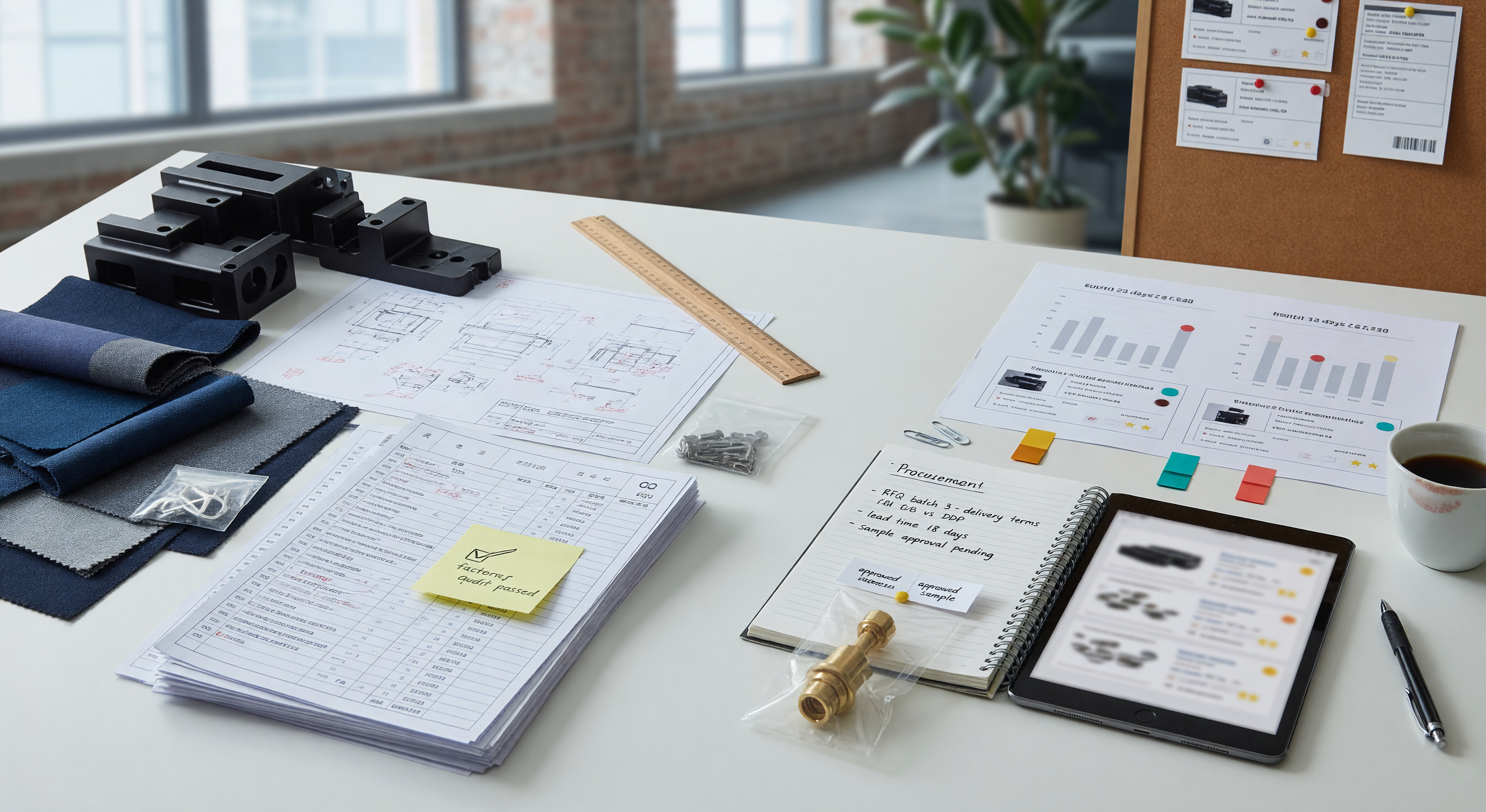
Supplier approval often fails because the team is not approving the same thing. One person thinks the decision is about a sample. Another thinks it approves a first production order. Finance may be looking only at unit price, while operations is worried about receiving, documents, or replacement handling. A supplier assumption scorecard makes the approval target visible before the team commits.
Use this guide after your team has found candidates on Cusket products, compared alternatives in Cusket search, or narrowed a category through Cusket categories. The scorecard is not meant to prove that a supplier is risk-free. It shows whether the current assumptions are documented well enough for a practical buying decision.
Use a simple 0-2 readiness score
Score each assumption from 0 to 2. A 0 means the assumption is missing, vague, or based on hope. A 1 means the team has a workable assumption, but it still needs confirmation, a named owner, or a clearer source. A 2 means the assumption is documented with the source, date, owner, and remaining risk.
For sampling, a lower score may be acceptable if gaps are owned. For first production, expect a higher score and no zeroes in price basis, delivery responsibility, documents, landed cost, or owner signoff. This is an internal rule, not legal, tax, import, or compliance advice.
Complete the supplier assumption scorecard
Copy the table into a shared approval note or spreadsheet. Keep one scorecard per supplier and product scope when comparing SKUs or buying paths through Cusket buying workflows.
| Approval area | What the buyer should document | 0 | 1 | 2 |
|---|---|---|---|---|
| Product scope | SKU, variant, size, material, packaging, labeling, accessories, and exclusions | Broad product name only | Main SKU listed, but details missing | Exact scope confirmed or supported by listing evidence |
| Supplier role | Manufacturer, distributor, agent, brand owner, or fulfillment partner | Unknown role | Role stated but unsupported | Role stated with source and buying impact |
| MOQ | Minimum quantity, mix rules, carton limits, sample exceptions | Missing | Known but exceptions unclear | MOQ and mix rules match the proposed order |
| Price basis | Unit price, currency, tier, validity date, and inclusions | Listing estimate only | Usable price but weak detail | Dated price tied to quantity and scope |
| Lead time | Sample time, production time, dispatch timing, dependencies | Guessed | One estimate exists | Steps and assumptions are documented |
| Delivery responsibility | Export prep, freight booking, payment, tracking, receiving, issue response | Not assigned | Main party assumed | Each handoff assigned or flagged |
| Documents | Invoice, packing list, certificates if relevant, reports if offered, data sheets | Not discussed | Some documents named | Documents listed with owner and status |
| Samples | Availability, cost, freight, reviewer, pass/fail criteria | No sample plan | Sample possible, criteria vague | Plan has cost, timing, reviewer, criteria |
| Replacements | Defects, shortages, wrong items, transit damage, evidence, remedy path | Not discussed | Informal statement | Commercial assumption documented |
| Landed cost | Product, freight, fees, duties or taxes to verify, inspection, storage, contingency | Unit price only | Some extra costs listed | Cost model shows knowns and unknowns |
| Owner signoff | Internal owner for budget, quality, delivery, scope, final approval | No owner | One buyer owns most items | Named owners sign off by area |
Confirm scope, role, MOQ, and price first
Price is weak if the product scope is loose. A quote for a bottle, part, tool, accessory, ingredient, or packaged kit can change when size, finish, grade, accessory bundle, barcode, or retail packaging is clarified. Give product scope a 2 only when a future approver can understand the exact item without reopening every message thread.
Supplier role should be scored separately from supplier quality. A distributor may fit a small fast order. A manufacturer may be better for customization. An agent may coordinate multiple items. The role matters because it affects replacement expectations, lead time, and who can answer technical questions.
MOQ and price basis should be tied to the same order scenario. If MOQ is 500 units but the price assumes 2,000 units, the team does not yet have a production-ready assumption. Record currency, quantity tier, validity date, and what the price includes.
Make delivery, documents, samples, and replacements clear
Avoid broad lines such as supplier ships order or buyer handles logistics. Write the handoffs: who prepares export documents, who books freight, who pays freight, who receives tracking, who checks arrival quantity, and who responds if goods are delayed or damaged. If delivery terms, insurance, duties, taxes, or regulated import questions may matter, mark them for the appropriate professional or internal specialist instead of presenting uncertain outcomes as guaranteed.
Samples need a decision purpose. State whether the team is checking material, sizing, finish, labeling, packaging, function, color, documents, or supplier responsiveness. Name the reviewer and define pass/fail notes before the sample arrives.
Replacement assumptions also need practical wording. Record what evidence the supplier expects for defects, shortages, wrong items, or transit damage. Note whether the likely remedy is replacement units, credit, refund discussion, discount, or future-order adjustment. This is planning evidence, not a promise that every issue will resolve one way.
Close with landed cost and owner signoff
The landed-cost row keeps the team from approving a unit price while ignoring freight, platform or payment fees, inspection, storage, contingency, or duties and taxes that still need verification. Separate confirmed numbers from estimates. A useful line says what is known, what is assumed, and who must verify the rest.
Owner signoff turns scattered comments into an approval path. The buyer may own supplier communication, finance may own budget, operations may own receiving constraints, and a technical user may own sample review. Before sending the packet, check that no high-risk row is scored 0, every score of 1 has a next action, and every owner understands their section. For more buying context, keep related notes near Cusket guides or ask Cusket support where platform navigation is unclear.