Buying Guide
How to compare supplier replies when every quote uses different terms: questions to ask
By Cusket Editorial · Published · Updated
A buyer checklist for turning inconsistent supplier quote replies into a fair comparison of price basis, MOQ tiers, packaging, freight, samples, documents, lead time, replacement terms, and validity.
Start by making every quote answer the same buying question
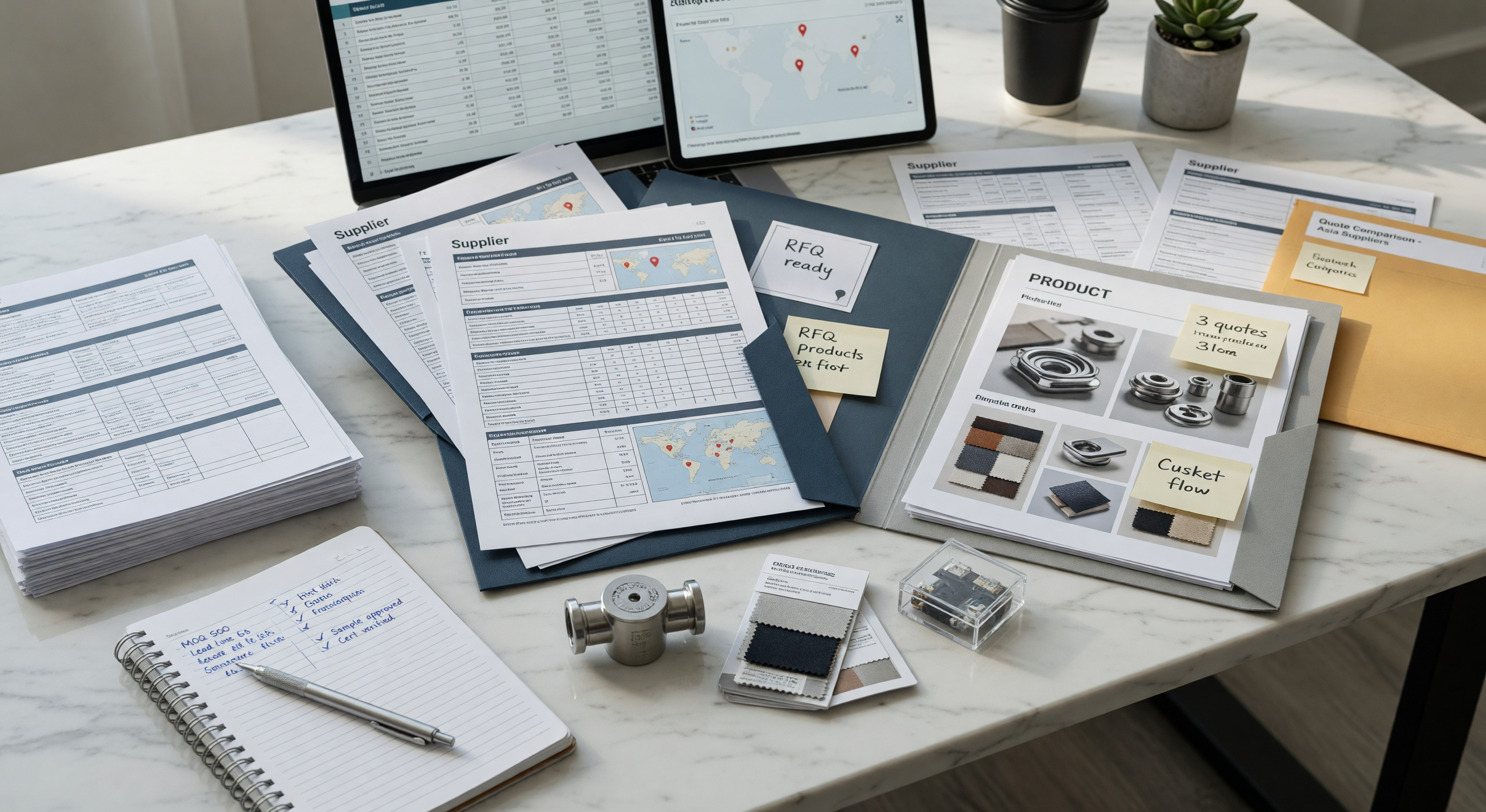
When suppliers reply in different formats, the lowest unit price is not enough to choose from. One quote may include export packing, another may assume buyer-arranged freight, and a third may use a different currency or quantity tier. Before comparing totals, turn every reply into the same buying question: what is included, where does supplier responsibility appear to stop, when does the timeline start, and what happens if the order is not acceptable?
Keep each comparison tied to the exact product, variant, quantity, and destination you intend to buy. If you found options through Cusket search, Cusket products, or Cusket categories, compare replies against the same product details rather than a similar model or pack size.
Normalize price basis, currency, and included packaging
Ask every supplier to restate the quote in one line: unit price, currency, delivery term, named place, quantity, and validity date. A price of USD 8.20 per unit can mean different things if it is ex works, FOB at a named port, or delivered to a destination. Cusket cannot replace your freight, tax, or import checks, but your comparison should show which costs the supplier says are included and which may remain on your side.
If quotes use different currencies, record the exchange date you used for comparison and ask whether the supplier will hold that currency basis until payment. Also ask whether the price includes ordinary export packaging, inner cartons, labels, barcodes, pallets, or inspection support. A low unit price can become less attractive if basic packaging or labeling is excluded.
Compare MOQ tiers and sample terms separately
MOQ is not just a yes-or-no field. Ask for the price at the supplier's stated MOQ, your target quantity, and the next practical tier above your target. One supplier may quote 500 units because that is the minimum, while another quotes 1,000 units because the factory becomes more efficient there. Comparing only the headline unit price can hide extra inventory cost.
Samples need their own line. Ask whether the sample matches production, whether the fee is refundable against a later order, who pays sample freight, and how long sample preparation takes. If color, material, plug type, packaging, or logo placement matters, ask whether the sample confirms those details or only shows general workmanship. For planning through Cusket buy, keep sample approval separate from production approval.
Ask what documents and freight assumptions are ready
Document readiness can prevent a long clarification loop later. Ask which documents the supplier normally provides, such as a pro forma invoice, packing list, commercial invoice, certificate of origin where available, product specification sheet, or test report. Treat these answers as supplier claims that may still need review by your logistics, customs, tax, or compliance advisers.
Freight responsibility should be explicit. Ask for the named port, airport, warehouse, or destination used in the quote. If freight is included, ask whether that means courier, air, ocean, local delivery, or delivery only to a forwarder. If freight is excluded, ask for carton dimensions, gross weight, pallet details, and ready-date assumptions so you can request your own freight estimate.
Use this checklist before choosing a supplier
Copy this table into your comparison notes and fill one row per supplier. If a supplier cannot answer yet, mark the field as pending instead of guessing.
| Question | Why it matters | What to record |
|---|---|---|
| What delivery term and named place does the price use? | It shows where supplier responsibility appears to end. | Term, named port/place, excluded costs. |
| Which MOQ tiers are available? | Unit price may change sharply by quantity. | MOQ, target price, next tier. |
| What packaging is included? | Retail, export, pallet, or label costs can shift totals. | Inner pack, carton, pallet, labels, barcode. |
| What currency and validity period apply? | Exchange movement and expired quotes change comparisons. | Currency, quote date, valid-until date. |
| Who handles freight and insurance? | Similar prices can carry different logistics obligations. | Included route, excluded freight, dimensions. |
| Are samples production-equivalent? | A sample may not confirm final materials or packaging. | Fee, refund rule, freight payer, timing. |
| When does lead time start? | Deposit, artwork, or sample approval can trigger different clocks. | Trigger event, production days, ship-ready date. |
| What replacement terms apply? | Defect handling should be clear before payment. | Evidence needed, claim window, replacement route. |
Confirm timing, replacement terms, and quote validity
Lead time should have a trigger. Ask whether production days start after deposit, full payment, sample approval, artwork confirmation, raw material booking, or final specification sign-off. Then ask whether holidays, peak season, or component shortages are already reflected in the timeline. A supplier who says "25 days" may mean 25 production days after several prerequisites are complete.
Replacement terms also need plain questions. Ask what happens if units arrive with wrong specifications, visible damage, missing accessories, or functional defects. Ask what evidence the supplier needs, how quickly you must report issues, whether replacement units ship with the next order or separately, and who pays freight for confirmed supplier-responsibility replacements. Do not treat the reply as legal certainty; use it as a practical risk screen and keep important commitments in writing.
Turn the answers into a decision
Once the missing fields are filled, compare suppliers in three layers: confirmed product fit, normalized commercial terms, and execution risk. The best option is often the reply that removes the most uncertainty, not simply the one with the lowest unit price.
Use Cusket guides for more buying workflow context, and contact Cusket support if you need help finding platform information or checking how a Cusket page presents product details. For supplier promises, keep the conversation specific: exact product, quantity, packaging, destination, and dates. Clear questions make supplier replies comparable, and comparable replies make the buying decision less dependent on guesswork.