Buying Guide
How to compare supplier replies when every quote uses different terms: workflow
By Cusket Editorial · Published · Updated
A buyer-facing workflow for collecting supplier replies, normalizing quote terms, requesting missing fields, and deciding when a quote is ready for checkout.
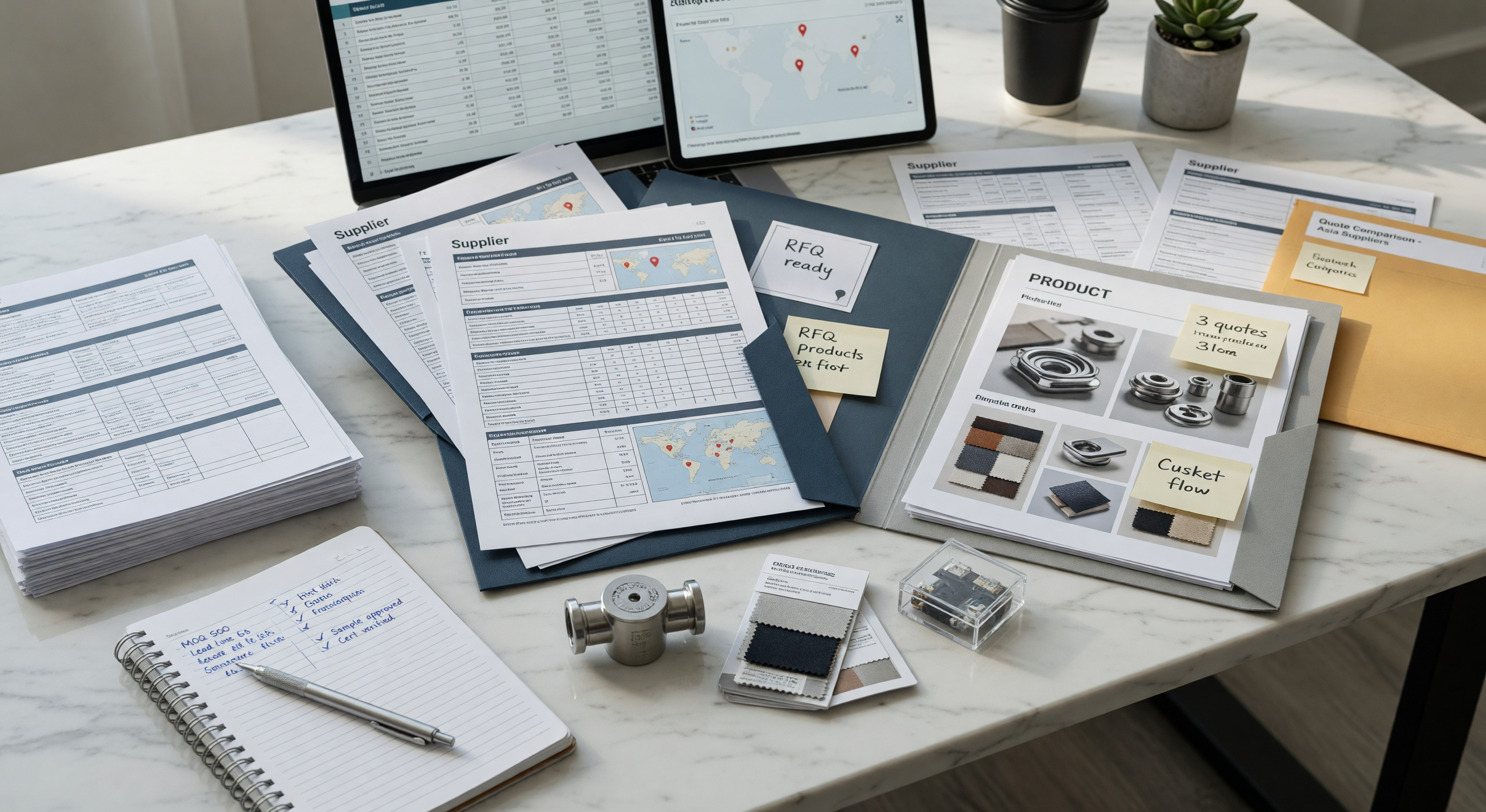
Collect every reply before you compare numbers
When supplier replies arrive with different quote terms, resist ranking them by the first visible unit price. A reply that looks cheaper may exclude freight, inspection, packaging, payment fees, or a longer production window. Start by collecting each reply in one place and separating confirmed facts from assumptions.
For each supplier, save the quoted item, quantity break, unit price, currency, packaging, delivery term, lead time, payment request, quote validity date, and exclusions. If the reply references a product listing, keep the listing open from https://cusket.com/products so you can confirm that the specification, material, size, color, and minimum order quantity match the conversation. If you found the supplier through https://cusket.com/search, keep the original search phrase, because it helps explain why two suppliers may have quoted substitutes.
Normalize the quote terms into one buyer view
Once every reply is collected, convert the information into the same buyer-facing categories. Use one currency, one quantity basis, one destination assumption, and one timeline format. If a supplier quotes per carton and another quotes per unit, convert both to the same unit basis. If one includes inner packaging and another only mentions bulk packing, mark that as a term difference.
Delivery terms need special care. A quote marked EXW, FOB, CIF, DAP, or another term may shift freight responsibility, risk timing, and local cost assumptions. Do not turn this into legal or tax advice. Instead, write down what the supplier says is included, what appears excluded, and what you still need to confirm with freight, customs, finance, or operations contacts.
Use this workflow table as the working comparison sheet:
| Field | Supplier A | Supplier B | Buyer action |
|---|---|---|---|
| Product specification | Confirmed model/material | Similar model, material unclear | Ask B to confirm exact specification |
| Quantity basis | 500 units | 50 cartons of 10 | Convert B to 500 units |
| Unit price | Includes standard packaging | Packaging not stated | Request packaging inclusion |
| Delivery term | FOB named port | EXW factory | Add freight assumptions before comparing |
| Lead time | 21 days after deposit | 14-18 days after artwork approval | Clarify approval trigger |
| Payment request | 30% deposit, balance before shipment | 50% deposit, balance before pickup | Review cash-flow impact |
| Quote validity | 10 days | Not stated | Ask B for validity date |
Request the missing fields in one clean message
After normalization, do not send scattered follow-up questions. Send one concise message to each supplier with the missing fields for that supplier only. This keeps the thread readable and reduces the chance that the supplier answers one point while ignoring the rest.
A practical request can say: please confirm whether the unit price includes export carton packaging, the named port or pickup address used for the delivery term, the production lead time trigger, the quote validity date, and any costs excluded from the quote. If the product has variants, ask the supplier to restate the exact variant, material, finish, plug type, language, or certification claim used for pricing.
Keep the tone operational. You are asking the supplier to make the quote comparable. If a quote relates to a category search, checking https://cusket.com/categories can help you name the product family consistently when you ask for revisions.
Compare revised quotes by landed assumption
When replies come back, update the comparison instead of starting again. The revised quote should replace the old number only if the supplier clearly confirms the changed term. If they answer vaguely, keep the old assumption and mark the field unresolved.
For buyer decisions, compare the total working assumption: product cost, packaging, expected freight responsibility, inspection or sample needs, payment timing, lead time, and quote validity. You may also include internal costs such as receiving labor, storage, artwork approval, or product testing. Those numbers depend on your business and jurisdiction, so treat them as internal assumptions rather than supplier promises.
This is also the moment to test whether the product page, supplier reply, and checkout path are aligned. If the item is listed on Cusket, confirm the public listing, quantity, and variant again before moving toward https://cusket.com/buy. A supplier reply should not leave you buying a different item than the one you evaluated.
Decide whether a quote is checkout-ready
A quote is checkout-ready only when the main buying assumptions are clear enough for your team to accept the order risk. That does not mean every future cost is perfectly known. It means the product, quantity, price basis, delivery assumption, lead time, payment step, and quote validity are documented well enough for an order decision.
Before checkout, scan for red flags: a supplier refusing to restate the specification, a delivery term without a location, a price that changes when packaging is mentioned, a lead time that starts from an unclear event, or a quote that expires before approval can finish. Also watch for replies that compare a substitute product without saying so directly.
If the quote is not ready, keep it in comparison mode. If it is ready, save the final supplier message, the normalized table, and the listing or search path you used. For broader buying guidance, keep https://cusket.com/guides nearby so your team can reuse the same decision pattern on future purchases.
Document final assumptions before you commit
The last step is a short decision note. Write it for the person who will review the order later, not only for the person placing it today. Include the selected supplier, product identifier, quantity, unit price basis, delivery term as stated, known exclusions, internal freight or handling assumptions, expected lead time trigger, quote expiry, and any unresolved items your team has accepted.
Use cautious wording where responsibility is not certain. For example, write "supplier stated FOB Shanghai; buyer team to confirm destination-side costs separately" rather than making broad claims about tax, customs, or compliance treatment. If the purchase depends on regulated use, import rules, labeling, safety marks, or tax treatment, route that question to the appropriate professional or internal owner.
Finally, keep a support path open. If the Cusket listing, checkout data, or supplier conversation appears inconsistent, contact https://cusket.com/support before committing.