Buying Guide
United Kingdom buyer checklist for sample orders
By Cusket Editorial · Published · Updated
A practical checklist for United Kingdom buyers ordering product samples, covering objectives, variants, shipping details, invoices, packaging, testing, defects, and next-order decisions.
Define the sample objective before you order
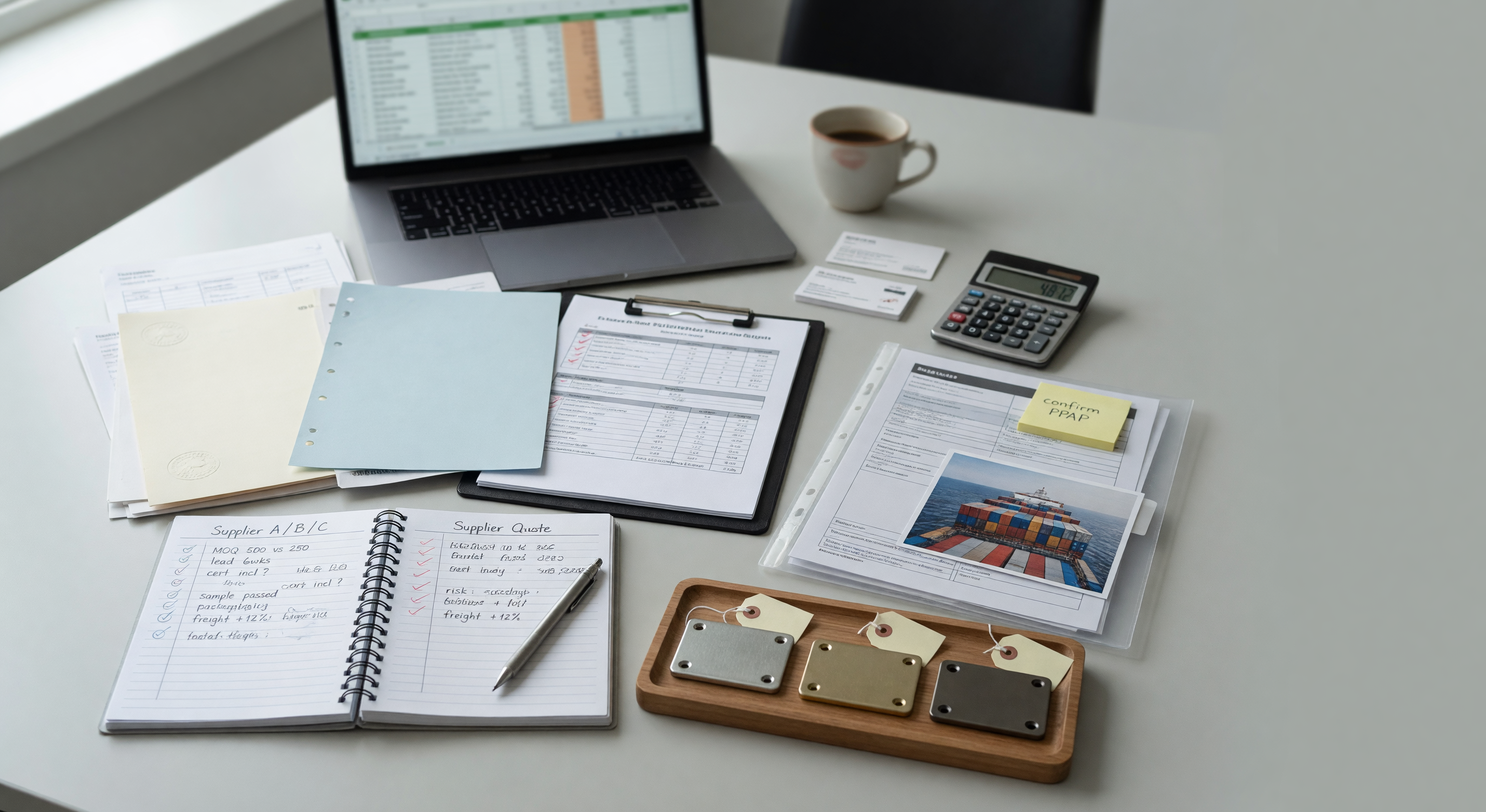
A sample order should answer a specific buying question, not just prove that a supplier can ship to the United Kingdom. Before you buy, write down what the sample must prove: material feel, finish quality, colour match, packaging durability, label placement, size tolerance, or whether the item fits your customer promise.
Start from a live listing on https://cusket.com/products or compare alternatives through https://cusket.com/search. If you are still narrowing a category, use https://cusket.com/categories to avoid requesting samples from products that are not close enough to your intended order. Keep the sample brief simple: target use, expected resale channel, preferred variant, and any details that must not change.
Choose variants, quantities, and substitutions carefully
A common sample mistake is ordering the easiest variant instead of the commercially relevant one. If your first customer offer depends on a matte black finish, a UK plug, a specific textile weight, or a gift-ready box, the sample should test that version. When the seller proposes a substitute, ask what is different and whether the production version will match the substitute or the original listing.
Keep the quantity small but useful. One unit may prove appearance, while two or three units can reveal consistency between pieces. For sets, kits, or products with accessories, confirm whether the sample includes every component shown in the listing. Save listing links from https://cusket.com/buy before payment so your team can compare the received item with the purchase context later.
| Checkpoint | What to confirm before payment | Why it matters |
|---|---|---|
| Objective | The sample question in one sentence | Prevents vague pass or fail decisions |
| Variant | Colour, size, material, plug, label, or pack type | Avoids testing the wrong product |
| Quantity | Number of units and whether extras are included | Helps judge consistency and defects |
| Substitution | Any changed component or finish | Keeps approval tied to the real order |
| Evidence | Photos, invoice, tracking, and messages | Creates a clean review trail |
Confirm the shipping address and invoice details
For a United Kingdom delivery, tiny address errors can delay a sample more than the product itself. Provide the recipient name, company name if applicable, street address, town or city, postcode, country, phone number, and email. If the sample is going to a warehouse, lab, photographer, or colleague rather than your billing address, make that clear in the order notes.
Ask the seller to align the invoice or packing document with the sample order details. In practice, you want the product name, quantity, unit value where applicable, currency, seller details, buyer details, and shipping reference to be understandable. Cusket cannot replace your own tax, import, or customs advice, and rules can depend on product type and shipment value. Treat the invoice as an operational document that should be accurate, consistent, and easy for your courier, accounts team, or broker to interpret.
If you are unsure how to structure the order note, use https://cusket.com/support before the shipment is arranged. It is easier to clarify invoice fields before dispatch than to correct a shipment already in transit.
Agree the customs description and packaging notes
The customs description should be plain and specific enough to identify the sample without exaggerating or hiding what it is. Avoid vague labels such as accessories, gift, parts, or sample goods if they do not clearly describe the item. A stable description might include the product type, material, and sample purpose, while leaving classification or duty treatment to the appropriate professional process.
Packaging notes are just as important. Tell the seller whether the sample must test retail packaging, protective transit packaging, or both. If the first production order will require barcode placement, warning labels, care cards, tamper seals, carton marks, or recyclable packaging, ask what can be included with the sample and what would only appear in mass production.
For fragile items, request photos of the packed sample before dispatch: inner wrap, void fill, carton condition, and exterior label placement.
Set testing criteria before the parcel arrives
Create the test plan while the sample is still on the way. Decide who will inspect it, what tools they need, and what evidence they must record. For apparel, that may include measurements, fabric hand feel, stitching, colour under daylight, and wash response. For electronics, it may include plug type, charging behaviour, setup flow, heat, noise, and accessory completeness. For home goods, it may include finish, stability, assembly, packaging marks, and cleaning response.
Use a simple pass, concern, fail scale. A concern should be specific enough for the seller to fix, such as carton corner crush after courier handling, print alignment off by 3 mm, colour warmer than listing photo, or missing spare part. Avoid subjective notes like poor quality unless you also record the observable issue. Save approval photos and defect notes alongside the order conversation so your team can revisit the decision without relying on memory.
You can keep broader buying guidance bookmarked through https://cusket.com/guides, but the sample scorecard should be specific to this product and next order.
Make the next-order decision from evidence
A sample is only useful if it leads to a clear decision. After inspection, choose one of four outcomes: approve for first order, approve with changes, request a second sample, or stop. If you approve with changes, list each change and ask the seller to confirm whether it affects price, lead time, minimum order quantity, packaging, or shipping method. If you request another sample, explain exactly what the second sample must prove.
For the next order, carry forward the evidence that matters: approved variant, photos, packaging notes, invoice expectations, delivery address, defect tolerances, and agreed improvements. Do not rely on a chat message such as same as sample unless the approved sample is clearly documented. If the sample failed, record why. A failed sample can still save budget if it prevents a larger order with unclear assumptions.
When your team is ready to compare replacement options, search again with the failed criteria in mind. The best sample process gives a UK buyer enough evidence to place the next order with fewer surprises.