Buying Guide
United States buyer checklist for replacement parts
By Cusket Editorial · Published · Updated
A practical checklist for US buyers confirming replacement part identity, fit, packaging, delivery details, warranty terms, and reorder planning before purchase.
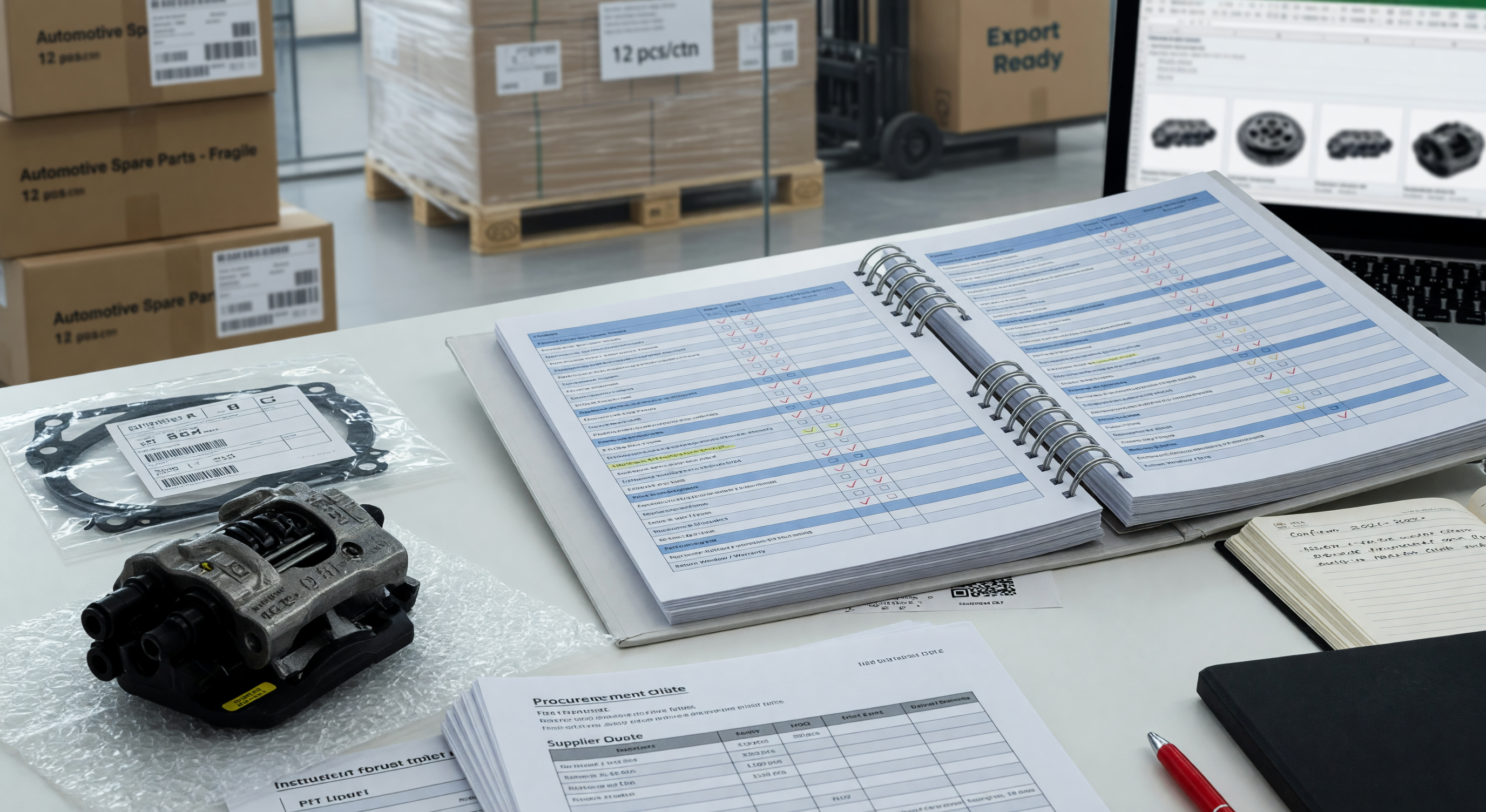
Confirm the exact part identity before comparing offers
Replacement parts are easy to buy incorrectly because many listings use similar names for parts that are not interchangeable. Start with the part number printed on the original component, the equipment model number, and any revision, trim, voltage, thread, connector, or side-specific marking. A left-side bracket, metric-thread fastener, or updated gasket can look close enough in a thumbnail and still fail during installation.
When browsing Cusket, keep one note open with the part number, machine or vehicle model, production year or range, and the reason the part is being replaced. Use https://cusket.com/search for exact identifiers first, then widen the search only after you understand which alternate numbers are cross-references and which are merely similar. If a listing on https://cusket.com/products shows a manufacturer code, compare it against your own service manual, worn part, or purchase records before relying on a title match.
Check compatibility using photos, dimensions, and fit details
A practical US buyer check is to treat every part listing as a fitment claim that needs evidence. Ask whether the listing shows the same connector shape, mounting holes, port direction, teeth count, bolt pattern, finish, and orientation as the part being replaced. Photos should include the front, back, connection points, and any labels or casting marks. If the listing has only one generic image, assume you need more confirmation before ordering.
Dimensions matter most when the part connects to a housing, seal, panel, pipe, hinge, rail, or harness. Record length, width, height, inner and outer diameter, thread size, pitch, cable length, and hole spacing in the same units used by the listing. For materials, look beyond color. Stainless steel, coated carbon steel, rubber grade, plastic type, ceramic, copper, and aluminum alloys can affect heat resistance, corrosion, flexibility, and service life.
Match the buying plan to replacement urgency
Replacement urgency changes the risk you can accept. If the failed part has stopped a machine, vehicle, production fixture, appliance, or repair job, prioritize confirmed compatibility, clear dispatch timing, and packaging that protects the item in transit. If the part is preventive maintenance, you may have more room to compare alternates, review categories at https://cusket.com/categories, or bundle related consumables.
Think in three urgency levels:
| Urgency | What to confirm first | Practical buying move |
|---|---|---|
| Critical downtime | Exact part number, dispatch window, damage protection | Choose the best-confirmed listing, even if comparison takes longer |
| Scheduled repair | Compatibility, material grade, included accessories | Compare equivalent listings and document why one was selected |
| Stock replenishment | Reorder quantity, shelf life, packaging labels | Buy enough for realistic use, not enough to create storage waste |
For any urgent replacement, keep a screenshot or copy of the listing details at the time of purchase. It helps your installer, internal approver, or support contact understand what was ordered.
Review packaging, condition, and included items
Before checkout, confirm whether the product is new, refurbished, remanufactured, open-box, aftermarket, OEM, or compatible replacement. Those terms can have different practical meaning depending on the product category, so look for specific condition notes instead of relying only on one label. A remanufactured pump, a compatible charger, and an OEM gasket each carry different expectations.
Check what is included: seals, clips, washers, adapters, brackets, manuals, calibration sheets, certificates, grease, protective caps, or installation hardware. Small missing items can turn a simple repair into a second order. For fragile or precision parts, packaging is not a minor detail. Ask whether threads, terminals, machined faces, glass, sensors, and polished surfaces are capped, padded, boxed, or separated so they do not rub against other items.
Use https://cusket.com/buy when you are ready to place the order, but pause if the listing leaves out an included-item question that affects installation.
Prepare customs and delivery information carefully
For imports into the United States, the product description on order and shipping documents should be plain, specific, and consistent with the actual item. A description such as “replacement hydraulic pump seal kit” is usually more useful than a vague word like “parts.” Avoid asking anyone to misdescribe value, origin, quantity, or item type. Customs, duties, taxes, and admissibility can depend on the product, country, use, and current rules, so treat this as an operational preparation point rather than legal or tax advice.
Keep the commercial description aligned with the invoice, packing list, and internal receiving note. If the part could be confused with a regulated, hazardous, medical, automotive safety, electrical, or branded component, gather more documentation before purchase. For batteries, liquids, magnets, pressure components, electronics, and used items, delivery constraints can affect both speed and carrier acceptance.
Confirm warranty, replacement, and reorder terms
Replacement parts are often judged only when installed, so read warranty and replacement terms before buying. Look for the claim window, what evidence is needed, whether installation damage is excluded, and whether the remedy is replacement, refund, store credit, or support review. If a part must be tested before installation, document the test result before it is mounted.
Plan for reorders while the first order is still fresh. Save the product URL, part number, supplier name, selected variant, photos, and any message history. If the part is used in recurring maintenance, add reorder notes to your internal system: expected life, quantity used per repair, related parts, and minimum stock level. You can keep broader buying guidance bookmarked from https://cusket.com/guides and contact https://cusket.com/support if a listing detail is unclear.
A careful replacement-parts purchase is not about slowing down the repair. It is about reducing the chance that the wrong part arrives quickly and creates a longer delay.