Buying Guide
United States buyer checklist for supplier quotes
By Cusket Editorial · Published · Updated
A practical checklist for United States buyers reviewing supplier quotes, covering product scope, pricing tiers, freight responsibility, documents, packaging, samples, and replacement terms.
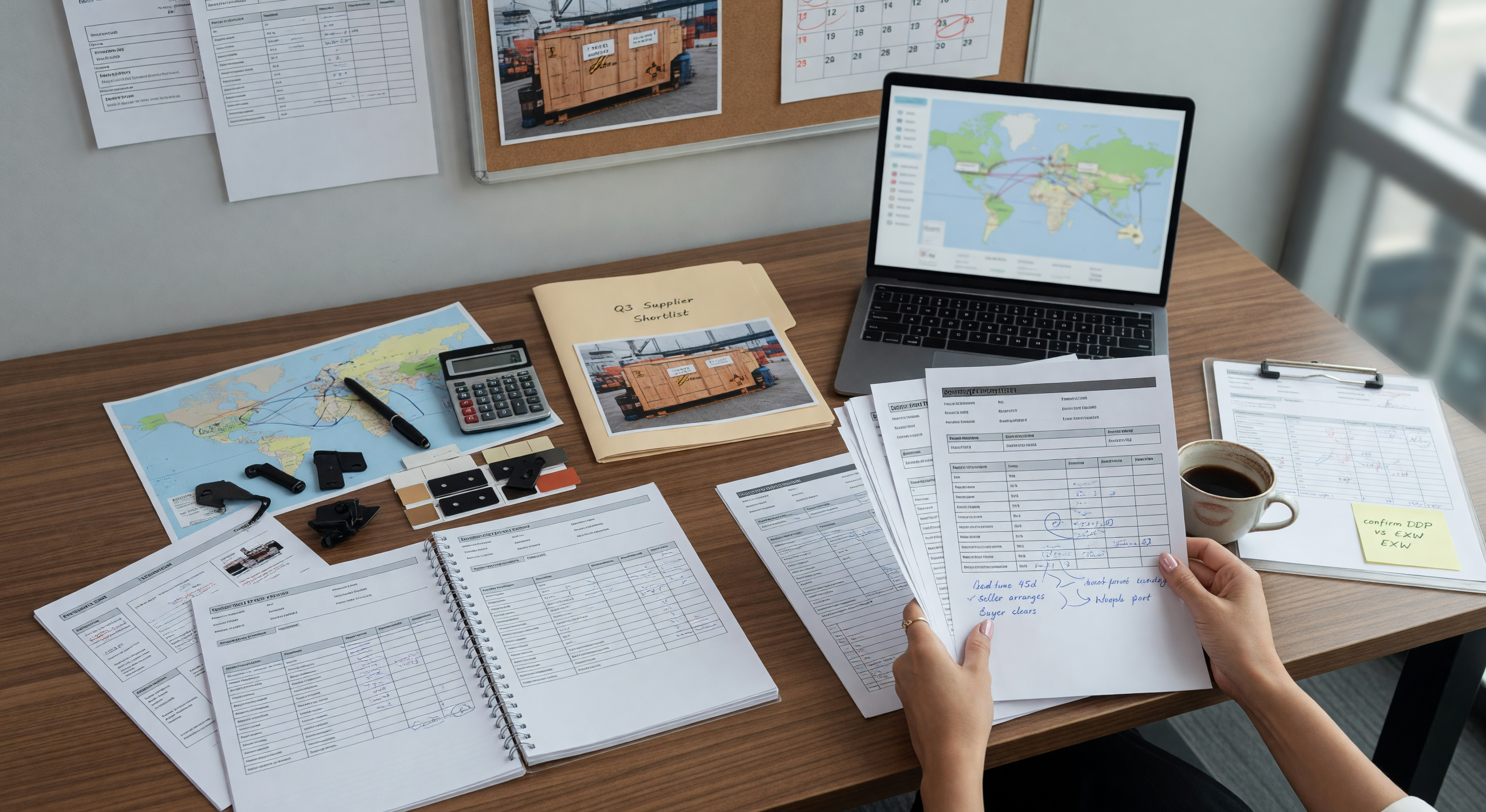
Before comparing offers on Cusket products or shortlisting suppliers from Cusket search, build a quote review habit that catches missing details early. For a United States buyer, the goal is to prevent a low headline price from hiding unclear packaging, short validity, mismatched currency, unpriced freight, weak document support, or unsupported replacement expectations.
Start with a quote scope that can be compared
Ask each supplier to quote against the same product scope. A good quote identifies the exact item, material, model, size, color, finish, included accessories, testing or inspection assumptions, and any excluded customization. If you are sourcing across several similar items, separate the quote by line item instead of accepting one blended number.
The scope should also state whether the price is for a standard product, a modified product, or a custom run. If artwork, labeling, private packaging, plugs, manuals, software setup, or spare parts are involved, list them as explicit inclusions or exclusions. A quote that says “as discussed” may be convenient today but difficult to compare later.
When browsing Cusket categories, keep a simple product brief beside you. Include intended use, must-have specifications, optional preferences, and unacceptable substitutions. Then check whether the supplier quote answers those points directly.
Confirm currency, validity, and MOQ tiers
United States buyers should confirm the currency before comparing unit prices. A quote should state whether prices are in USD or another currency, whether exchange-rate adjustments may apply, and whether bank fees, platform fees, or payment charges are included. If the supplier quotes in USD, still check whether freight, samples, tooling, and optional services are also priced in USD.
Quote validity matters. Raw materials, freight, and capacity can change, so ask for a clear validity date such as “valid through June 30, 2026.” Avoid relying on vague wording like “current price” or “subject to change” without knowing when the next review happens.
MOQ tiers should be shown as a ladder, not a single number. Request prices at sample quantity, first-order quantity, reorder quantity, and target annual volume. The useful detail is not only the lowest possible unit price; it is the quantity at which packaging, tooling, lead time, or payment terms change.
Pin down freight responsibility and landed-cost assumptions
A quote should state which freight responsibility assumption it uses. The supplier may quote goods available at factory, delivered to a port, delivered to a forwarder, or delivered to a final destination. Do not assume the cheapest quote includes the same freight steps as another offer.
For landed-cost planning, separate supplier charges from buyer assumptions. Supplier charges may include unit price, packaging, inland transport, export handling, documents, sample fees, tooling, and inspection support. Buyer assumptions may include international freight, insurance, customs brokerage, duties, taxes, destination handling, storage, domestic delivery, and payment costs.
For United States import planning, treat duty rates, admissibility, labeling rules, product safety obligations, and agency requirements as items to verify with qualified sources. A supplier can share experience and documents, but the buyer should not treat a quote as legal, tax, customs, or compliance advice.
Check invoice fields and shipping documents
Ask what commercial invoice fields the supplier can provide before the order is placed. At minimum, the quote should support consistent product description, quantity, unit price, currency, country of origin, buyer and supplier names, payment terms, shipping terms, and any model or SKU references used in the order.
Document expectations should be written down. Depending on the product and shipping path, you may need a packing list, certificate of origin, test report, bill of lading or air waybill details, insurance certificate, material declaration, or other product-specific records. The quote should show what the supplier can provide and whether any document has an added fee or lead time.
If you are unsure which records to request, use Cusket guides as a starting point for organizing questions, then confirm product-specific requirements with your broker, logistics provider, counsel, testing lab, or relevant agency source.
Lock packaging, sample approval, and replacement terms
Packaging can change the cost of a quote. Ask for unit packaging, master carton quantity, carton dimensions, gross weight, pallet assumptions, labeling, barcode placement, and any retail-ready packaging costs. If fragile, temperature-sensitive, regulated, or high-value goods are involved, ask how the supplier prevents transit damage.
Sample approval should be a milestone, not an informal courtesy. The quote should say whether samples are paid or credited, whether sample freight is separate, what differences may exist between sample and mass production, and what evidence will confirm approval. Photos, videos, measurements, test results, and signed sample references can all help reduce confusion before production.
Replacement terms should be practical and specific. Ask what happens if units are missing, visibly damaged, materially different from the approved sample, or fail agreed specifications within a stated review window. The answer may involve replacement units, credit, spare parts, or rework. Avoid assuming a general “warranty” covers shipping, labor, customs costs, or downstream losses unless the quote says so.
Use this quote review checklist before you buy
Before moving from quote review to checkout or a purchase order, run the offer through a checklist. If you are ready to compare items or continue buying on Cusket, start from Cusket buy and keep the quote details available for your internal approval process.
| Checkpoint | What to confirm | Why it matters |
|---|---|---|
| Product scope | Specs, variants, accessories, exclusions | Prevents comparing different goods |
| Currency and validity | USD or other currency, expiry date, fee assumptions | Keeps pricing comparable and time-bound |
| MOQ tiers | Sample, first order, reorder, annual-volume pricing | Shows where cost and lead-time changes occur |
| Freight responsibility | Which party covers each transport step | Avoids hidden logistics gaps |
| Invoice and documents | Invoice fields, packing list, origin, test or transport records | Supports import and receiving workflows |
| Packaging | Cartons, labels, weights, dimensions, damage controls | Affects freight cost and customer experience |
| Sample and replacement terms | Approval evidence, defect window, remedy type | Reduces disputes after production |
A strong quote does not remove every sourcing risk, but it gives you a clear decision record. If a supplier cannot answer a point yet, mark it as open rather than filling the gap with assumptions. For order-specific questions, document issues early and contact Cusket support when platform help is needed.