Buying Guide
Workwear and uniforms supplier checklist
By Cusket Editorial · Published · Updated
A product-level guide for comparing workwear and uniform suppliers by fabric, sizing, branding, MOQ, sampling, production lead time, and return expectations.
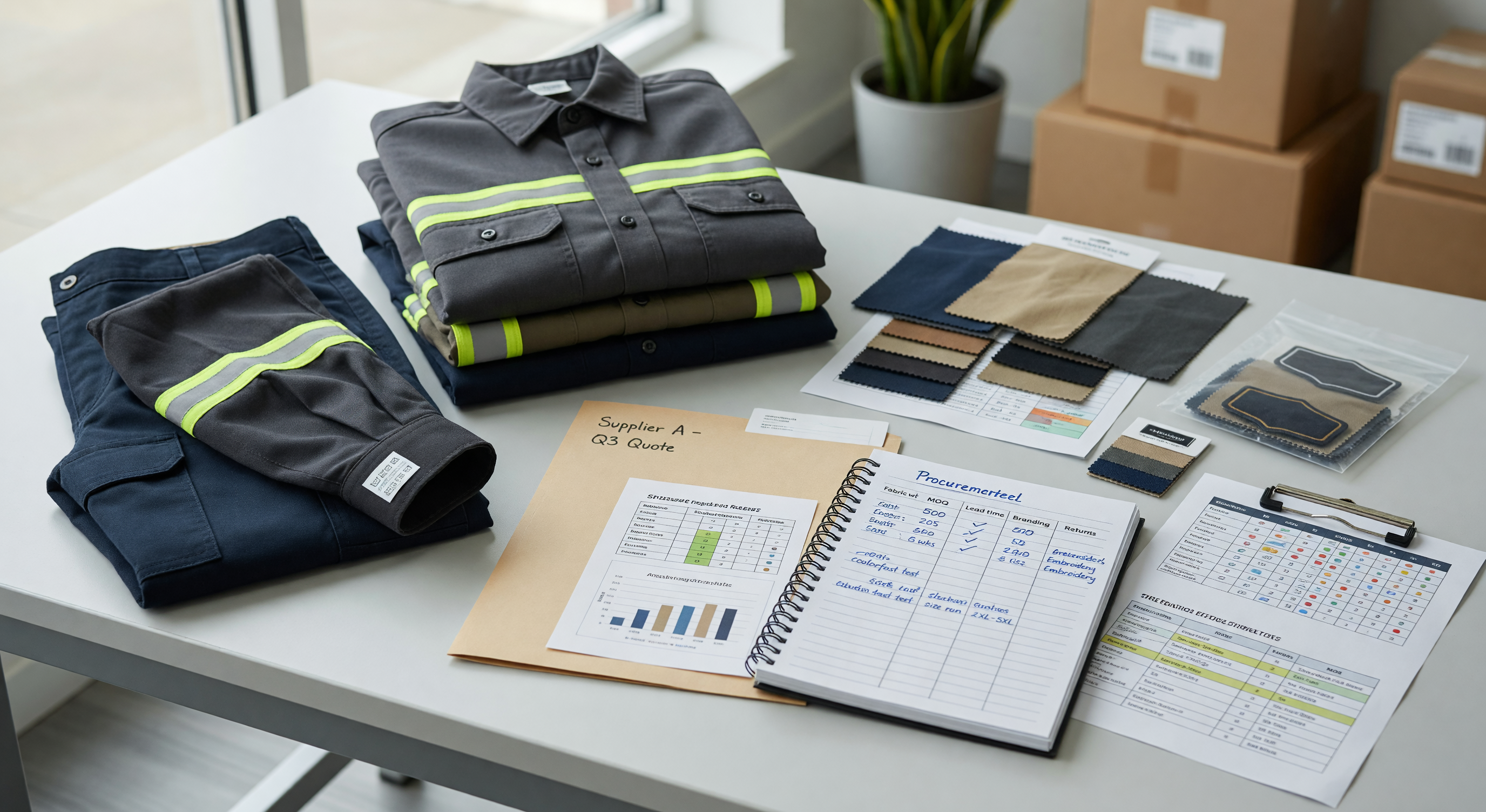
Source workwear around fit, fabric, and operating conditions
Workwear and uniforms need to match the job environment, sizing range, fabric performance, decoration method, wash expectations, and reorder plan. A lower unit price is not useful if the garment fails in daily use or cannot be restocked consistently.
Product specs to define
Write the uniform requirement by role and working condition. A restaurant apron, warehouse polo, construction hi-vis jacket, hotel front-desk shirt, healthcare tunic, and corporate field jacket have different fabric and compliance needs. Define garment type, fabric composition, fabric weight, stretch, breathability, flame resistance, waterproofing, high-visibility class, pocket layout, closure type, reinforcement areas, color standard, size range, gender or unisex fit, and seasonal variants.
Branding should be specified early. State whether logos are embroidered, screen printed, heat transferred, woven label, patch, sublimation, or private-label trim. Include logo size, placement, thread colors, Pantone references, wash requirement, and whether employee names, departments, or location codes vary. If the uniforms must match existing garments, send physical samples or exact color references because photos rarely capture fabric shade accurately.
MOQ and price tier logic
Price tiers should be read as a model, not a promise. A supplier may show one unit price at sample quantity, another at carton quantity, and a lower number at pallet or container quantity. Your landed cost should include setup charges, tooling, artwork, testing, labeling, export packing, freight, duties, payment fees, and the cost of quality failures. The lowest unit price is rarely the lowest total purchase cost if it forces the wrong MOQ, hides a long lead time, or excludes required documentation. Uniform MOQ can be calculated per style, color, size, fabric, branding method, or order total. Suppliers may offer lower MOQ for blank stock garments and higher MOQ for cut-and-sew custom garments. Embroidery and print setup can also create minimums by logo version. Ask for tier pricing by total garments and by size mix, because an order of 500 pieces across 14 sizes behaves differently from 500 pieces in three sizes.
Separate setup charges from unit price. Digitizing, screen setup, pattern development, lab dips, sample fees, woven labels, hang tags, and packaging can affect first-order economics. For recurring teams, ask about reorder MOQ, replacement pieces, new employee packs, and whether the supplier can keep fabric and trims consistent over time. A low first-order unit price is risky if reorders require a large MOQ or long lead time.
Sample and proofing path
For custom or compliance-sensitive items, do not skip the proof path. Ask for a pre-production sample, golden sample, digital proof, material certificate, test report, or dimensional drawing before mass production. Store the approved proof with the quote so receiving, support, and reorder teams know what was actually accepted. Workwear approval should include fit samples, fabric swatches, color lab dip if custom dyed, branding proof, wash test, and a size-set review when fit matters. Test shrinkage, colorfastness, seam strength, logo durability, pocket placement, comfort during movement, and packaging presentation. For safety garments, ask for applicable standards and documentation before approving mass production.
For branded uniforms, approve a pre-production sample with the actual logo and care label. If the order includes many sizes, confirm size chart measurements and tolerance. Keep one approved garment as a control sample for receiving and future reorders.
RFQ questions to ask
- Is the quote based on stock garments, modified stock, or custom cut-and-sew production?
- What fabric composition, weight, color, and performance features are included?
- Is MOQ per style, color, size, logo, or total order?
- What branding method, logo size, placement, and setup fees are included?
- Can the supplier provide fit samples, size set, fabric swatch, and wash test results?
- What replacement or reorder process exists for new hires?
- What packaging, labeling, carton sorting, and size breakdown are included?
- What lead time applies after sample approval?
Red flags
Red flags include vague product names, copied specification sheets, missing certification numbers, resistance to samples, unclear ownership of tooling, price breaks that change after questions, no written lead time, and quotes that omit packaging or delivery responsibility. A good supplier may still need clarification, but they should be able to document what they will make, when they will make it, and what is included in the price. For uniforms, be cautious with suppliers who cannot provide a size chart, avoid fabric composition details, quote branding without artwork review, or promise exact color matching from a screen photo. Red flags also include no reorder plan, no wash guidance, no tolerance for size measurements, and unclear responsibility for defective embroidery or printing. If uniforms carry safety claims, do not accept unsupported marketing language in place of documentation.
Next step in Cusket
Cusket is most useful for this kind of purchase when the buyer can move from a checklist into product discovery, seller comparison, RFQ, cart, or checkout without losing the commercial assumptions. Use the Cusket guide hub for broader sourcing context, then open product search or the relevant category page when you are ready to compare live listings. Use workwear search and the workwear category to compare supplier offers. For related planning, review low-MOQ sourcing, custom product supplier comparison, and delivery terms before buying.
Quote comparison fields to score
Compare suppliers by garment type, fabric composition, fabric weight, color, size range, pattern source, branding method, sample path, MOQ per style, MOQ per logo, setup charges, reorder MOQ, packing method, production lead time, and delivery term. Add operational columns for new-hire replenishment, damaged garment replacement, and size exchange support. Uniform programs fail when the first bulk order is cheap but later replacement pieces are slow, inconsistent, or unavailable.
Acceptance criteria before purchase
Set acceptance rules for size measurements, fabric hand feel, shrinkage, colorfastness, seam strength, logo placement, logo durability, pocket placement, care labels, packaging, and carton sorting. Run a small wearer trial if the garment will be used daily. If the supplier changes fabric mill, dye lot, trim, pattern, or branding method, require a new approval sample. Consistency over repeat orders is part of the product, not an optional service.
Planning the first order
For a first uniform order, build the size curve from real employee measurements or prior usage, not guesswork. Include spare units for replacements, new hires, and returns, but keep custom fabric or color risk under control until the team has worn the garments. Ask the supplier to quote a pilot order, launch order, and reorder pack. The best supplier is often the one that can keep sizing, fabric, and branding consistent after the first shipment.