Buying Guide
Processed and Packaged Foods RFQ Checklist for Business Buyers
By Cusket Editorial · Published · Updated
A practical RFQ checklist for business buyers sourcing processed and packaged foods, covering specifications, compliance evidence, packaging, pricing, samples, and first-order approval planning.
Define the product before asking for price
A strong RFQ for processed and packaged foods starts with a product definition that suppliers can quote without guessing. Write down the exact product form: frozen, chilled, shelf-stable, canned, dried, powdered, bottled, ready-to-eat, ready-to-cook, or ingredient format. A supplier quoting canned fruit is not quoting the same process, packaging cost, shelf life, or documentation burden as a supplier quoting aseptic puree or individually quick frozen ingredients.
Separate commercial intent from technical requirements. Commercial intent covers market, order size, price target, channel, and launch timing. Technical requirements cover recipe, processing method, packaging, labeling, testing, and documents. When everything is compressed into one short message, suppliers often answer the price question and skip the details that decide whether the offer is usable.
Use https://cusket.com/categories/PROCESSED_FOOD to benchmark product types before issuing the RFQ. If the finished item depends on seasonal raw materials, check sourcing assumptions against https://cusket.com/categories/FRESH_PRODUCE so suppliers understand whether you need a finished product, a packed ingredient, or development support.
Share specifications that suppliers can price
Suppliers can only quote accurately when the specification is measurable. Instead of asking for a "premium sauce" or a "retail snack pack," provide target values and acceptable ranges. For processed foods, the key specs usually include net weight, pack format, ingredient list, allergen position, processing method, shelf life, storage condition, case pack, pallet pattern, and destination market labeling rules.
If the item is still in development, state which parts are fixed and which can be adjusted. A supplier may reduce cost by changing jar size, pouch structure, film thickness, case count, or carton dimensions. They cannot make useful suggestions if every detail looks final but the RFQ also asks for aggressive savings.
Include current samples, reference SKUs, or performance targets when available. Use reference SKUs or performance targets when available.
Build the RFQ checklist
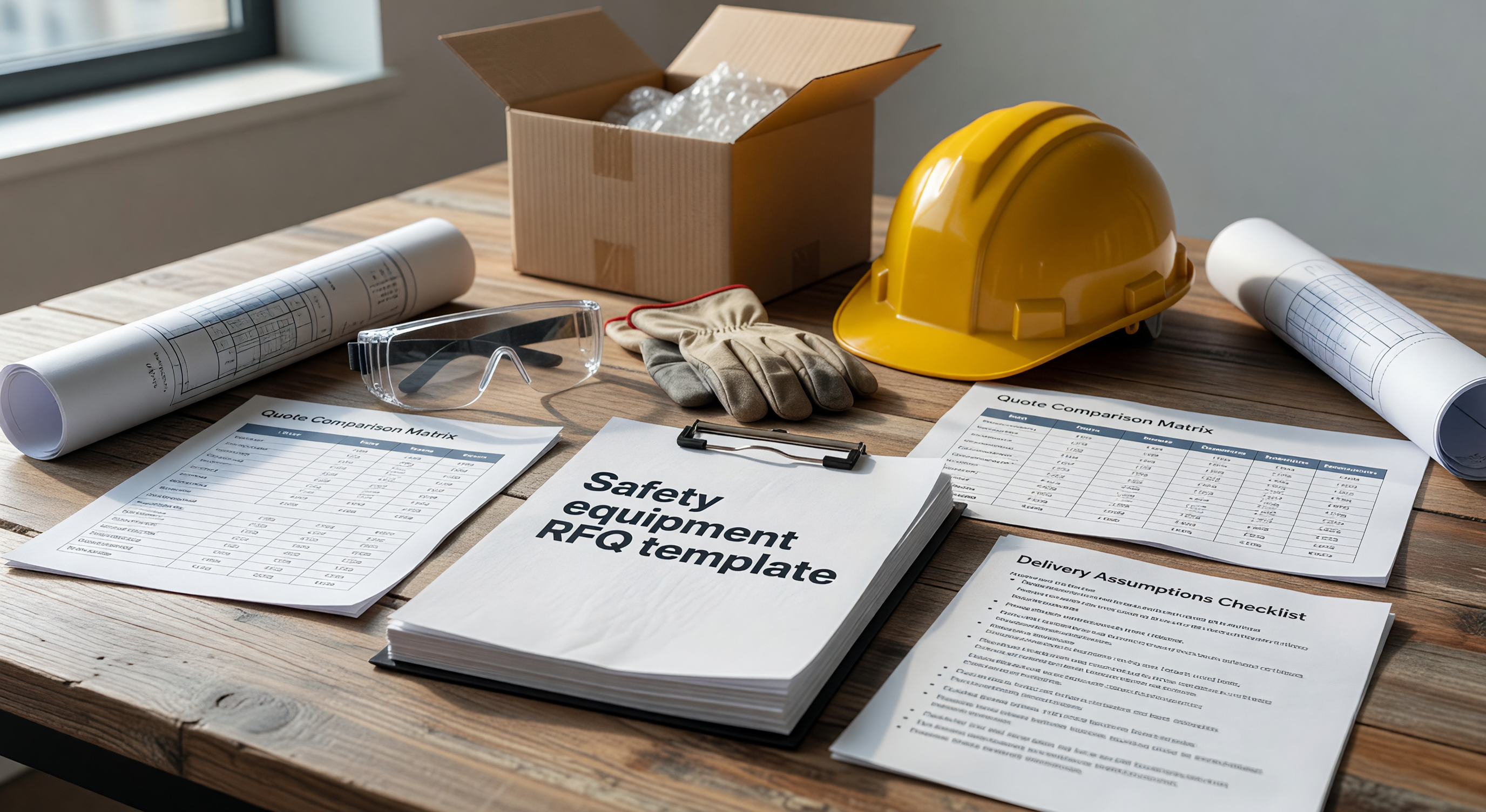
Use a checklist so every supplier answers the same questions in the same order. This makes comparison faster and reduces the risk that the lowest price is missing a major requirement.
| RFQ item | What to request | Why it matters |
|---|---|---|
| Product identity | Product name, format, recipe status, target channel | Confirms the supplier understands the intended use |
| Processing method | Pasteurized, frozen, dried, retort, fermented, baked, or blended | Drives equipment, validation, shelf life, and cost |
| Packaging | Primary pack, carton, case count, pallet pattern | Affects unit cost, freight, retail readiness, and damage risk |
| Compliance | HACCP plan, certificates, allergen controls, market documents | Reduces import, audit, and buyer approval delays |
| Testing | Microbiology, nutrition, shelf-life, migration, sensory, or stability tests | Shows whether claims and shelf life are supported |
| Commercials | MOQ, lead time, sample fee, tooling, payment terms, price validity | Makes quotes comparable beyond unit price |
| Change control | Recipe, artwork, ingredient, and packaging change process | Protects buyers after the first approved production run |
Ask suppliers to mark exceptions. If you are sourcing both the food and the pack, review options in https://cusket.com/categories/FLEXIBLE_PACKAGING before deciding whether the food supplier or a separate packaging partner should manage film, pouches, labels, cartons, or sleeves.
Ask for compliance evidence early
Processed food procurement has more hidden approval work than many buyers expect. A quote is not complete until you know what documents the supplier can provide, when they can provide them, and whether the documents match your sales market. Ask for food safety certificates, facility audit status, allergen control statements, country-of-origin details, ingredient declarations, nutrition panels, and shelf-life validation approach.
Be specific about destination market rules. A supplier experienced with one region may not automatically prepare labels or documents for another. If you need English labeling, bilingual packs, importer details, organic certification, halal documentation, vegan claims, gluten-free controls, or child-focused warnings, put that in the RFQ instead of waiting until artwork review.
For private-label products, define who owns formula approval, regulatory review, artwork approval, and final release. Buyers often assume the supplier will catch every claim issue, while suppliers assume the brand owner is responsible for market claims. Put responsibility in writing before samples move forward.
Compare total landed cost, not only unit price
The cheapest unit quote may become expensive once freight, packaging, testing, rework, lead time, waste, and cash terms are included. Build your comparison around total landed cost and launch risk. A supplier with a higher unit price but proven documentation, stable lead times, and lower spoilage risk may be the better business choice.
Ask each supplier to separate cost lines where possible: product cost, packaging cost, tooling or plate charges, sample development fees, lab testing, export documentation, inland freight, and any minimum charges. Request price validity and the formula for future changes if commodities, energy, resin, glass, or freight move sharply.
Use https://cusket.com/search and https://cusket.com/products to compare supplier ranges, adjacent formats, and pack sizes before negotiating. If suppliers quote different formats, normalize offers to cost per kilogram, cost per serving, cost per retail unit, and cost per pallet delivered.
Confirm samples, approvals, and the first order plan
A useful RFQ should end with a path from quote to production. Ask for the sample sequence, sample lead time, shelf-life testing schedule, artwork deadline, purchase order deadline, production slot reservation, inspection point, and shipment readiness date. First orders often fail because approvals move slower than the factory schedule.
Define acceptance criteria before samples arrive. Decide who will approve taste, texture, pack appearance, label copy, carton strength, barcode placement, and storage tests. If the buyer has several internal teams, name the final approver so the supplier gets one clear decision path.
Keep the first order conservative unless the supplier already has proven performance with your exact product type. Start with an MOQ that can validate demand, quality, documents, and logistics without overcommitting inventory. After the first production run, review defects, lead time accuracy, claim support, buyer feedback, and transport damage before scaling volume. For more sourcing guidance, review https://cusket.com/guides when building future category RFQs.