Buying Guide
Stationery and notebooks MOQ and price tier guide
By Cusket Editorial · Published · Updated
A buyer-focused guide to comparing stationery and notebook MOQ rules, price tiers, customization costs, carton planning, and reorder risk before placing a bulk order.
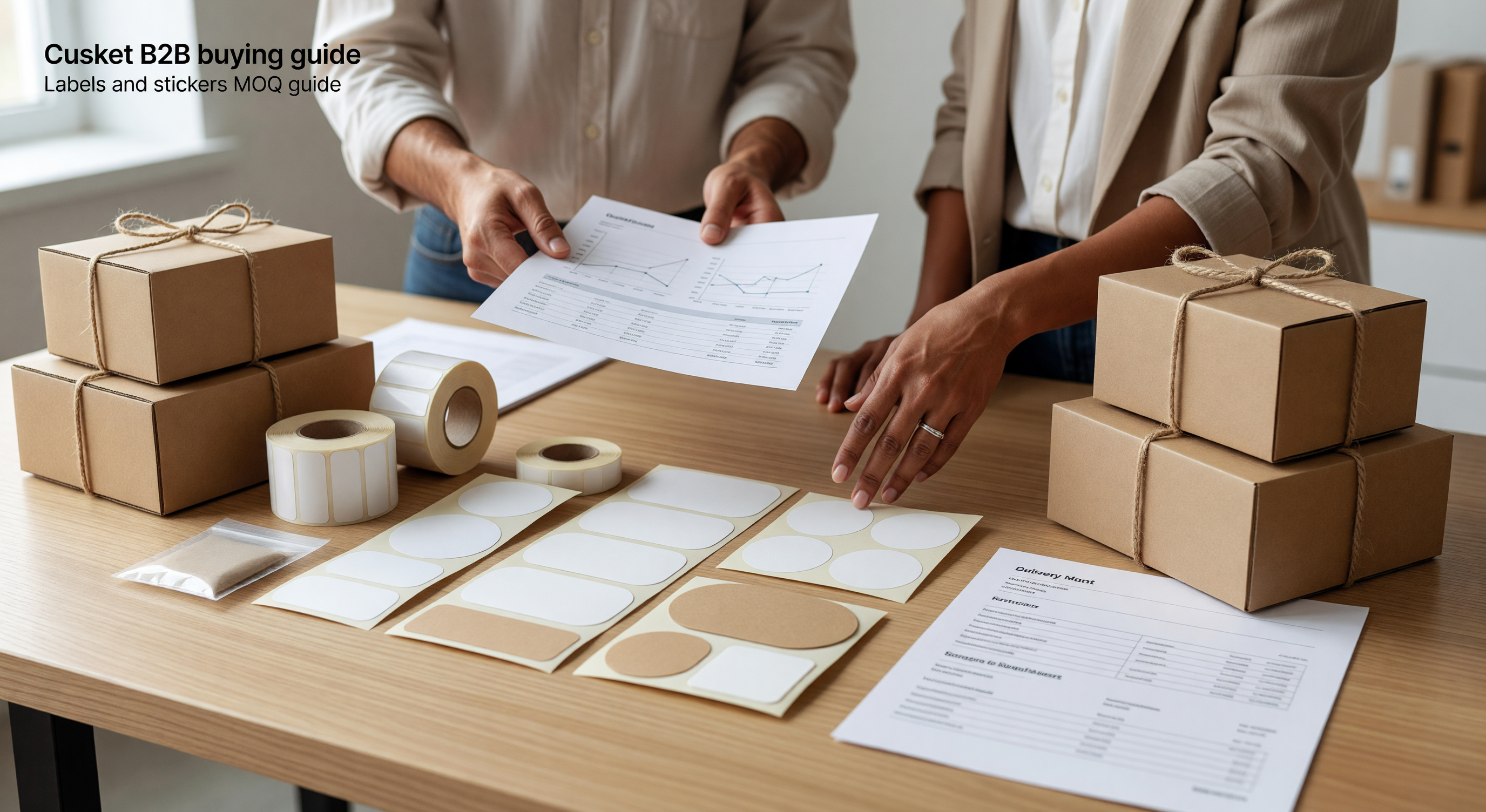
Read MOQ and price tiers together
Stationery buying looks simple until the first bulk order: notebooks, sticky notes, planners, pens, folders, binders, and desk pads all have small unit prices, but the real cost depends on carton quantities, customization, packaging, and how quickly each SKU will move. A minimum order quantity is not just the lowest number a buyer can place in the cart. It is the supplier's starting point for production and freight.
When comparing stationery listings on Cusket, read MOQ and price tiers as one commercial structure. A notebook priced at 1,000 units may look cheaper than a 300-unit listing, but it can tie up cash, storage, and planning time if the design or paper spec is wrong. The best buy is the tier that matches sell-through, branding needs, and reorder timing, not the lowest unit price.
Separate stock stationery from custom stationery
Stock stationery has a lower decision burden. If the notebook size, ruling, cover material, and color are fixed, the main questions are availability, pack size, carton quantity, and delivery time. These products can fit office replenishment, classroom supply planning, event kits, and retail assortment testing.
Custom stationery needs a slower comparison. Logo printing, cover artwork, page inserts, elastic bands, dividers, belly bands, gift boxes, and barcode stickers can all change MOQ. A supplier may accept 200 blank notebooks but require 1,000 units for a custom cover because printing setup, color matching, and material waste have to be spread across the order.
Before you chase the lowest tier, decide whether you need a ready-made product or a product that carries your brand. Buyers sourcing adjacent office supplies can often mix stock items with a smaller number of branded stationery pieces to keep the first order manageable.
Build a realistic landed unit cost
A price tier is only useful when it is compared against the full order. Start with the product unit price, then add printing or setup charges, sample charges, inner packaging, export carton requirements, payment fees, freight, duties where applicable, and expected defect allowance. For notebooks, also check whether the quoted price includes the exact paper weight, sheet count, binding, cover finish, and packaging you need.
A small tier can be right if it protects cash flow or allows a test run. A larger tier can be better if the product is standardized, reorder demand is proven, and freight efficiency improves meaningfully. The danger is buying the larger tier only because the unit price looks attractive. If half the order sits unused, the effective cost per used unit is much higher than the quoted price.
MOQ and price-tier checklist
Use this checklist before shortlisting stationery suppliers. It is especially useful for notebooks, planners, journals, memo pads, folders, and school kits where small specification changes can alter the quote.
| Check | What to confirm | Why it matters |
|---|---|---|
| Product specification | Size, pages, paper weight, ruling, binding, cover, finish, packaging | Keeps unlike notebooks from being compared as identical |
| MOQ basis | Per design, color, size, SKU, or total order | Shows whether mixed items can meet the minimum |
| Price tier breakpoints | Unit prices at each quantity, plus setup fees | Identifies where savings are real, not cosmetic |
| Customization rules | Logo method, color limits, artwork, proofing, sample timing | Avoids delays after the price looks acceptable |
| Carton and storage impact | Units per carton, dimensions, gross weight, shelf life | Connects the quote to warehouse planning |
| Reorder path | Lead time, repeat-order MOQ, repeated setup charges | Shows whether the first order can become stable supply |
For school supply sourcing, add one more line: confirm whether the supplier can keep kits consistent across terms or campaigns. A low first price is less useful if future notebook colors, page counts, or packaging cannot be repeated.
Compare tiers by use case, not only by discount
A 10 percent discount at the next tier sounds helpful, but the right decision depends on purpose. For internal office use, calculate how many months of inventory the order represents. If a 2,000-unit tier equals three years of notebooks, the discount may not justify storage and obsolescence risk. For retail, compare the tier against expected sales velocity, display capacity, and seasonal timing.
For promotional events, MOQ should be tied to confirmed attendance plus a small buffer. Over-ordering custom notebooks for a single event can leave leftovers because the date, sponsor, or campaign message is printed on the item. For subscription boxes or school programs, the tier should match the number of kits plus replacement needs.
Use Cusket search to compare alternatives across stationery, office, and school categories when one listing's MOQ is too high. Sometimes a similar stock item with a lower minimum is a better first buy than a custom item that forces a large commitment.
Ask questions before the tier locks you in
Before placing a larger stationery order, resolve details that could change the tier. Ask whether the MOQ applies to each cover design, whether assorted colors are allowed, whether inner packs can be split for resale, and whether a paid pre-production sample is available. For notebooks, request clarity on paper opacity, ink bleed behavior, cover durability, and binding tolerance if those details affect end users.
Keep your shortlist structured. Save the listing URL, quantity tier, final specification, delivery expectation, unanswered questions, and decision owner. For broader sourcing context, review other Cusket guides while building your comparison notes.
Choose the tier that supports the next reorder
The strongest stationery purchase is not always the cheapest first order. It is the order that lets you verify quality, use inventory at a healthy pace, and reorder without restarting the entire comparison. If the first tier is a test, keep it small enough to learn from. If the product is proven, choose the tier where lower unit cost, carton efficiency, and reorder timing line up.
After you choose a supplier, keep the specification and tier history. Record the exact notebook model, artwork version, proof approval date, packaging, carton details, and price tier. That record makes the next order easier to compare and helps your team avoid accidental changes. If a listing or checkout detail is unclear, use Cusket support before treating the order as final.