Buying Guide
Tires and Wheels supplier comparison checklist
By Cusket Editorial · Published · Updated
A buyer-focused checklist for comparing tire and wheel suppliers by fitment, compliance, product consistency, landed cost, lead time, and support quality.
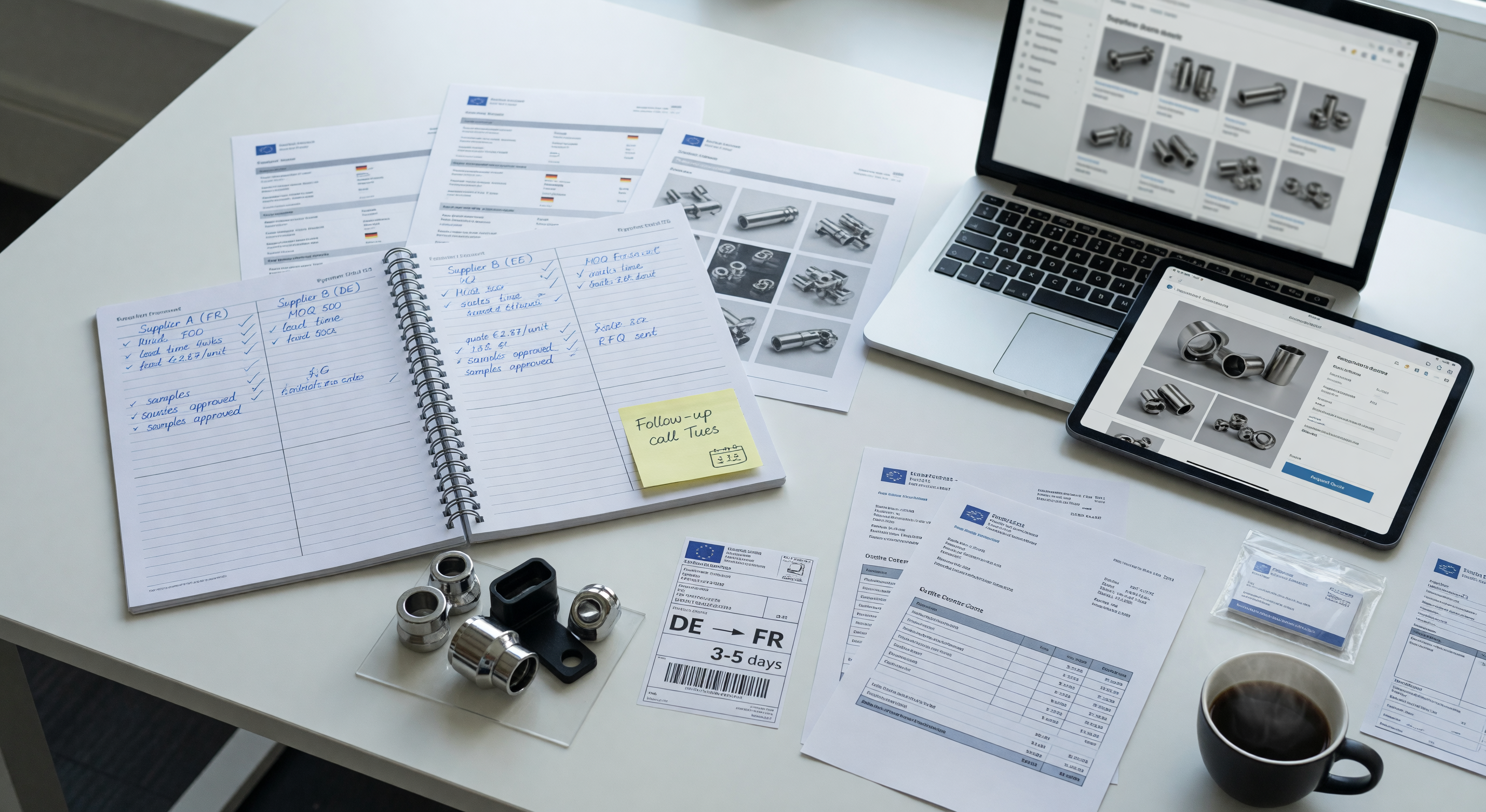
Start with the exact tire and wheel fitment problem
A good supplier comparison starts before any quote is requested. For tires and wheels, the first question is not simply "who has the lowest price?" It is whether each supplier can support the exact fitment, load, duty cycle, and market expectations behind the order. A passenger tire order, a commercial van wheel order, and a mixed trailer replacement program may all sit near each other in a catalog, but they carry different compliance, packaging, warranty, and repeat-order risks.
Build the first page of your comparison around the use case. Record tire size, wheel diameter and width, bolt pattern, center bore, offset, load index, speed rating, season, tread pattern, valve requirements, finish, and target vehicle type. If the order supports a maintenance program, include the installed base and the replacement cadence. If you are still mapping options, start from the Cusket tire and wheel category at https://cusket.com/categories/TIRES_WHEELS, then compare adjacent automotive listings through https://cusket.com/categories/AUTO_PARTS_ACCESSORIES when accessories, hubs, sensors, caps, or mounting hardware affect the final purchase.
Separate tire capability from wheel construction
Tires and wheels should be evaluated together, but not blended into one vague score. Tire suppliers need to prove performance consistency: compound, casing, tread depth, wet grip expectations, rolling resistance, noise, wear claims, and age control. Wheel suppliers need to prove construction quality: casting or forging method, material grade, coating durability, runout tolerance, impact resistance, balance expectations, and finish repeatability.
When one supplier offers both tires and wheels, ask whether they manufacture both lines or coordinate with partner factories. A bundled quote can reduce coordination work, but it can also hide weak documentation on one side of the package. When suppliers specialize, compare how clearly they can integrate with the rest of the assembly. For heavier applications, also check whether related parts should be sourced through https://cusket.com/categories/TRUCK_BUS_PARTS so the tire and wheel decision does not conflict with axle, brake, or fleet maintenance requirements.
Compare suppliers with a weighted scorecard
Use a scorecard to keep the discussion disciplined. Weight the criteria before reviewing prices so the lowest quote does not automatically win. A simple 1 to 5 score is enough if everyone uses the same evidence standard.
| Criteria | Weight | What to verify | Supplier A | Supplier B | Supplier C |
|---|---|---|---|---|---|
| Fitment accuracy | 20% | Size, bolt pattern, offset, load rating, vehicle compatibility, and clear exceptions | |||
| Compliance and test evidence | 20% | Market certificates, lab reports, date codes, batch traceability, and claim language | |||
| Product consistency | 15% | Sample match, tread or finish repeatability, balance, runout, and defect handling | |||
| Commercial terms | 15% | MOQ, price tiers, payment terms, packaging, warranty, and replacement policy | |||
| Lead time reliability | 15% | Production slot, inventory position, shipping plan, and delay communication | |||
| Support quality | 15% | Technical answers, documentation speed, after-sale response, and escalation path |
Keep notes beside each score. "Good price" is not evidence; "quoted 40-foot container price with two confirmed load indexes and cartonized wheel packaging" is evidence. Use https://cusket.com/search to compare similar listings and vocabulary, and use https://cusket.com/products when you need a broader view of active product pages before narrowing the supplier list.
Check documentation, samples, and batch consistency
Documentation matters because tire and wheel problems often appear after installation, not at the quote stage. Ask every shortlisted supplier for product specification sheets, drawings where relevant, test summaries, photos of actual packaging, warranty terms, and batch identification practices. For tires, confirm manufacturing date expectations and whether older inventory is allowed. For wheels, confirm finish testing, cap compatibility, valve hole details, and whether supplied photos show current production or only catalog imagery.
Samples should be treated as a controlled inspection step, not as a courtesy. Record the sample source, sample date, measured dimensions, tire age, wheel weight, finish quality, markings, packaging, and any deviation from the quote. If the order will be repeated, ask how the supplier prevents approved-sample drift across future batches. A supplier that can explain batch control clearly is often safer than one that responds quickly but cannot identify what changed between production runs.
Price the full landed order, not only the unit
Tires and wheels are bulky, damage-sensitive, and specification-sensitive, so unit price alone can mislead the buyer. Compare landed cost by including MOQ, container utilization, pallet or carton design, protective packaging, labeling, duties, inspection, inland freight, storage, warranty reserves, and expected replacement handling. A lower unit price can disappear if wheels arrive with finish damage, if tire date codes are older than expected, or if the packaging is inefficient for your warehouse.
Ask each supplier to separate product cost, tooling or mold charges, sample fees, packaging upgrades, inspection costs, and freight assumptions. Also ask what happens when part of the order fails inspection. The best commercial term is not always the cheapest; it is the term that makes responsibility clear before money and inventory are committed. If you need to compare buying process questions across categories, keep https://cusket.com/guides open as a reference while you build your internal checklist.
Shortlist and document the buying decision
After scoring, reduce the list to two or three suppliers. One should be the preferred option, one should be a backup, and one may be a specialist for unusual fitments or urgent replenishment. Do not delete the rejected suppliers immediately. Keep their quotes, scorecard notes, and reasons for rejection so future buyers understand whether the issue was price, lead time, documentation, compliance, or product fit.
Before placing the order, write a short buying memo that includes the approved specification, comparison table, open risks, inspection plan, packaging expectation, warranty path, and re-order trigger. This memo is especially useful when procurement, operations, and service teams all touch the tire or wheel program. If a listing, order, or account issue needs clarification during the process, use https://cusket.com/support rather than relying on assumptions inside a supplier spreadsheet. A disciplined comparison does not slow the purchase; it prevents a low-price order from becoming a fitment, warranty, or inventory problem later.